
Senator Erwin Tulfo has intensified his call for genuine inclusivity for Persons with Disabilities (PWDs) by filing a Senate resolution urging a formal inquiry into the implementation of existing PWD laws.
Under Senate Resolution No. 186, the appropriate committee is directed to conduct an oversight of the implementation of Batas Pambansa Blg. 344 (the “Accessibility Law”) and Republic Act 7277 (the “Magna Carta for Persons with Disabilities”).
“What is the sense of these laws protecting the rights of PWDs if accessible transportation and building features still fall short? Our PWDs are often forced to rely on others or risk their own safety just to move around,” Tulfo said.
“There should be no issuance of building permits or approval of government projects for structural designs that lack mandatory accessibility features!”
“There should be no issuance of building permits or approval of government projects for structural designs that lack mandatory accessibility features!” the legislator said.
The chairperson of the Senate Committee on Social Justice, Welfare, and Rural Development also underscored the prevalence of inaccessibility in public infrastructure.
“In public transportation, most designs are inconsiderate of the needs of the PWD community.”
“We see it on the news and social media—footbridges so steep that PWDs using mobility devices cannot navigate them safely. Even in public transportation, most designs are inconsiderate of the needs of the PWD community,” the senator lamented.
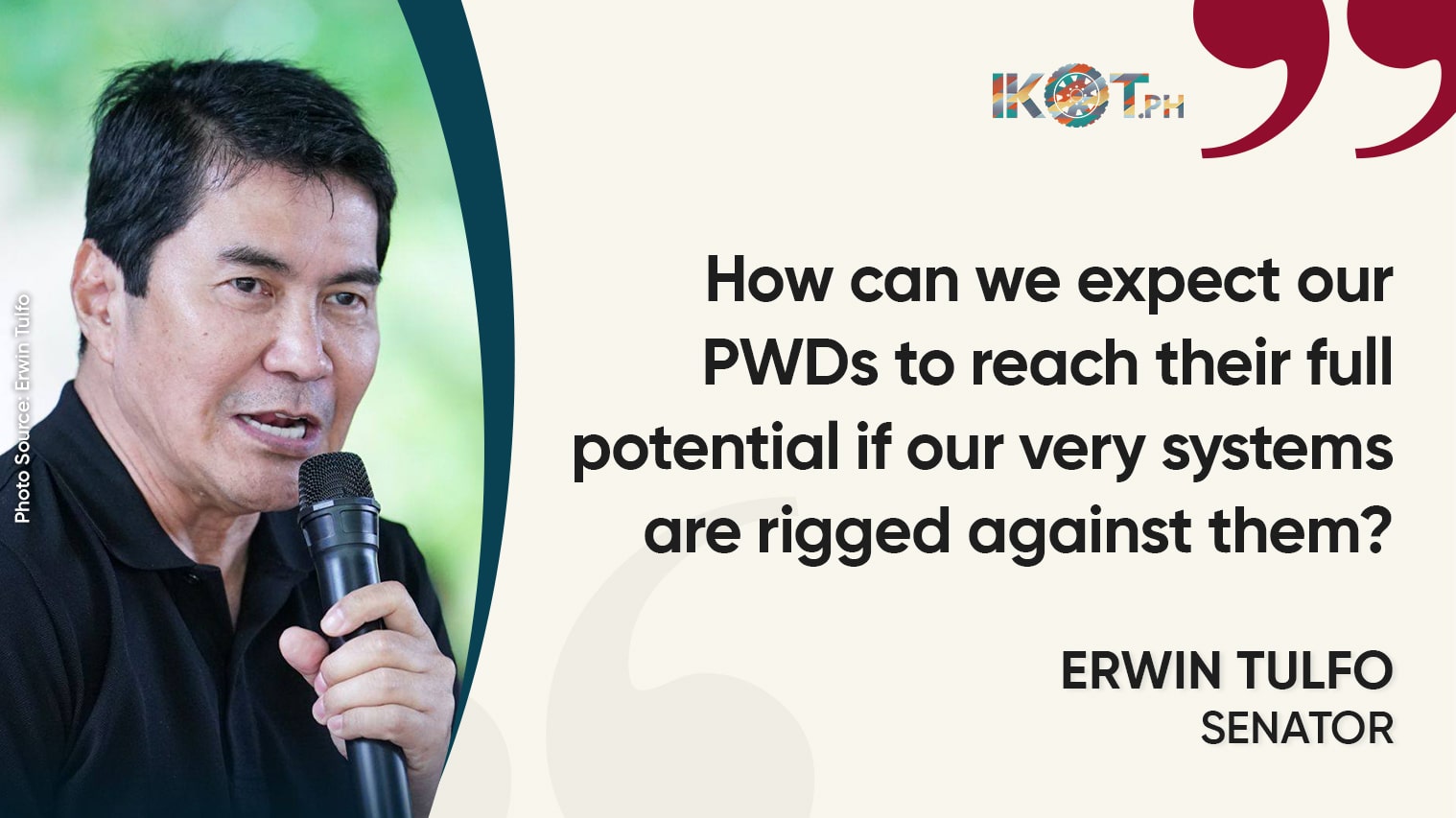
He then asked: “How can we expect our PWDs to reach their full potential if our very systems are rigged against them?”
A known ally of the PWD community, Tulfo is also advocating for the lifetime validity of PWD IDs for those with permanent disabilities. This measure aims to remove the burden of renewing IDs every five years, which often incurs unnecessary costs and effort for the beneficiaries.
Furthermore, he urged the depoliticization of PWD registration and called for a more efficient, centralized repository of records to ensure that aid reaches the rightful recipients without political interference.