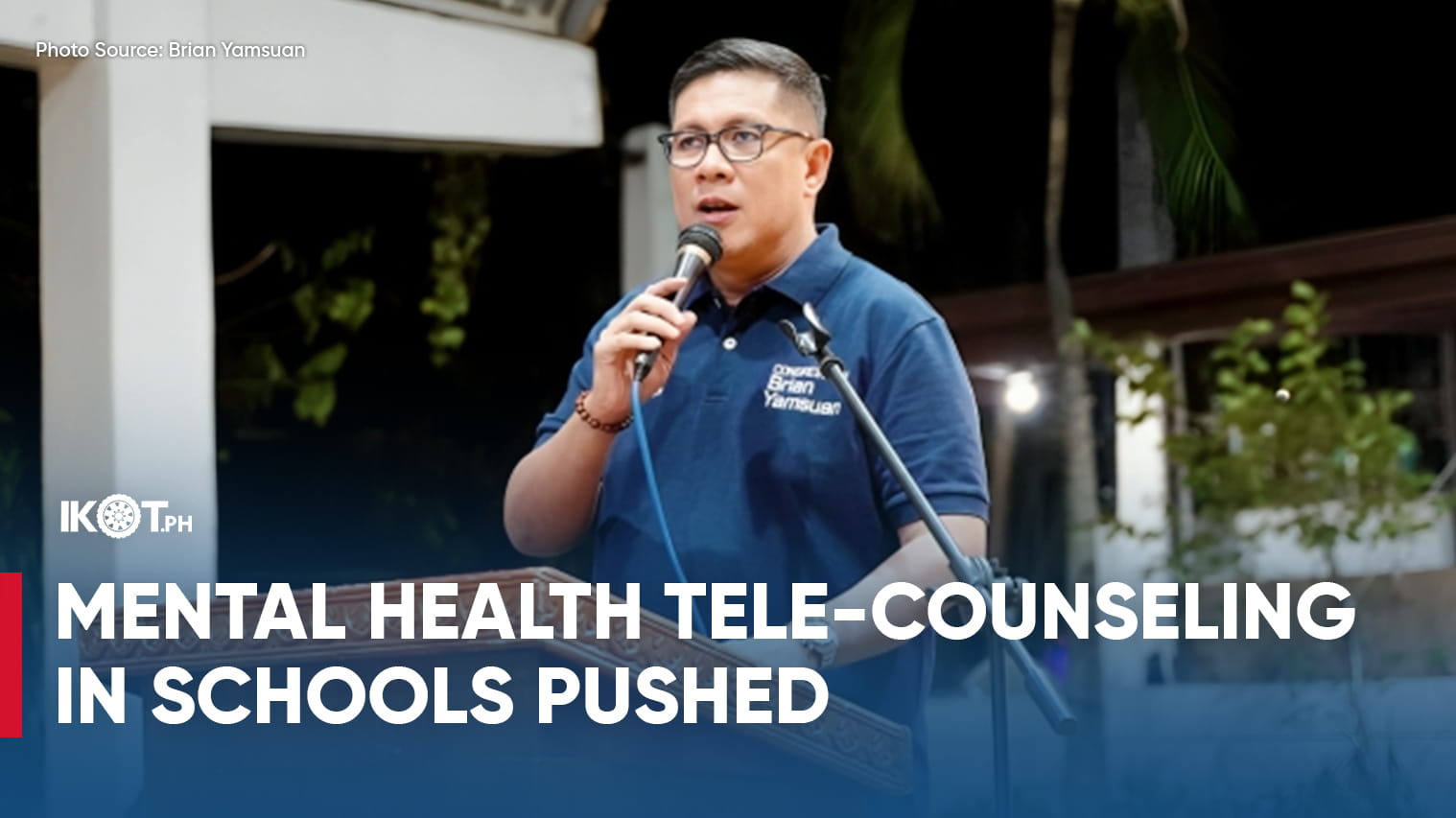
Parañaque 2nd District Representative Brian Raymund Yamsuan is eyeing the establishment of a free online-based counseling program in public schools to make anti-bullying and mental health support services easily accessible to students.
Yamsuan said his proposed tele-counseling program under House Bill (HB) 5240 will further expand the scope of the newly implemented school-based mental health support and child protection initiative of the Department of Education (DepEd).
A nationwide online support program which will tap the expertise of guidance counselors and licensed mental health professionals in offering secure teleconsultation services for students will be established under Yamsuan’s proposed measure.
“Our proposed legislation aims to address the acute shortage of guidance counselors and mental health professionals that are supposed to be physically present in our schools. Providing online mental health support services will ease the access of students to counseling and other interventions necessary for their well-being,” Yamsuan said.
Yamsuan said establishing an online-based mental health support system will also help improve the reporting and monitoring of cases involving bullying and other mental health challenges that students face in public schools.
According to DepEd Secretary Sonny Angara, the country continues to face a severe shortage of guidance counselors in schools, with only 4,069 licensed to do the job as of 2022. He added that over 4,000 counselor vacancies budgeted in 2024 are unlikely to be filled in the next five years, since universities are producing few graduates.
Yamsuan said establishing an online-based mental health support system will also help improve the reporting and monitoring of cases involving bullying and other mental health challenges that students face in public schools.
“Many students might find the act of physically speaking with a counselor awkward or difficult. By creating an online support program, students would be more comfortable in reporting cases of bullying or telling a guidance counselor about one’s mental health problems,” Yamsuan said.
Yamsuan commended Secretary Angara for recently implementing the Kaagapay program, which aims to strengthen the DepEd’s efforts in supporting the mental health of students and preventing bullying in public schools. The program taps parents, guardians and caregivers as “co-educators” to reinforce “values formation, positive discipline, and well-being at home” among elementary and secondary learners.
“Our proposed School Tele-counseling Act under House Bill 5240 will complement Secretary Sonny Angara’s initiatives to address the disturbingly high incidence of bullying and cases of mental health issues among students in public schools,” Yamsuan said.
Based on findings by the Second Congressional Commission on Education (EDCOM 2), bullying cases in public schools have reached alarming rates. The Philippines had the highest percentage of bullying among participating countries and territories in the Programme for International Student Assessment (PISA), based on results in 2019 and 2022.
According to DepEd Secretary Sonny Angara, the country continues to face a severe shortage of guidance counselors in schools.
According to PISA 2019, 65 percent of Filipino students reported being victims of any type of bullying at least a few times in a month, with 40 percent being bullied frequently (once a week or more). The PISA 2022 results show that one out three Filipino students are being bullied in schools.
Yamsuan said that under HB 5240, the tele-counseling program shall make use of a secure digital platform to deliver mental health services. These include, but shall not be limited to: individual teleconsultations, group counseling sessions, psychological first aid and referrals to specialized mental health professionals, services and facilities.
The tele-counseling program shall also strictly adhere to the provisions of the Data Privacy Act and other relevant guidelines for mental health practice.
To encourage mental health professionals to participate in the program, they will be granted continuing professional development credits duly recognized by the relevant professional regulatory board, and a monthly honorarium subject to the relevant guidelines of the Department of Budget and Management (DBM) and the Civil Service Commission (CCSC).
The Department of Health (DOH), in coordination with the DepEd, Commission on Higher Education (CHED), Department of Information and Communications Technology (DICT), DBM and relevant professional regulatory bodies are tasked as the lead implementing agencies under the bill.