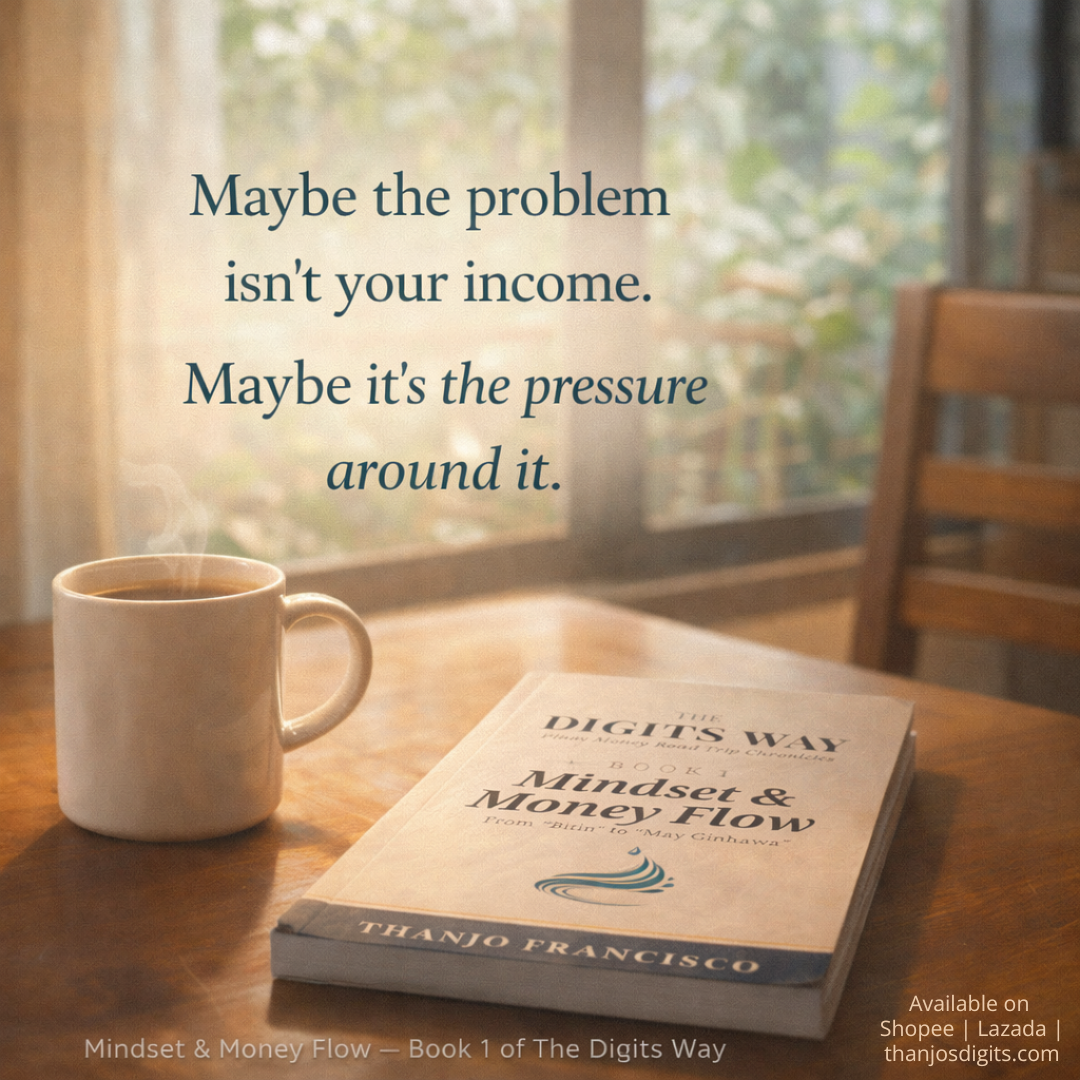
A deeper look at progress, pressure, and what “enough” really means
There is a quiet frustration many people don’t know how to name.
You earn more than you used to.
You’ve built systems meant to bring peace—not perfect ones, but routines, reminders, and habits that make money feel a little less chaotic.
You’re more disciplined, more intentional, more aware of your choices.
And yet, somehow, it still feels like you’re chasing something.
Bills are paid, but the relief is short-lived. A little savings appear, then quickly get assigned to the next responsibility. Even moments of progress are followed by a familiar thought:
“Parang bitin pa rin.”
For many Filipinos, this feeling is confusing. We were taught to believe that higher income automatically leads to lighter days. That once we cross a certain number, life should finally slow down.
But for a lot of people, that slowdown never comes.
One reason is that the pressure didn’t disappear—it simply moved.
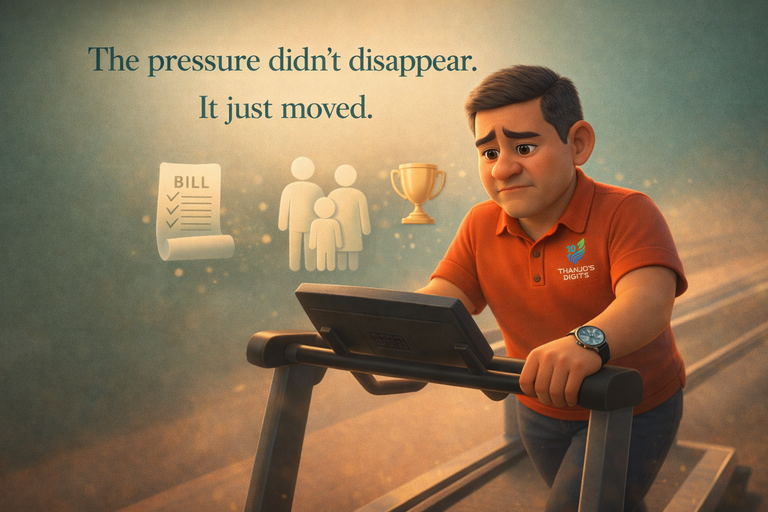
When income increases, expectations quietly adjust. Expenses grow to match new responsibilities. Family needs expand. Social comparisons shift. The goalposts move, often without us noticing.
Suddenly, the new income doesn’t feel like progress. It feels like maintenance.
This isn’t always about irresponsibility or lifestyle creep. More often, it’s about unexamined expectations.
We rarely pause to ask what the money is meant to support beyond survival. We just keep moving forward, assuming that the next increase will finally be enough.
But “enough” is not a number. It’s a sense of direction.
Without clarity, growth can feel like running on a faster treadmill. You’re moving more, earning more, doing more—but the sense of being behind remains.
This is especially true for those carrying quiet responsibilities.
Helping family.
Supporting siblings.
Covering shared expenses.
Stepping in when someone else falls short.
As income grows, so does the list of people and situations that depend on it. The money doesn’t just represent comfort—it represents reliability. And reliability carries weight.
So when people say, “Bakit parang wala lang?”
What they often mean is, “Bakit parang walang pahinga?”
The issue isn’t that earning more is wrong. Growth matters. Progress matters.
But growth without reflection can quietly turn into pressure.
Sometimes, the most important question isn’t, “How do I earn more?”
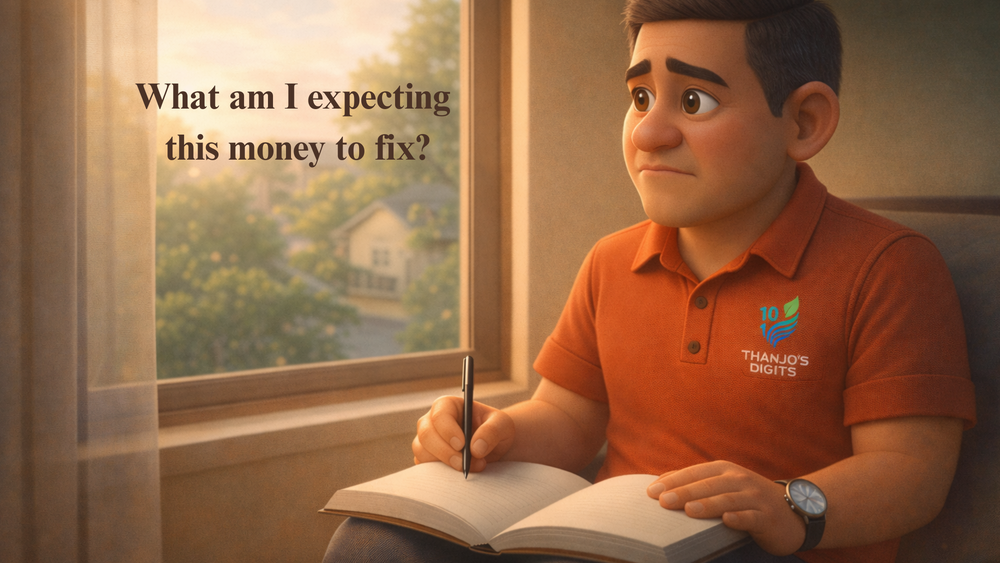
It’s, “What am I expecting this money to fix?”
Is it meant to provide safety?
Stability?
Freedom?
Or simply permission to rest?
When we don’t answer that question, we risk chasing income without ever arriving at ease.
Financial progress begins to feel different when income gains are paired with intention. When we define what “enough” looks like where you are right now. When we recognize that not all growth needs to be visible, dramatic, or immediately rewarding.
Sometimes, progress looks like fewer emergencies.
Sometimes, it looks like quieter thoughts at night.
And sometimes, it looks like the freedom to say no without guilt.
Earning more is not the enemy of peace.
But peace doesn’t automatically come with the raise.
It comes when growth is guided—not just by opportunity, but by clarity.

And often, realizing that is the first moment when earning more finally starts to feel like moving forward, not just keeping up.
When money gains direction, progress stops feeling like a chase and starts feeling like ground you can actually stand on.
Catch Thanjo’s personal finance column every Tuesday at 7 p.m. on IKOT.PH and across Facebook, X (Twitter), and Instagram.
DISCLAIMER:
The views and opinions of our partners and contributors expressed in this article are exclusively their own and are made in their personal capacities. They do not reflect the views, policies, or official stance of IKOT.PH, its editors, officers, or affiliates. As such, nothing contained herein shall be construed as professional advice or as an official declaration, endorsement, or position of IKOT.PH.