The Department of Education (DepEd) stressed the importance of a stronger alignment among educational institutions, training providers, industry partners and government agencies as it represented the Philippines in the 16th ASEAN Qualifications Reference Framework Committee (AQRFC) Meeting.
According to DepEd, building a future-ready workforce needs a common framework to link basic education, technical vocational education and training (TVET), higher education, and employment to prepare leaders in the transition from school to work.
Education Secretary Sonny Angara emphasized that strengthening the alignment of different sectors is important to prepare students for changing demands in the workforce.
“We are envisioning a more creative and innovative Filipino learner, which will be a significant boost to the industry.”
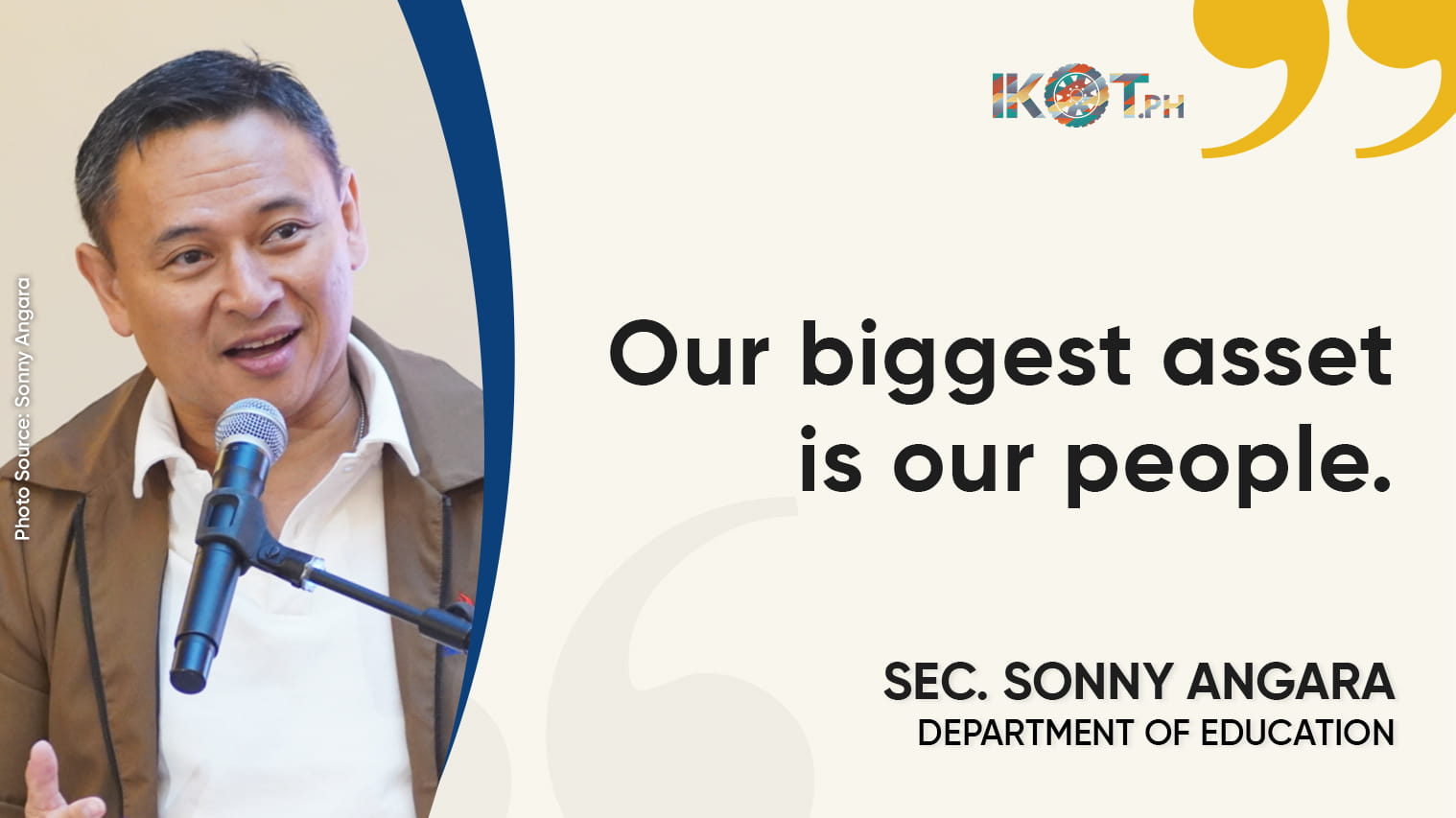
“Our biggest asset is our people. Under President Marcos Jr.’s leadership, we are envisioning a more creative and innovative Filipino learner, which will be a significant boost to the industry,” Angara said.
This can be seen in the continuous update of the Philippine Qualifications Framework (PQF), which aims to come up with a clearer pathway for learners and ensure that the lessons and skills from school will be acknowledged and value by the different sectors.
The updated PQF has eight levels aligned with the ASEAN Qualifications Reference Framework. It has a clear pathway between technical-vocational and higher education. The Senior High School is in Level 3, with the microcredentials formally incorporated to support lifelong learning and give students more flexibility to enhance their skills over time.
DepEd also stressed the need for stronger coordination with the Technical Education and Skills Development Authority (TESDA), Commission on Higher Education (CHED), and Department of Labor and Employment (DOLE) to be able to respond to the longstanding gap of education and the actual needs of work.
DepEd affirmed its support to come up with a unified labor market information system and expanded enterprise-based training and industry-led upskilling programs.
This step aims to give better support to learners in their education and training to better prepare them transition to technical-vocational programs and, ultimately, into the workforce.
The ASEAN meeting was also held following the formal submission of the Second Congressional Commission on Education (EDCOM 2) Final Report and the National Education and Workforce Development Plan (NatPlan) 2026–2035 to President Ferdinand Marcos Jr., which will strengthen the government’s whole-of-system approach in pushing for better education and workforce.
The revised PQF is expected to strengthen the alignment of education, training and employment, as well as the reforms pushed in the legislature including the proposed Lifelong Learning Development Framework Act of 2025, the expanded scope of prior learning, and better distance education policies.
Angara said this will need non-stop coordination and unified commitment among stakeholders for the implementation to succeed.
“The challenge now is execution.”
“We already see alignment under President Marcos’ leadership. The challenge now is execution—staying the course, aligning budgets and incentives, and holding ourselves jointly accountable for learning outcomes,” the education chief concluded.