

For many Filipinos, saying yes feels safer than saying no.
Yes keeps the peace.
Yes avoids awkwardness.
Yes feels kind, generous, and responsible.
And often, yes is genuine. We want to help. We don’t want to be the reason someone struggles. We don’t want to appear selfish, ungrateful, or “madamot.”
So we say yes—to requests, to favors, to financial help, to expectations that quietly pile up.
Over time, though, yes begins to cost more than we realize.
It costs time.
It costs energy.
And very often, it costs money.
But the real cost isn’t just what leaves our wallet. It’s what slowly leaves our sense of choice.
When saying yes becomes automatic, it stops being generosity and starts becoming an obligation. We give before we pause. We agree before we check our capacity. We commit before we ask ourselves if we actually can.
And that’s where the strain begins.
Because not all yeses come from the same place.

Some yeses come from responsibility.
And responsibility, when healthy, is necessary. It is what keeps commitments intact. It stabilizes families. It honors roles. It ensures that what must be carried is carried well.
But responsibility becomes sustainable only when it has boundaries. When you know what is truly yours to handle—and what is not. When you pace yourself instead of absorbing everything.
Other yeses come from generosity.
And generosity is beautiful when it is chosen. It expands impact. It supports others beyond obligation. It allows you to give from a place of strength.
But generosity becomes sustainable only when it comes from margin. From clarity. From the ability to say, “I can give this without destabilizing myself.”
The problem begins when responsibility and generosity blur.
When duty turns into endless availability.
When generosity becomes proof of worth.
When saying yes feels required—even when capacity says otherwise.
This is where the emotional cost builds.
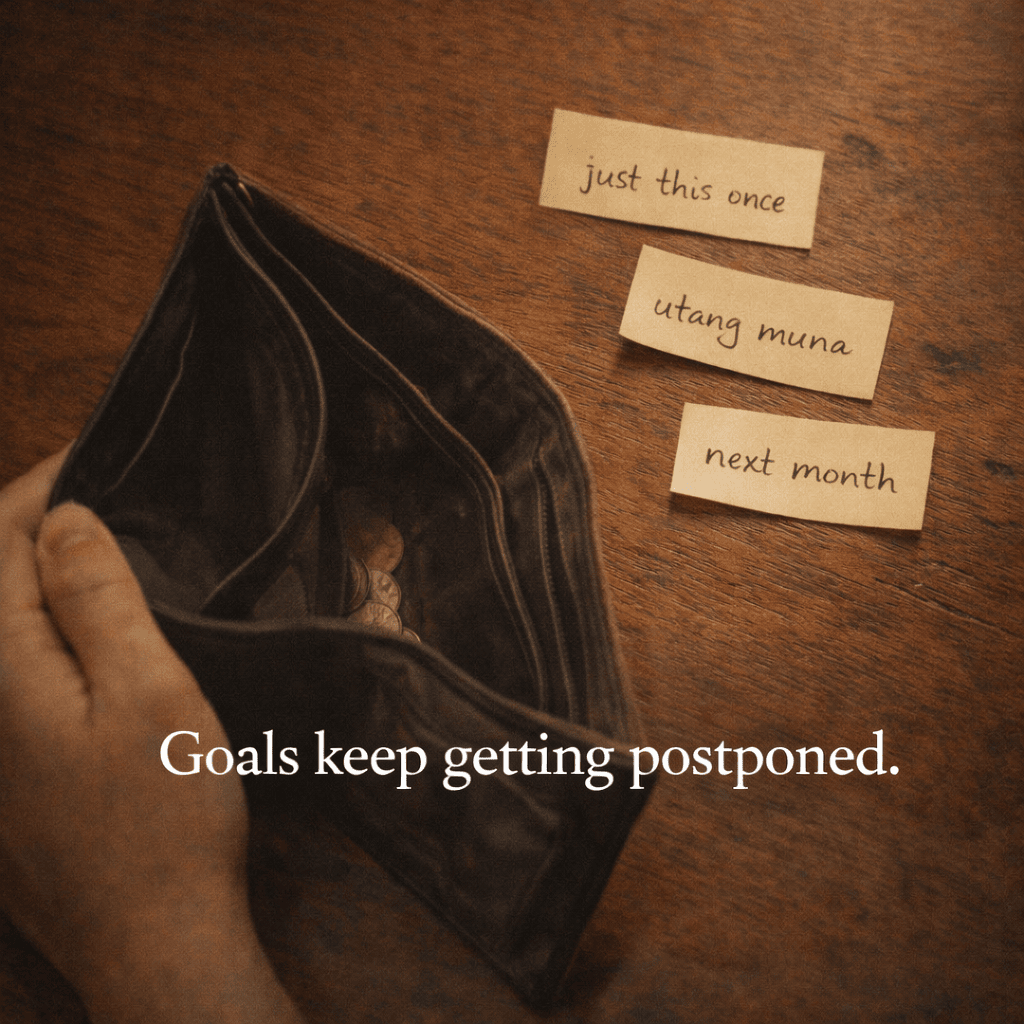
A contribution here. A “just this once” there. Covering something because it’s easier than explaining why you can’t. Individually, each decision feels minor. Together, they quietly distort your cash flow.
Not always dramatically—but steadily.
Money begins to feel pre-assigned.
Your margin shrinks before you’ve even made your own plans.
Future goals are delayed—not because they’re impossible, but because they’re constantly postponed.
What makes this pattern harder to confront is the emotional risk underneath it.
Saying no doesn’t just feel uncomfortable.
It feels destabilizing.
What if they think I’ve changed?
What if they think I’m doing better and now I’m withholding?
What if they’re disappointed?
So instead of saying no, we absorb the discomfort ourselves. We stretch. We adjust. We make it work.
But when you repeatedly override your own limits, you begin to lose clarity about what you can actually sustain. Decisions become reactive. Budgets feel tight—not always because income is insufficient, but because too many commitments were made without pause.
This is the emotional cost of always saying yes.
It erodes choice.
And without choice, even generosity feels heavy.
Boundaries, in this context, are often misunderstood.
They’re not about being cold.
They’re not about becoming selfish.
And they’re not about refusing to help.
Boundaries are about honesty.

They are the pause between request and response.
They are the space where you check your numbers before answering.
They are the discipline of asking, “Can I give this without compromising something essential?”
Sometimes, a boundary sounds like:
“Hindi ko kaya ngayon.”
“Hindi ito pasok sa budget ko.”
“Kailangan ko munang unahin yung iba.”
These statements can feel uncomfortable at first. They may invite questions. They may even disappoint someone.
But guilt is not always a sign that you’re doing something wrong. Often, it’s a sign that you’re doing something new.
Saying no does not cancel generosity. It clarifies it.
Because responsibility keeps your life steady.
Generosity extends it outward.
One builds the ground you stand on.
The other determines how far your influence can reach.
But neither can last without limits.
Financial stability is not only built through earning more or saving consistently. It is also built through protecting your margin—your time, your energy, your liquidity—from commitments that exceed your capacity.
Generosity is strongest when it is sustainable.
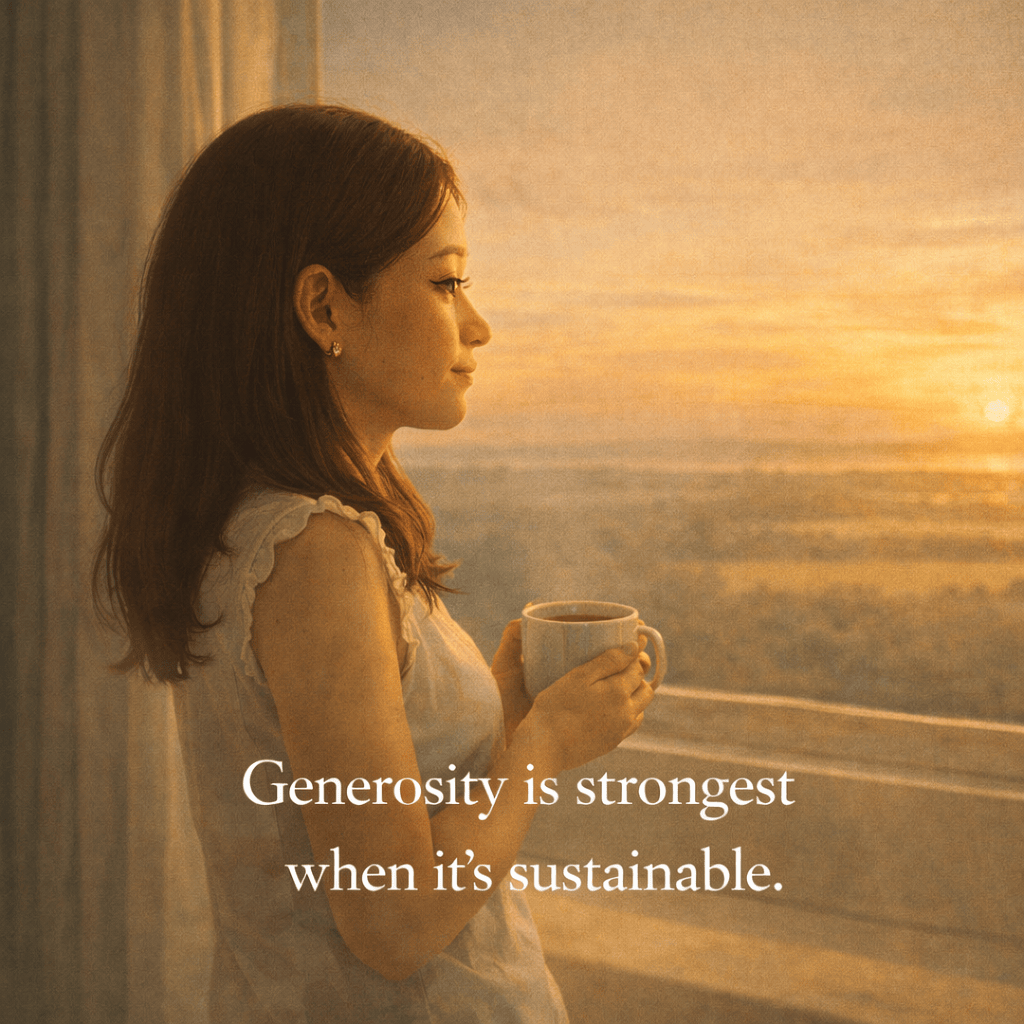
And sustainability requires choice.
When you protect your ability to choose, your yes becomes powerful again—not automatic, not pressured, but deliberate.
And generosity that is deliberate lasts longer than generosity driven by fear of disappointing others.
True financial maturity isn’t about giving less—it’s about giving in ways that allow both the giver and the future to remain steady.
Catch Thanjo’s personal finance column every Tuesday at 7 p.m. on IKOT.PH and across Facebook, X (Twitter), and Instagram.
DISCLAIMER:
The views and opinions of our partners and contributors expressed in this article are exclusively their own and are made in their personal capacities. They do not reflect the views, policies, or official stance of IKOT.PH, its editors, officers, or affiliates. As such, nothing contained herein shall be construed as professional advice or as an official declaration, endorsement, or position of IKOT.PH.