
In a major step toward faster and more transparent public service, the Bureau of Customs (BOC) formally launched its new Electronic Certificate of Payment (e‑CP) System, advancing President Ferdinand Marcos Jr.’s directive to fast‑track digital transformation across government.
The enhanced platform replaces the previous e‑CP process—which relied on manual validation, limited automation, and fragmented data sharing—with a fully automated, real‑time system that directly links the BOC and the Land Transportation Office (LTO).
The new e‑CP significantly reduces processing time, strengthens data integrity, and improves service delivery for both government agencies and industry stakeholders.
The e‑CP System is an online application platform that facilitates the submission, processing, and transmission of motor vehicle, components, and parts information, together with the corresponding duties and taxes paid, from the BOC to the LTO.
Compared to the previous e‑CP, which required manual verification and separate coordination between agencies, the new system enables seamless and secure data sharing, supporting faster and more efficient vehicle registration processes.
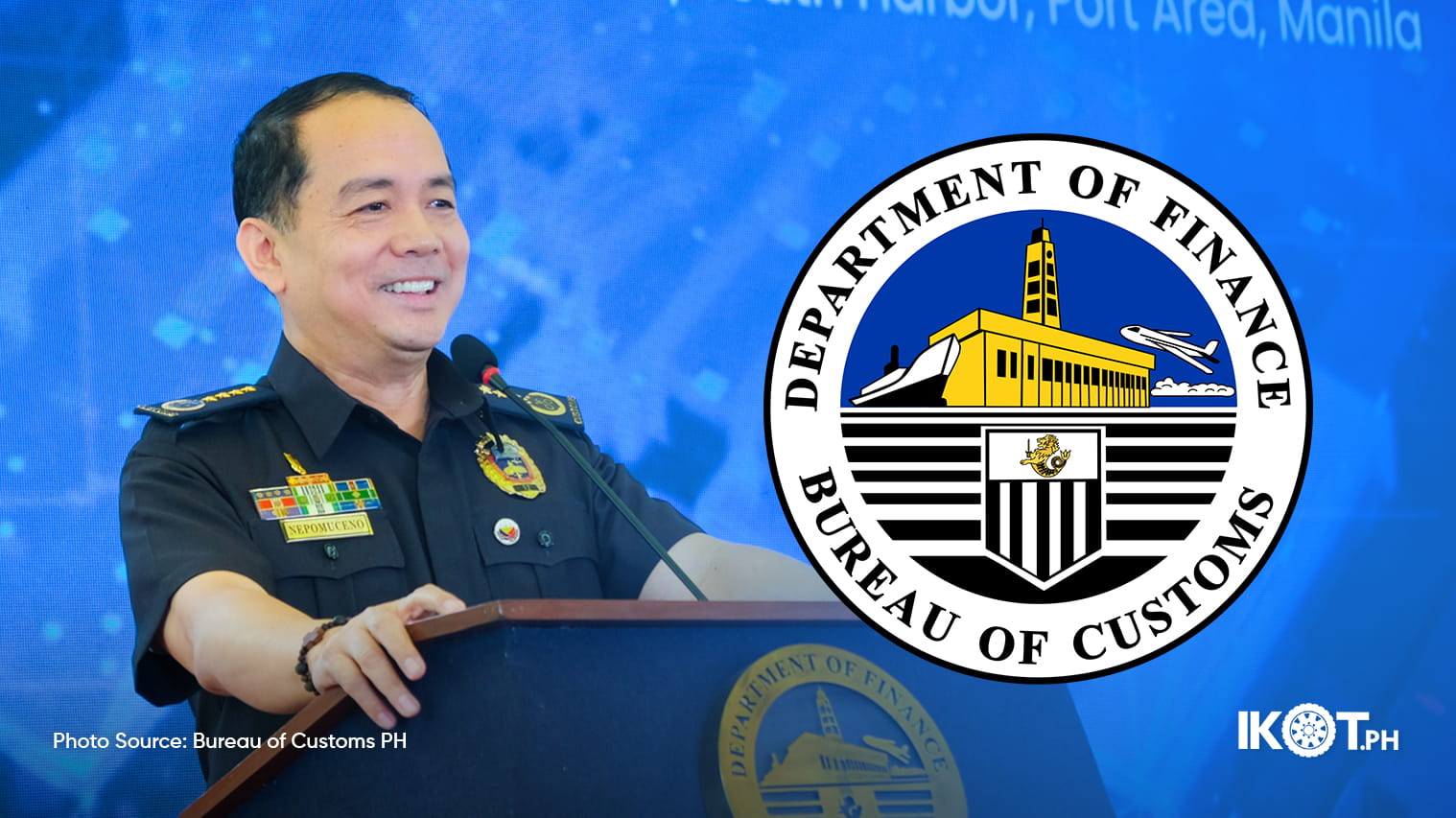
In his keynote address, Commissioner Ariel Nepomuceno emphasized that the new e‑CP strengthens inter‑agency coordination while enhancing transparency and ease of doing business.
“We are making customs transactions faster, more secure, and more transparent for our stakeholders.”
“The new e‑CP System is a clear demonstration of the Bureau’s commitment to modernization and whole‑of‑government collaboration. By automating validation, eliminating redundant processes, and ensuring real‑time data exchange with the LTO, we are making customs transactions faster, more secure, and more transparent for our stakeholders,” Nepomuceno said.
The system integrates with the BOC’s existing Electronic‑to‑Mobile (E2M) System to automatically validate payment records and Single Administrative Document (SAD) details, allowing for quicker processing and transmission of information to the LTO.
It also provides stakeholders with real‑time tracking of their e‑CP application status, while strengthening data integrity through enhanced validation and audit mechanisms.
The platform further features a feedback mechanism with the LTO’s Land Transportation Management System (LTMS), enabling automatic updates on registered license plates and other vehicle registration details. This closed‑loop integration ensures accuracy, traceability, and improved monitoring of motor vehicle importation transactions—addressing longstanding issues associated with manual reconciliation under the previous system.
Assistant Secretary Marcus Lacanilao of the LTO expressed support for the initiative, underscoring the value of digital integration in improving public service delivery.
“For many years, inter-agency coordination relied on manual processes in separate systems, but the growing scale of transaction now requires more integrated approaches,” Lacanilao said.
“The new electronic certificate of payment system is a direction.”
“The new electronic certificate of payment system is a direction; information that previously required several layers of validation can now move across system more efficiently, allowing agencies to rely on a shared verifiable records—We at the LTO look forward to continuing our cooperation with the BOC as we move forward to a more integrated and modern public service,” he added.
The launch ceremony was attended by officials from the Department of Finance (DOF), the Department of Transportation (DOTr), and the Land Transportation Office (LTO), as well as industry partners from the Chamber of Automotive Manufacturers of the Philippines, Inc. (CAMPI) and the Association of Vehicle Importers and Distributors (AVID), who are among the primary users of the system.
Officials from partner agencies also delivered messages of support during the launch, including Department of Transportation Secretary Giovanni Lopez and Department of Finance Undersecretary Rolando Ligon Jr., who emphasized the importance of inter‑agency cooperation in advancing government digitalization and improving regulatory efficiency.
Industry partners, including CAMPI and AVID, welcomed the launch of the new e‑CP System, noting that the platform is expected to streamline compliance requirements, reduce transaction costs, and improve predictability in motor vehicle importation and registration.
The Bureau of Customs remains committed to implementing initiatives that promote efficiency, transparency, and digital transformation in customs operations, in support of the government’s broader agenda to enhance public service delivery and facilitate legitimate trade.