
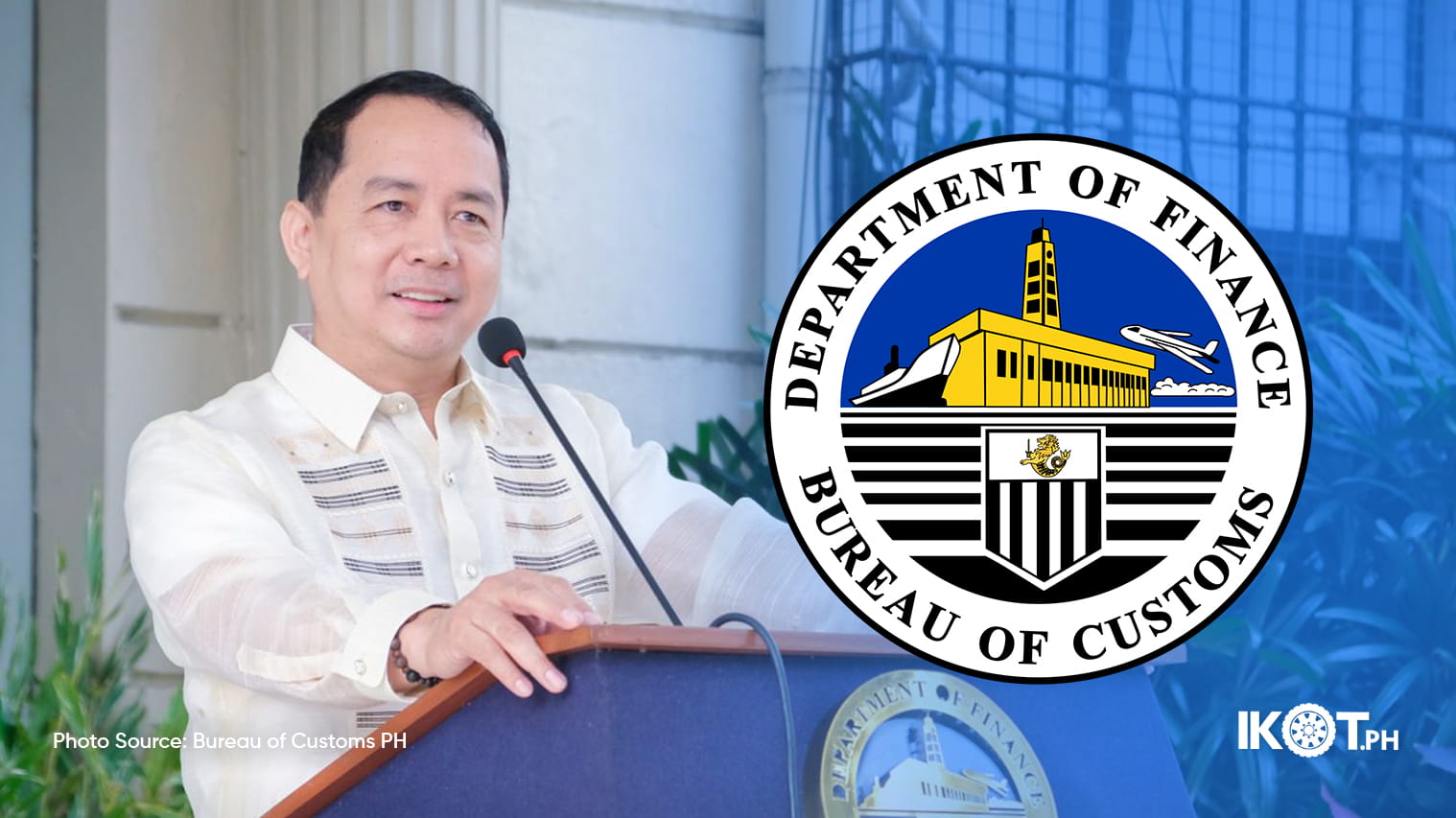
To further reinforce its partnership with the private sector, the Bureau of Customs (BOC) convened the 5th General Assembly of the Customs Industry Consultative and Advisory Council (CICAC), bringing together key industry stakeholders to advance cooperation and support more efficient customs processes.
The assembly also served as a platform to review ongoing initiatives, exchange updates, and align priorities between the Bureau and its partners, in line with the directive of President Ferdinand Marcos Jr. to enhance ease of doing business, streamline government processes, and strengthen public-private collaboration.
A highlight of the event was the strong expression of support and commendation from the private sector for the Bureau’s current leadership, with stakeholders from various parts of the country presenting their manifestos of support and reaffirming their confidence in the agency’s direction.
Chinese-Filipino Business Club, Inc. President Gerald Uy Chan conveyed his support for the Bureau, stating, “Because of your leadership, bridges were built; because of your leadership, trust was restored; and because of your leadership, progress became possible,” pertaining to Commissioner Ariel Nepomuceno.
Chan further emphasized the value of the Council.
“For the first time the private sector is not just heard, we are engaged. Not just consulted, we are included.”
“What makes CICAC truly valuable is simple: it works. For the first time the private sector is not just heard, we are engaged. Not just consulted, we are included. Not just informed, we are part of the solution. And through CICAC communication has become direct, honest, and efficient. Deretso na at wala nang paligoy-ligoy, and in that simplicity, we found something powerful, which is trust. Indeed, the Bureau of Customs has transformed. From an agency once avoided to an institution now respected, engaged, and trusted,” he remarked, underscoring the growing confidence of the private sector in the Bureau, highlighting the tangible improvements in engagement, transparency, and trust fostered under the current administration.
During the conference proper, the BOC presented updates on deliverables from previous CICAC meetings, key presentations on ongoing operational improvements and modernization initiatives, including efforts to ease port congestion, the continued rollout of the Electronic Customs Processing (eCP) System, and developments on a proposed new Customs Processing System aimed at enhancing service delivery and ensuring more efficient and reliable cargo clearance processes.
Private sector representatives likewise shared valuable insights on prevailing industry conditions, particularly on factors influencing the movement of goods and overall logistics operations, highlighting opportunities for sustained coordination, clearer and more consistent procedures, and stronger alignment among stakeholders to further enhance efficiency across the supply chain.
In his remarks, Nepomuceno emphasized the importance of harmonizing efforts between the Bureau and its stakeholders to ensure smoother business processes, improved revenue collection, and greater contributions to national development.
The customs chief reiterated the agency’s commitment to maintaining an open and responsive dialogue with its partners.
“We are not wasting your time, we are serious in identifying what are your concerns with the Bureau of Customs.”
“Our commitment to you is; we are not wasting your time, we are serious in identifying what are your concerns with the Bureau of Customs, and on the other hand we are also interested to let you know what we need from you,” he said.
“Because again we are in the middle of a challenging aspiration that we are transforming the Bureau of Customs for you, and as I always mention too, that the very good news is and we don’t have to second guess, the President himself is hoping a modern Bureau will be his legacy. So, I am honored to be part of that mission, and I need your help in making this mission successful,” Nepomuceno added.
The CICAC continues to serve as a vital platform for dialogue between the BOC and its partners, supporting the shared goal of a more efficient, predictable, and globally competitive customs environment.