
Manila City Mayor Francisco “Isko” Moreno Domagoso said his administration is stepping up efforts to address rising prices of goods by combining direct financial relief and aggressive public spending, as inflation remains one of the top concerns of Filipinos amid the global oil shock driven by escalating tensions in the Middle East.
Domagoso said the city is focusing on keeping money moving in the local economy to soften the impact of higher fuel costs now pushing up the prices of basic goods and services.
“The city is focusing on keeping money moving in the local economy to soften the impact of higher fuel costs now pushing up the prices of basic goods and services.”
The move comes as controlling inflation remains the most urgent national concern of Filipinos, with 59% citing it in a recent Pulse Asia survey.
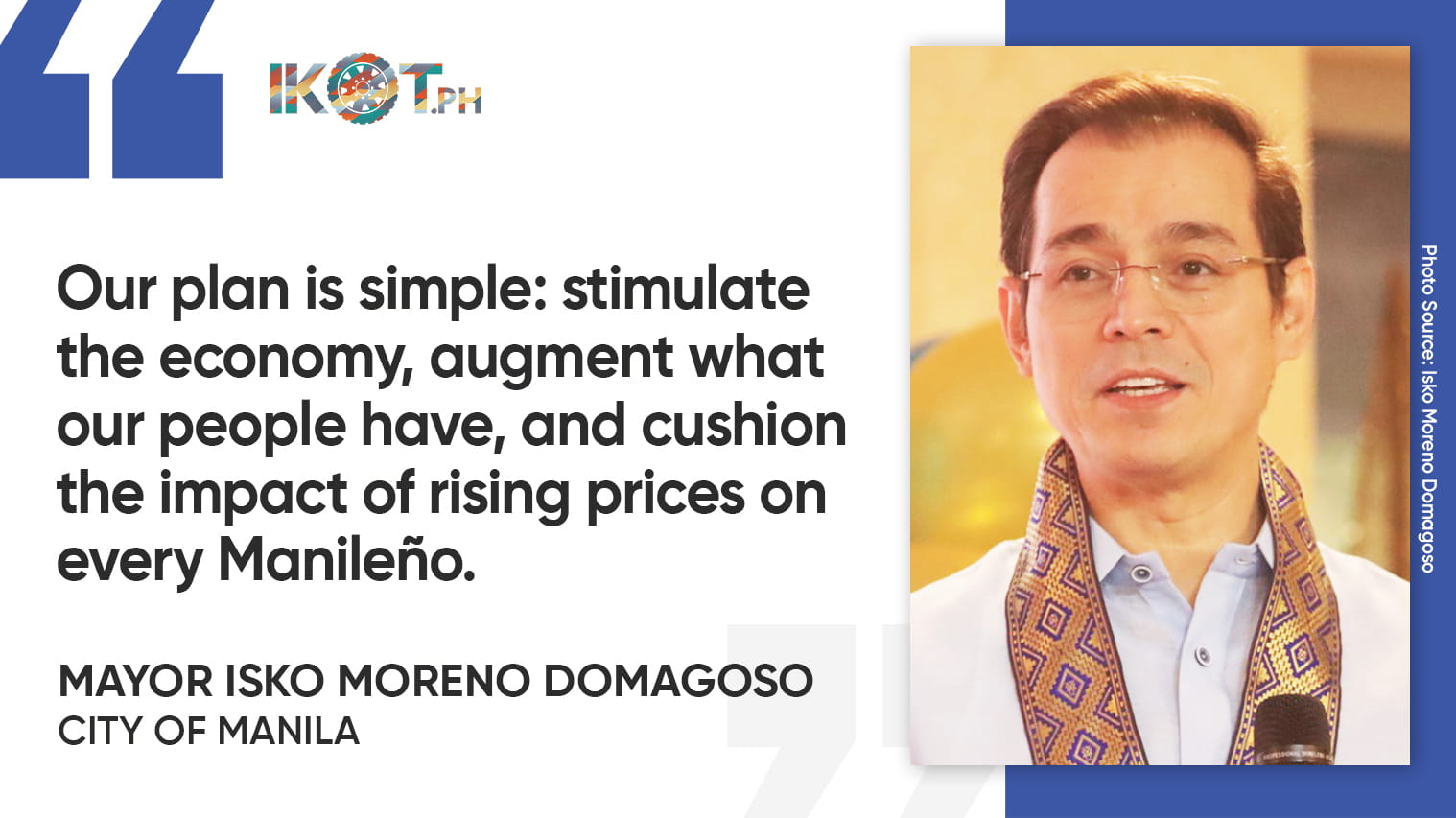
“Our plan is simple: stimulate the economy, augment what our people have, and cushion the impact of rising prices on every Manileño,” the mayor said.
At the center of the plan is the ₱1.76-billion stimulus package, meant to put cash directly into the hands of residents and keep spending moving in local communities.
The stimulus will directly benefit around 330,000 Manileños, or about 15% of the city’s population, with a significant portion allocated to social amelioration programs covering senior citizens, solo parents, and persons with disabilities, as well as educational assistance and incentives for public sector workers.
“The city is pushing ahead with major infrastructure projects to create jobs and keep economic activity going.
At the same time, he said the city is pushing ahead with major infrastructure projects to create jobs and keep economic activity going.
Among these are the construction of the Pamantasan ng Lungsod ng Maynila (PLM) Allied Health Sciences building, the Binondominium 2 in-city vertical housing project, and the redevelopment of Ramon Magsaysay High School.
Domagoso said the city is combining direct cash aid and ongoing government spending to keep the local economy moving, stressing that stronger spending power and more jobs will help families cope with rising prices.