
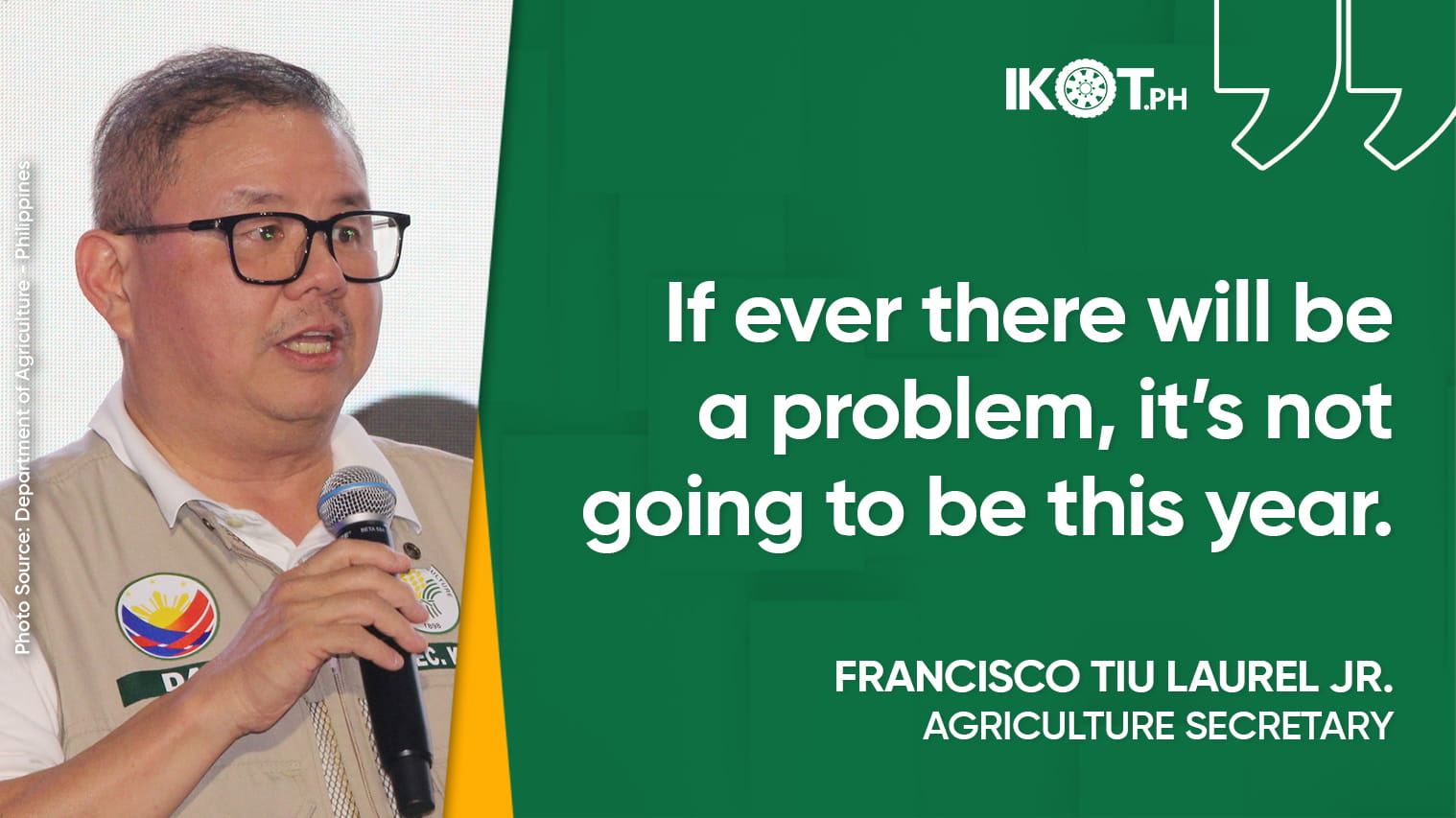
Agriculture Secretary Francisco Tiu Laurel Jr. struck an optimistic tone on the country’s food security outlook, assuring the public that government measures are keeping rice supply stable despite rising global oil prices and farm input costs.
At the same time, Tiu Laurel firmly pushed back against claims raised in recent hearings that imported rice is being used in the P20-per-kilo rice program.
“Totally not true,” the agriculture chief said, stressing that the initiative uses only rice purchased by the National Food Authority (NFA) from local farmers—reinforcing both affordability for consumers and support for domestic producers.
“In the future, if domestic rice production contracts sharply, imported rice may be used to support the P20 program.”
But the agriculture head did not discount that in the future, if domestic rice production contracts sharply, imported rice may be used to support the P20 program.
While acknowledging the pressures brought by higher fuel and fertilizer prices, he said that these remain manageable given the actions taken by the government under the direction of President Ferdinand Marcos Jr.
Tiu Laurel noted that projections of a 20 percent decline in palay production represent “worst-case scenarios,” particularly if no interventions are made. With government action already underway, such outcomes are not seen as inevitable.
The current indicators point to a comfortable supply position. The Philippines continues to benefit from strong global rice availability, with major exporters such as India and Vietnam in peak harvest season.
Locally, NFA warehouses are nearly full, backed by a solid domestic harvest.
“If ever there will be a problem, it’s not going to be this year,” he said, indicating that 2026 supply remains secure.
The Department of Agriculture has also moved quickly to cushion the impact of rising costs.
Within days of escalating tensions in the Middle East that drove oil prices higher, the agency rolled out a P10-billion assistance package for farmers and fisherfolk, alongside fuel subsidies and targeted interventions. Rice was prioritized, followed by other key commodities, reflecting a focused and phased response strategy.
“The government is ready to scale up support if needed.”
Tiu Laurel said the government is ready to scale up support if needed. Estimates point to an additional P20 billion for farm inputs and P10 billion for fisherfolk assistance to further strengthen production and livelihoods. These proposed measures aim not only to offset cost pressures but also to sustain output levels.
Importantly, he highlighted the availability of alternatives to expensive inputs, such as biofertilizers and other non-fossil-based options, which could help farmers maintain yields while lowering costs.
Tiu Laurel also underscored the government’s readiness to keep markets stable through calibrated importation when necessary, ensuring ample supply without undermining local producers.
Overall, he said that while challenges persist, early action, strong inventory levels, and flexible policy tools are helping position the country to maintain food security and protect both farmers and consumers in the months ahead.