
Senator Bong Go renewed his call for the urgent consideration of his proposed fuel relief measure, emphasizing the need for a ready legal framework that can protect ordinary Filipino consumers from sudden increases in basic household expenses, including electricity and water bills.
Go appealed as power consumers faced higher electricity bills in April.
Various media reports quote the Manila Electric Company (Meralco) as attributing power hikes to higher generation charges, increased summer demand, and weakening of the Peso versus the US Dollar.
For the veteran legislator, the April bill shock underscores the need for mechanisms that can provide households with breathing space should fuel-related pressures begin to impact essential services.
“Kung tataas pa lalo ang singil sa kuryente o iba pang pangunahing gastusin dahil sa fuel crisis, ang mahalaga ay hindi mabibigla ang mga ordinaryong Pilipino.”
“Kung tataas pa lalo ang singil sa kuryente o iba pang pangunahing gastusin dahil sa fuel crisis, ang mahalaga ay hindi mabibigla ang mga ordinaryong Pilipino,” the seasoned lawmaker said. “Maraming minimum wage earners ang halos wala nang natitirang take-home pay. Dapat may nakahandang paraan para maibsan ang bigat sa kanilang bulsa.”
Generally, electricity consumption rises during the hot season, adding pressure on household bills as more consumers rely on cooling appliances. It has yet to be determined whether power rates will rise again in May, months into the global fuel crisis.
Go filed Senate Bill No. 2033, or the proposed Fuel Crisis Immediate Relief and Response Bill, which seeks to provide targeted relief to Filipino households during periods of fuel crisis.
The measure proposes deferment of payments for basic utilities such as electricity and water, as well as temporary suspension of mandatory contributions like PhilHealth, SSS, GSIS, etc.
During the public hearing of the Senate committee on Proactive Response and Oversight for Timely and Effective Crisis Strategy (PROTECT) on April 13, he said Congress should not wait until the impact of rising fuel costs becomes more severe before preparing relief measures.
“Kami naman po rito sa Senado, handa po kaming magpasa ng batas kung kakailanganin, tulad po ng Bayanihan 1 and 2 noong 2020,” Go said, referring to the emergency measures passed during the COVID-19 pandemic.
“Kung hindi maiiwasan ang pagtaas ng singil sa kuryente, huwag naman sana biglaan at isang bagsakan para hindi mabigat sa mga kababayan natin.”
He also pressed energy regulators on possible ways to shield consumers from the immediate impact of higher electricity charges, asking whether the government could help maintain a temporary status quo in the rates being passed on to households.
“Kung hindi maiiwasan ang pagtaas ng singil sa kuryente, huwag naman sana biglaan at isang bagsakan para hindi mabigat sa mga kababayan natin. Mas makakabuti kung ipapamahagi ito sa mas mahabang panahon para hindi sabay-sabay ang epekto sa kanilang buwanang gastos,” Go said.
At the center of the proposal is a utilities moratorium intended to help households manage recurring expenses during fuel-related economic pressure. Under the measure, payments for essential services may be deferred, giving affected families more flexibility in allocating limited income for food, transportation, medicine, and other urgent needs.
He acknowledged that there has been a series of fuel price rollbacks, easing some pressure on consumers. However, Go said the recent volatility in oil prices and the continuing uncertainty tied to the crisis in West Asia should serve as a lesson for policymakers.
“Maganda po na may mga rollback, at malaking tulong ‘yan kahit paano. Pero ang aral dito, hindi tayo dapat umaasa lang sa pagbaba ng presyo,” he said. “Kapag may krisis, dapat may batas na handang umalalay sa mga konsyumer.”
Go said relief measures must be designed with low-income households in mind, particularly those who cannot easily absorb sudden increases in monthly bills.
“Para sa mga pamilyang sakto lang ang kinikita, kahit maliit na dagdag sa kuryente, malaking bawas na sa pagkain, pamasahe, o gamot,” he said. “Kaya dapat may mekanismo para hindi sila basta na lang malulunod sa sabay-sabay na bayarin.”
Go also said the government’s experience during the pandemic showed that temporary relief mechanisms can help families survive periods of economic strain. While the present situation is different, he said the principle remains the same: reduce immediate pressure on households while longer-term solutions are being pursued.
“Mas mabuti nang nakahanda po tayo kesa naman dun pa tayo magmamadali,” he said.
Go said the proposed fuel relief bill should be treated as a practical safeguard for consumers, especially at a time when external shocks can quickly affect the cost of power, transport, and basic goods.
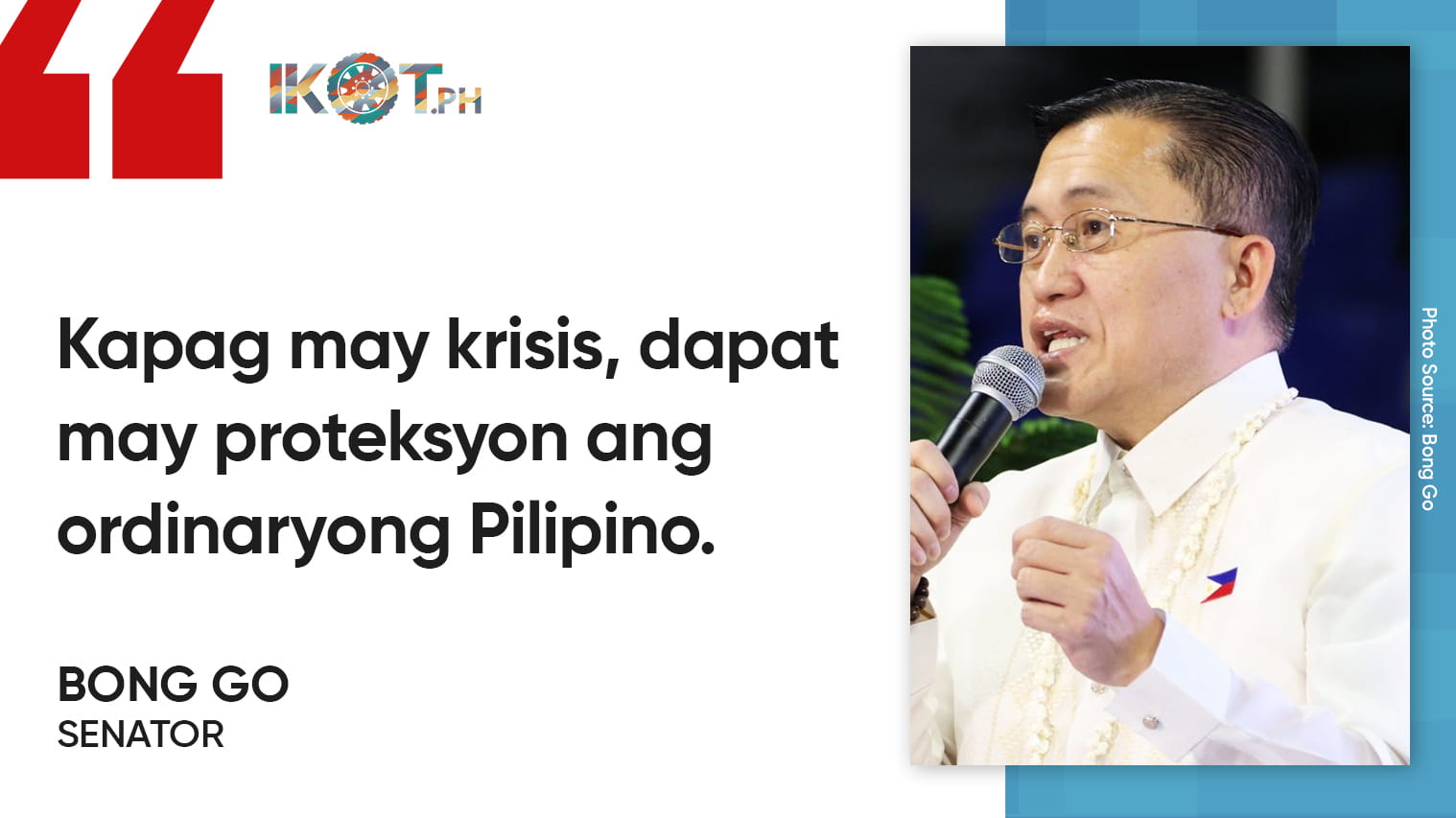
“Kapag may krisis, dapat may proteksyon ang ordinaryong Pilipino,” he said. “Hindi dapat sila ang unang mabigla at pinakahuling matulungan.”