
Philippine agriculture sector, with improving rice output and steady gains in livestock and poultry expected to offset a weak first-quarter performance, Agriculture Secretary Francisco Tiu Laurel Jr. said, even as emerging risks cloud the outlook later this year.
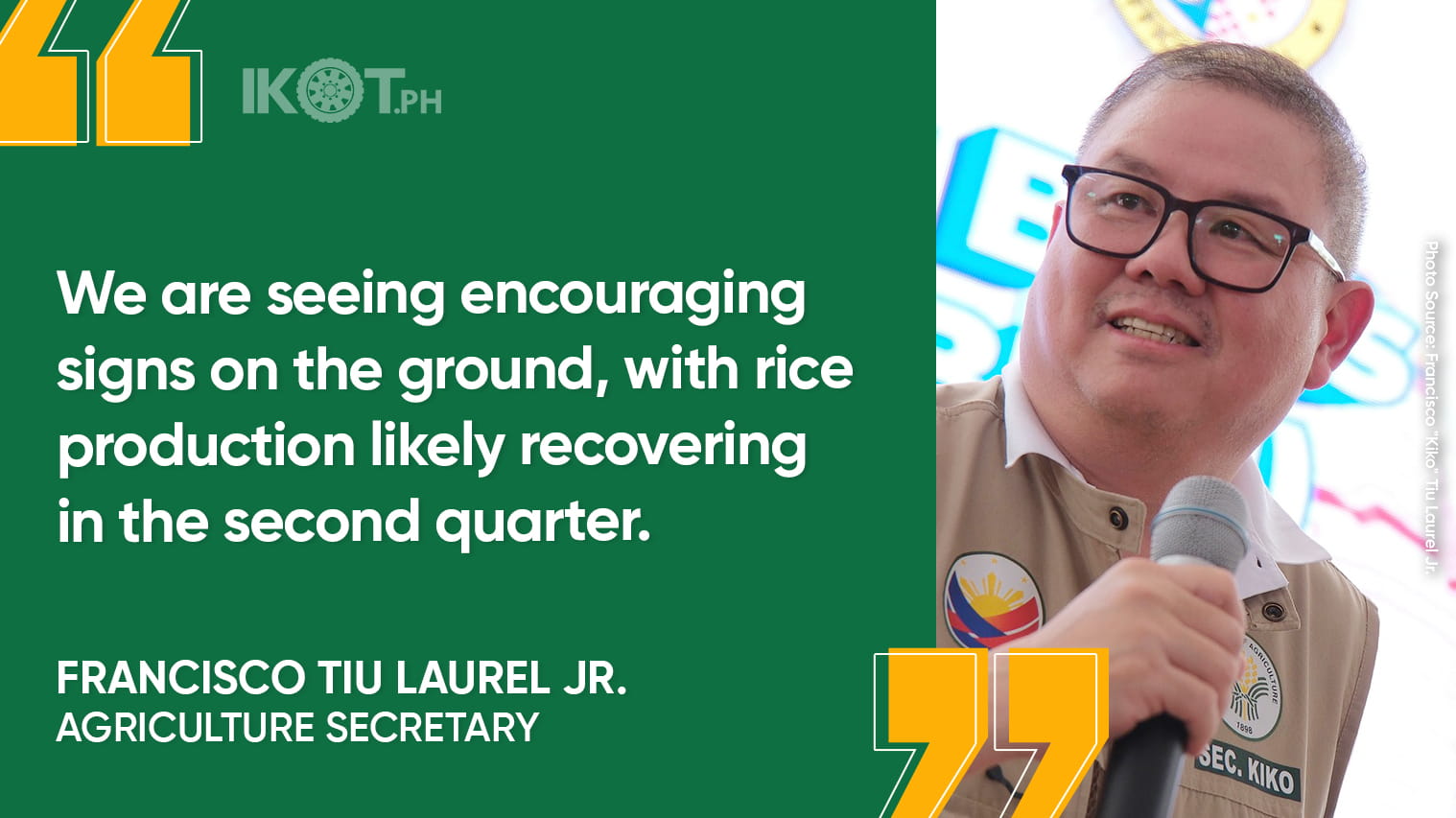
“We are seeing encouraging signs on the ground, with rice production likely recovering in the second quarter as planting conditions normalize, palay prices improve, and government interventions take effect,” Tiu Laurel said.
“The continued strength of our livestock and poultry sectors is helping cushion overall output and providing stability to food supply.”
“At the same time, the continued strength of our livestock and poultry sectors is helping cushion overall output and providing stability to food supply,” the agriculture chief added.
The upbeat outlook follows a soft start to 2026, as agriculture and fisheries production slipped 0.3 percent to P437.52 billion in the January to March period, based on constant 2018 prices. The decline was driven by weaker crop and fisheries output, underscoring the sector’s vulnerability to weather disruptions and price volatility.
Crop production, which accounts for nearly 56 percent of total output, fell 2.4 percent to P243.62 billion, weighed down by a drop in rice production. Palay output declined 6.26 percent to 4.4 million metric tons, reflecting the lingering impact of typhoons that hit late in 2025, as well as damaged irrigation systems.
The agriculture head noted that softer farmgate prices prior to the government’s temporary rice import restrictions from September to December also discouraged planting.
Fisheries output likewise contracted, with production value down 6.1 percent to P52.34 billion, pointing to persistent structural and environmental challenges.
Still, the broader picture showed pockets of resilience. Livestock output rose 5.1 percent to P60.74 billion, with hog production up 6.4 percent, while poultry expanded 7.1 percent to P80.83 billion, supported by steady demand for affordable protein.
Agriculture contributes roughly 9 percent to gross domestic product and accounts for one in every five jobs in the country. Yet millions of farmers and fisherfolk remain among the poorest, even as food prices heavily influence inflation, which consequently determine monetary policy and business costs.
Tiu Laurel cautioned that risks remain.
“While we expect a stronger second quarter, the impact of higher oil prices on transport and inputs, particularly fertilizer, as well as the potential effects of an El Niño-induced drought, could weigh on production in the second half.”
“While we expect a stronger second quarter, the impact of higher oil prices on transport and inputs, particularly fertilizer, as well as the potential effects of an El Niño-induced drought, could weigh on production in the second half,” he said.
Tiu Laurel said the first quarter weakness reflected temporary disruptions rather than a structural decline. He said sustained support and timely interventions position the sector for recovery while managing emerging headwinds.
The outlook points to a gradual rebound, though restoring crop output—particularly rice—will be key to stabilizing both farm incomes and consumer prices.