
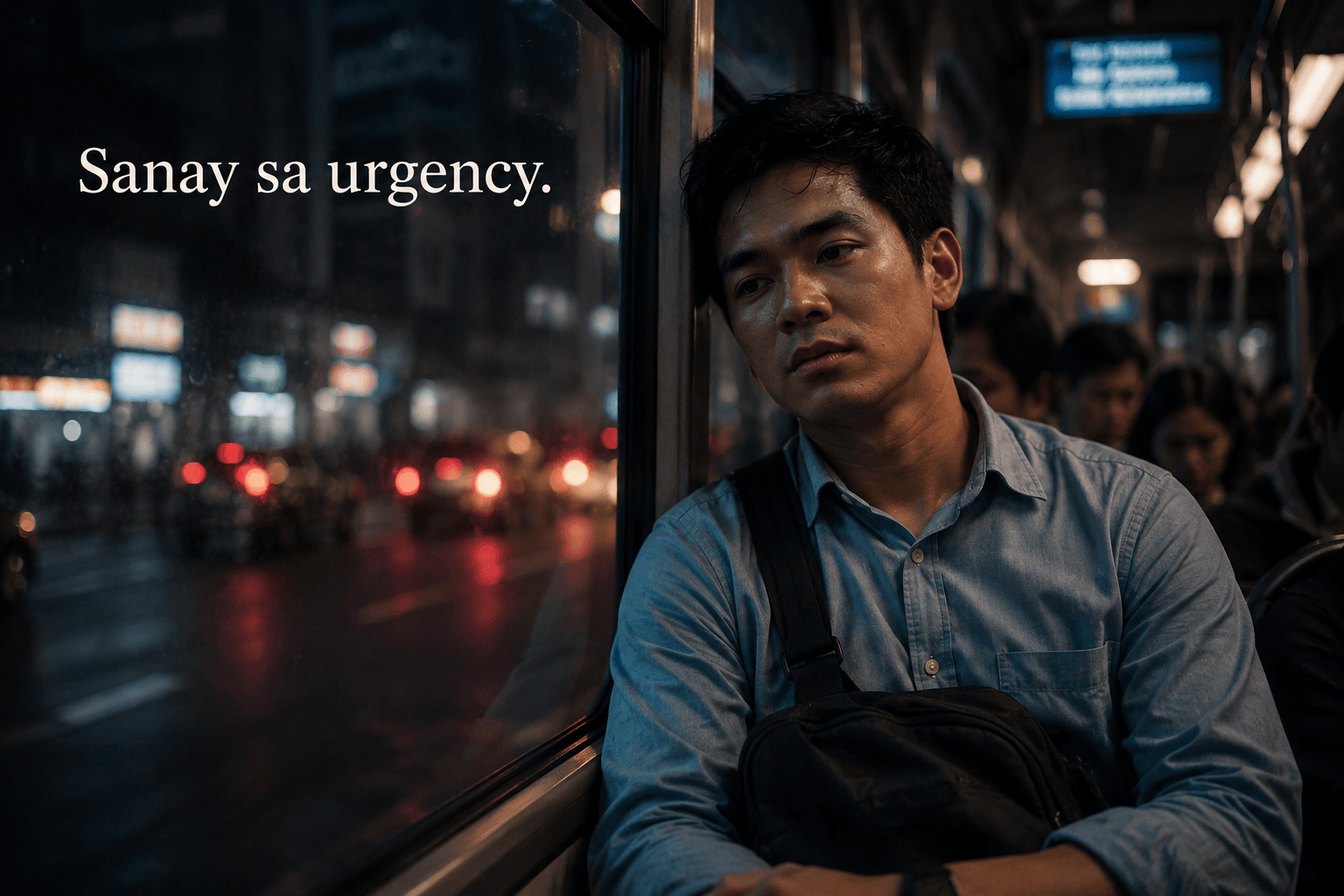
For a long time, survival has a very specific feeling.
It’s urgency.
Yung laging may hinahabol.
Laging may kailangang ayusin.
Laging may iniisip na baka may biglang mangyari.
You calculate constantly.
You adjust quickly.
You stay alert because one wrong move can feel expensive.
And after enough time, that state stops feeling temporary.
It starts feeling normal.
When Survival Becomes Your Baseline
Many people don’t notice how deeply survival mode shapes them.
Not because they’re careless—
but because survival doesn’t leave much space for reflection.
You focus on what’s urgent.
What’s due.
What needs to be carried today.
Then tomorrow comes,
and you do it again.
The Shift Doesn’t Arrive Dramatically

That’s why when things begin to improve,
the transition is easy to miss.
There’s no big announcement.
No moment where someone says:
“Okay na. Safe ka na.”
Instead, the signs are quieter.
The Small Moments That Start to Change
You notice a problem
that no longer sends you into panic.
You realize you’re not checking your balance every few hours anymore.
You pause before reacting to an expense—
and sometimes, you don’t need to react at all.
At first, these moments feel small.
Temporary.
Parang tsamba lang.
So part of you stays guarded,
just in case.
When the Pattern Slowly Changes
But over time, something becomes harder to ignore.
The emergencies are fewer.
The urgency has softened.
The constant edge you used to carry
isn’t always there anymore.
And this is where many people move too quickly past an important realization:
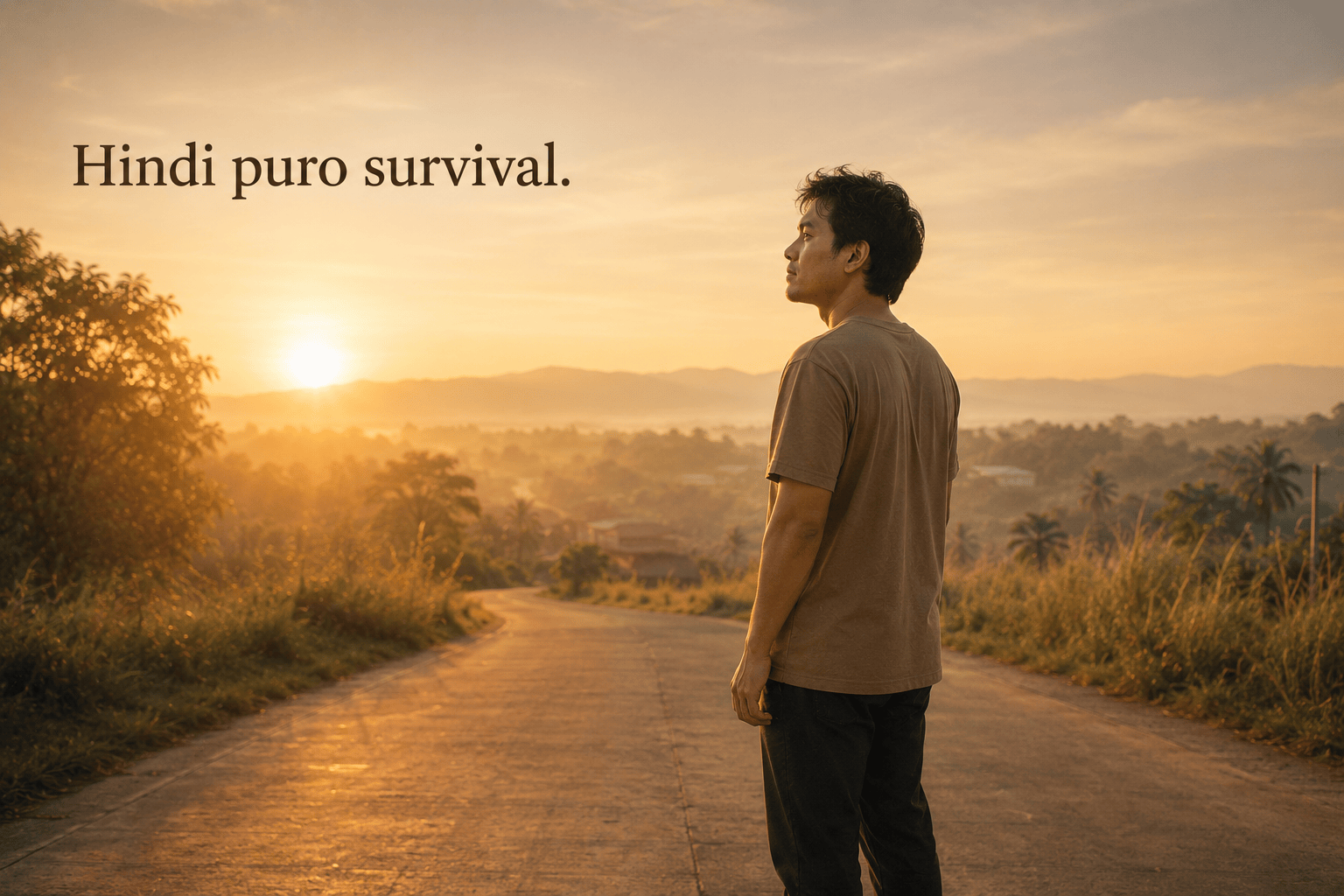
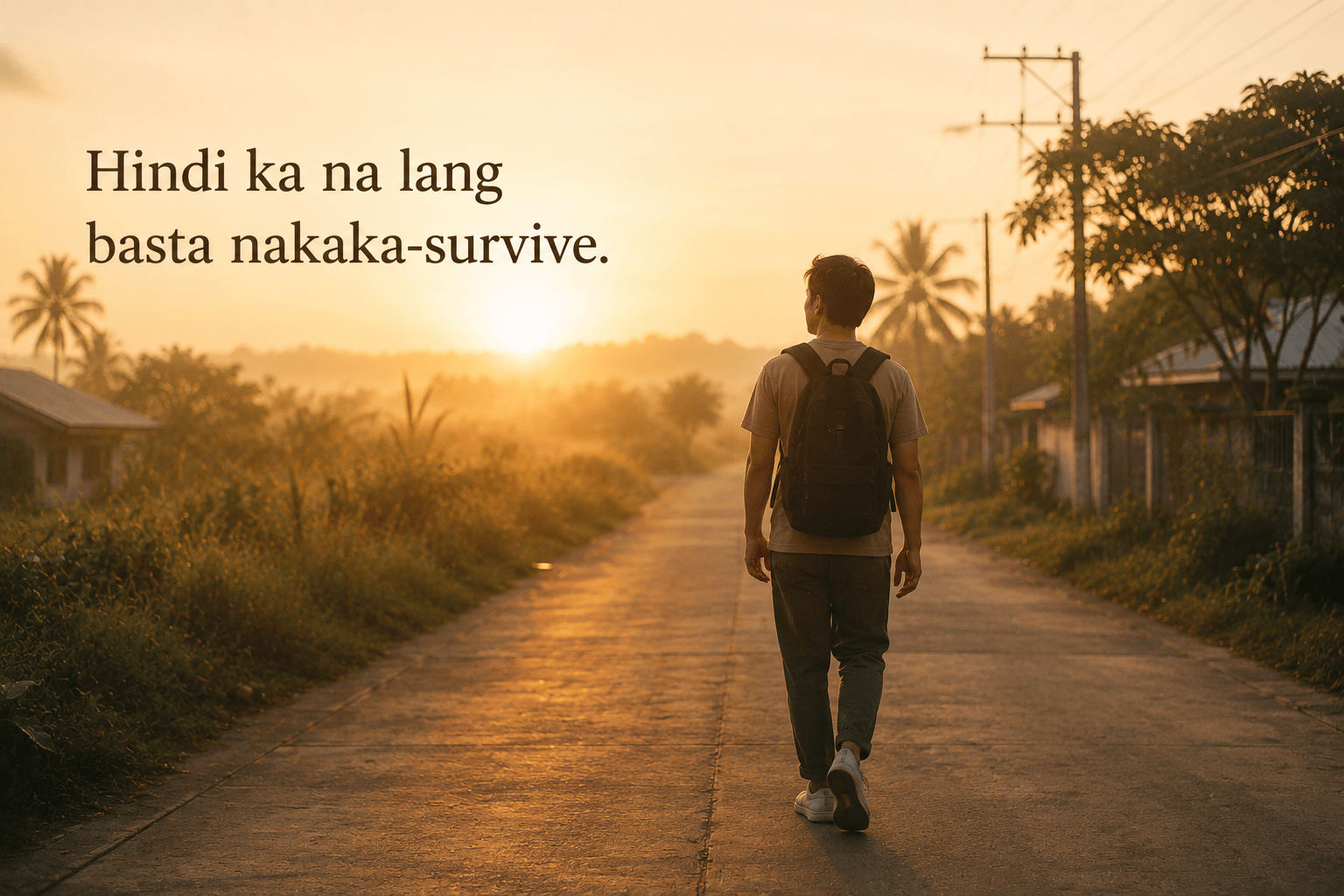
Hindi ka na lang basta “nakaka-survive.”
Why This Moment Feels Strange
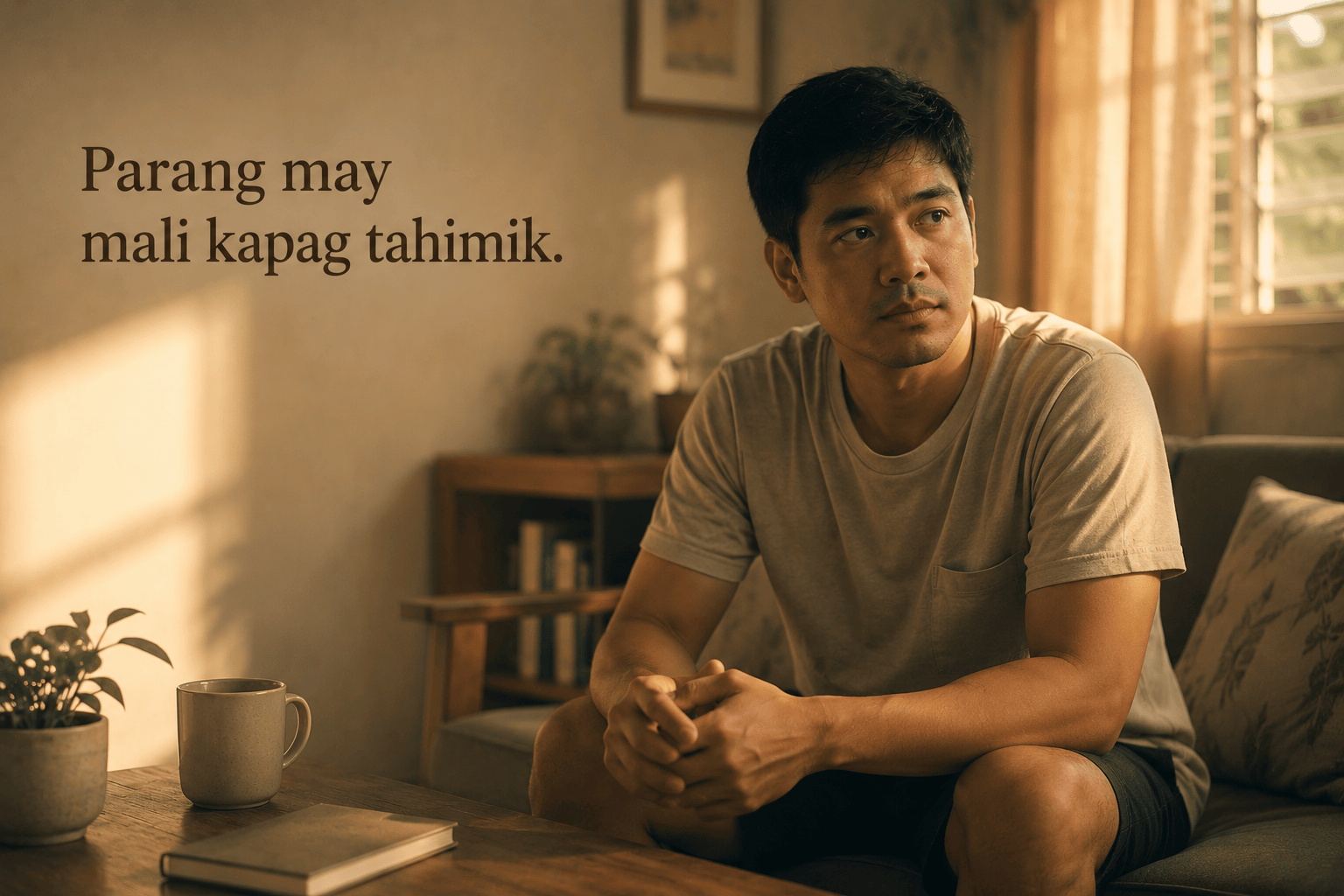
The difficult part is that stability doesn’t always feel relaxing at first.
Sometimes, it feels unfamiliar.
Even unsafe.
Because when you’ve spent years living in reaction mode,
calm can feel suspicious.
Parang may mali kapag tahimik.
The Questions That Surface Next
Without constant pressure, new questions begin to appear.
Ano na ang gagawin ko ngayon?
Pwede na ba akong huminga?
Hindi ba ako nagiging kampante?
These questions are more important than they seem.
Because they usually appear
when survival is no longer fully in control of your life.
Crossing a Threshold
This is not laziness.
And it’s not lack of ambition.
It’s transition.
Survival is about getting through.
Stability is about learning how to stay.
The Difference Between Surviving and Staying
When you’re surviving,
most decisions come from urgency.
You think short-term.
You react quickly.
You focus on avoiding collapse.
But when stability slowly enters the picture,
a different kind of awareness becomes possible.
You begin thinking beyond the next emergency.
You begin considering sustainability.
You begin asking not just:
“How do I get through this?”
—but—
“What kind of life can actually hold me long-term?”
Learning to Trust What You’ve Built
This stage requires something many people are unfamiliar with:
Trust.
Trust that your systems can hold.
Trust that one mistake won’t destroy everything.
Trust that rest is no longer dangerous.
And that trust doesn’t appear overnight.
Especially for Filipinos who spent years carrying pressure quietly.
When Worth Stops Depending on Struggle
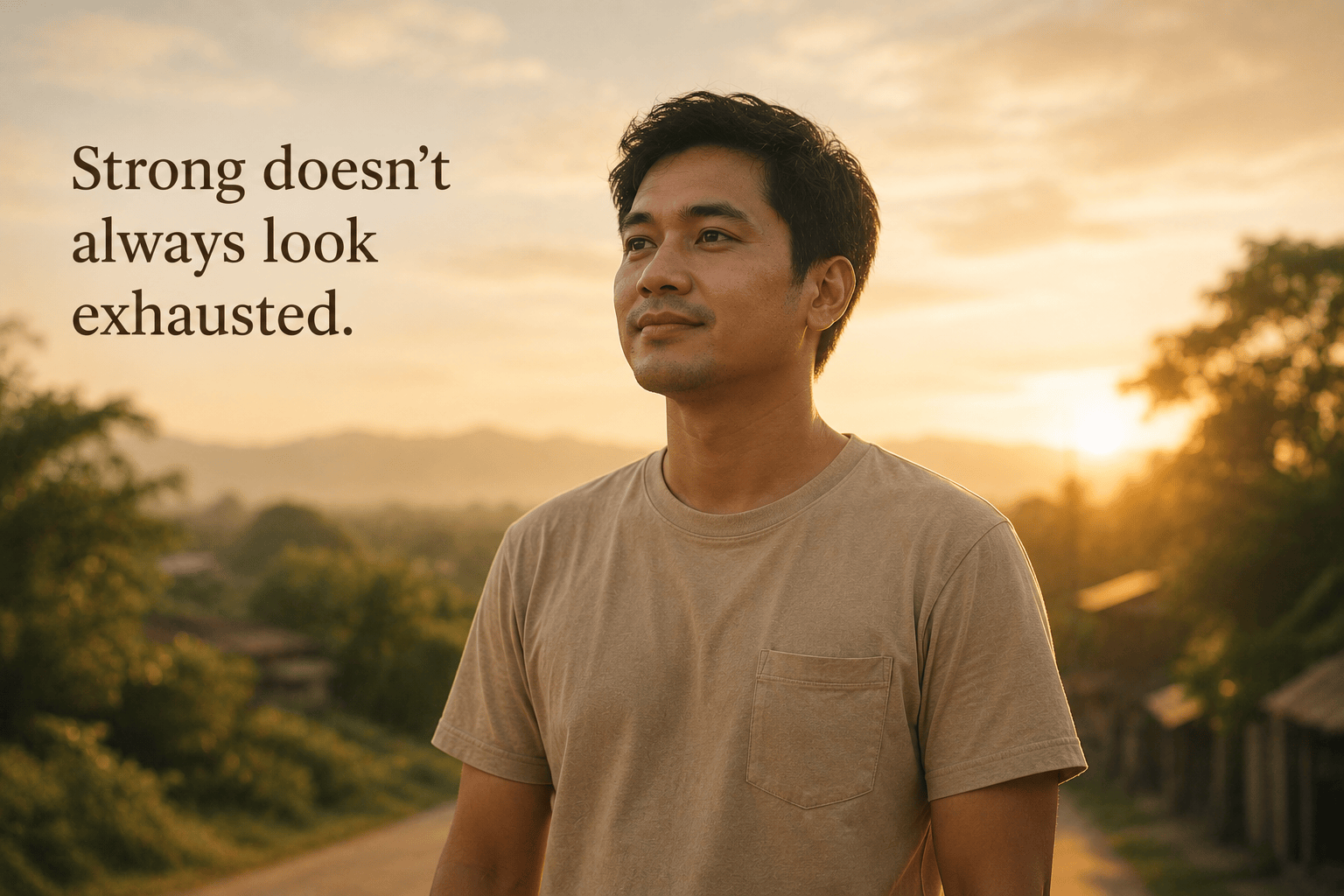
One of the deepest shifts in this stage is this:
You slowly stop measuring your worth
by how much you can endure.
Before, being “strong” may have meant surviving exhaustion, instability, uncertainty.
Now, strength starts looking different.
More grounded.
Less reactive.
Less attached to struggle.
The Temptation to Keep Chasing Pressure
This is also why some people unintentionally create new pressure once life becomes steadier.
They look for the next thing to fix.
The next goal to chase.
The next crisis to solve.
Not because something is wrong—
but because urgency became familiar.
Stillness feels unfamiliar.
Why This Moment Deserves Attention
But this stage matters.
Because recognizing that you’re no longer just surviving changes how you move through life.
Your decisions become less fear-driven.
Your thinking becomes clearer.
Your energy becomes less consumed by constant recovery.
You don’t stop being careful.
You don’t abandon responsibility.
You simply stop living
as if everything is about to fall apart.
A Quiet Reframe
Some forms of progress don’t look dramatic.
They look like:
Breathing room.
Slower reactions.
Fewer panic moments.
A quieter mind.
Finally, Something Important
If life has felt slightly lighter lately—
even in small ways—
don’t rush past that.
Don’t dismiss it just because it doesn’t look impressive.
Because for people who spent years surviving,
peace often arrives quietly.
Closing Reflection
Growth begins to feel different
when you realize your life is no longer built entirely around recovery.
Not because everything is perfect.
But because, little by little,
you’ve finally started standing on steadier ground.
And sometimes, the most important financial shift
is not the moment you earn more—
but the moment you realize
you no longer have to live in constant fear of falling behind.
That’s when money stops being purely about survival…
and starts becoming about direction.
Catch Thanjo’s personal finance column every Tuesday at 7 p.m. on IKOT.PH and across Facebook, X (Twitter), and Instagram.
DISCLAIMER:
The views and opinions of our partners and contributors expressed in this article are exclusively their own and are made in their personal capacities. They do not reflect the views, policies, or official stance of IKOT.PH, its editors, officers, or affiliates. As such, nothing contained herein shall be construed as professional advice or as an official declaration, endorsement, or position of IKOT.PH.