
For many people, growth sounds exciting in theory.
A better income.
A calmer life.
More freedom.
More choices.
But emotionally, growth does not always feel hopeful.
Sometimes, it feels dangerous.
When Improvement Feels Fragile
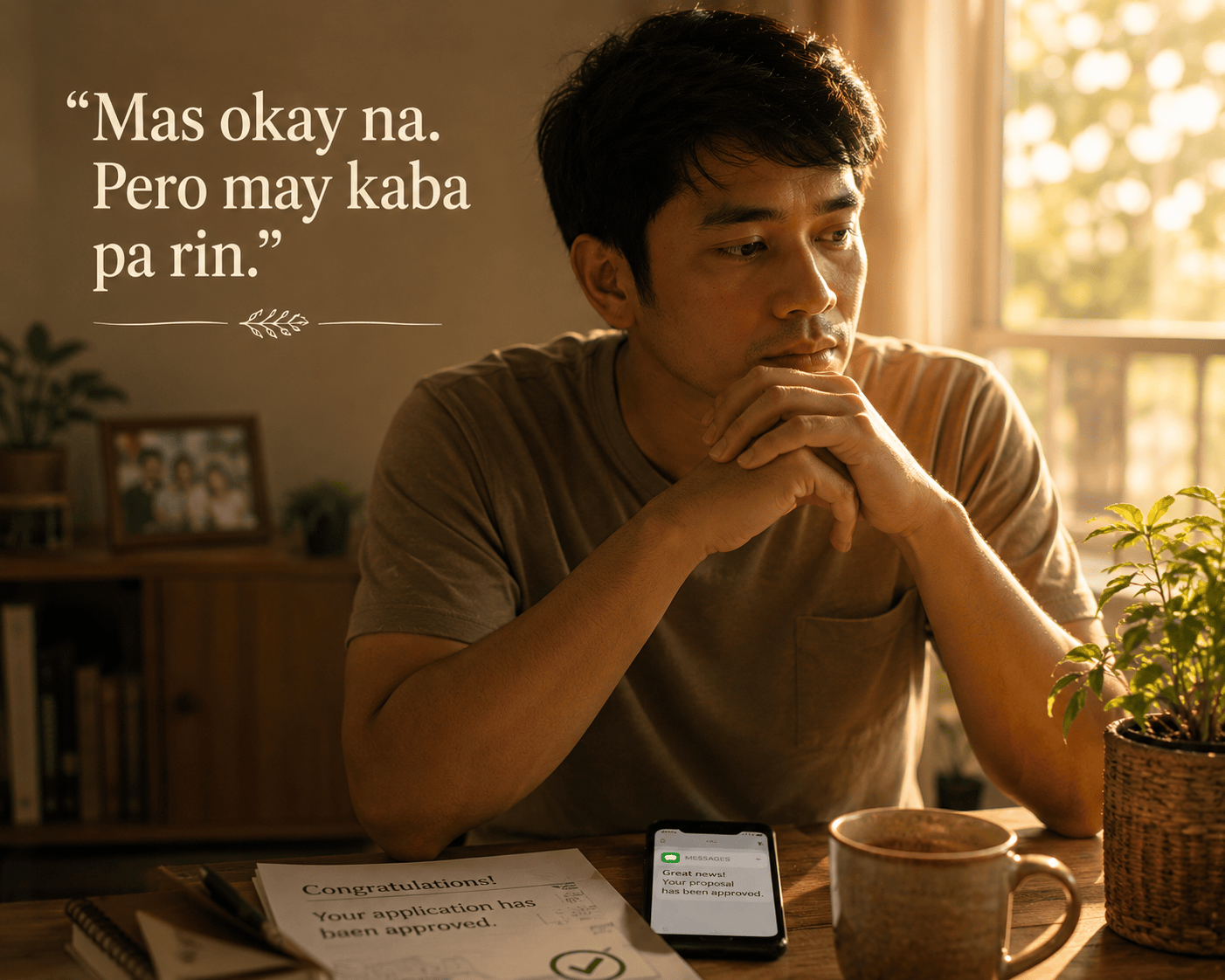
You finally begin improving financially—
and instead of feeling fully excited,
you become careful.
You hesitate before making plans.
You second-guess good opportunities.
You avoid celebrating too early.
Part of you wants to move forward.
Another part quietly whispers:
“Baka mawala rin.”
Why This Feeling Confuses People
This reaction surprises many people because, objectively, life may already be improving.
Maybe emergencies are less frequent now.
Maybe income has become steadier.
Maybe you finally have breathing room some months.
So why does part of you still feel afraid?
Because financial growth is not just practical.
It is emotional.
And emotions remember things
that numbers cannot erase immediately.
The Kind of Progress Many Filipinos Grew Up Around
Many Filipinos were not raised around stable forms of growth.
We were raised around temporary relief.
A little extra money disappeared into emergencies.
One good season was interrupted by another setback.
Small wins were followed by unexpected problems.
So even positive moments carried uncertainty attached to them.
Learning Not to Trust Ease Too Much
Over time, this shapes the way people relate to hope itself.
You begin treating improvement carefully.
You learn not to expect too much.
You become emotionally trained
to prepare for loss even while things are going well.
And slowly, without noticing it,
growth becomes emotionally associated with danger.
The Fears Hidden Inside Expansion
Because growth changes things.
Growth increases visibility.
Growth increases expectation.
Growth increases the fear of losing something you worked hard to build.
For some people, the fear sounds like:
“What if I fail after finally improving?”
For others:
“What if people start expecting more from me?”
And for many breadwinners:
“What if doing better means carrying even more people?”
These Fears Are Not Irrational
They are protective.
They were built from real experiences.
Real disappointments.
Real instability.
Which is why many people unconsciously shrink themselves to stay emotionally safe.
The Ways People Quietly Stay Small
Sometimes it looks like avoiding opportunities that are clearly within reach.
Delaying applications.
Avoiding visibility.
Staying inside familiar limitations.
Not because they lack ambition.
But because familiar hardship can feel emotionally safer
than unfamiliar possibility.
When Survival Trains You to Manage Expectations
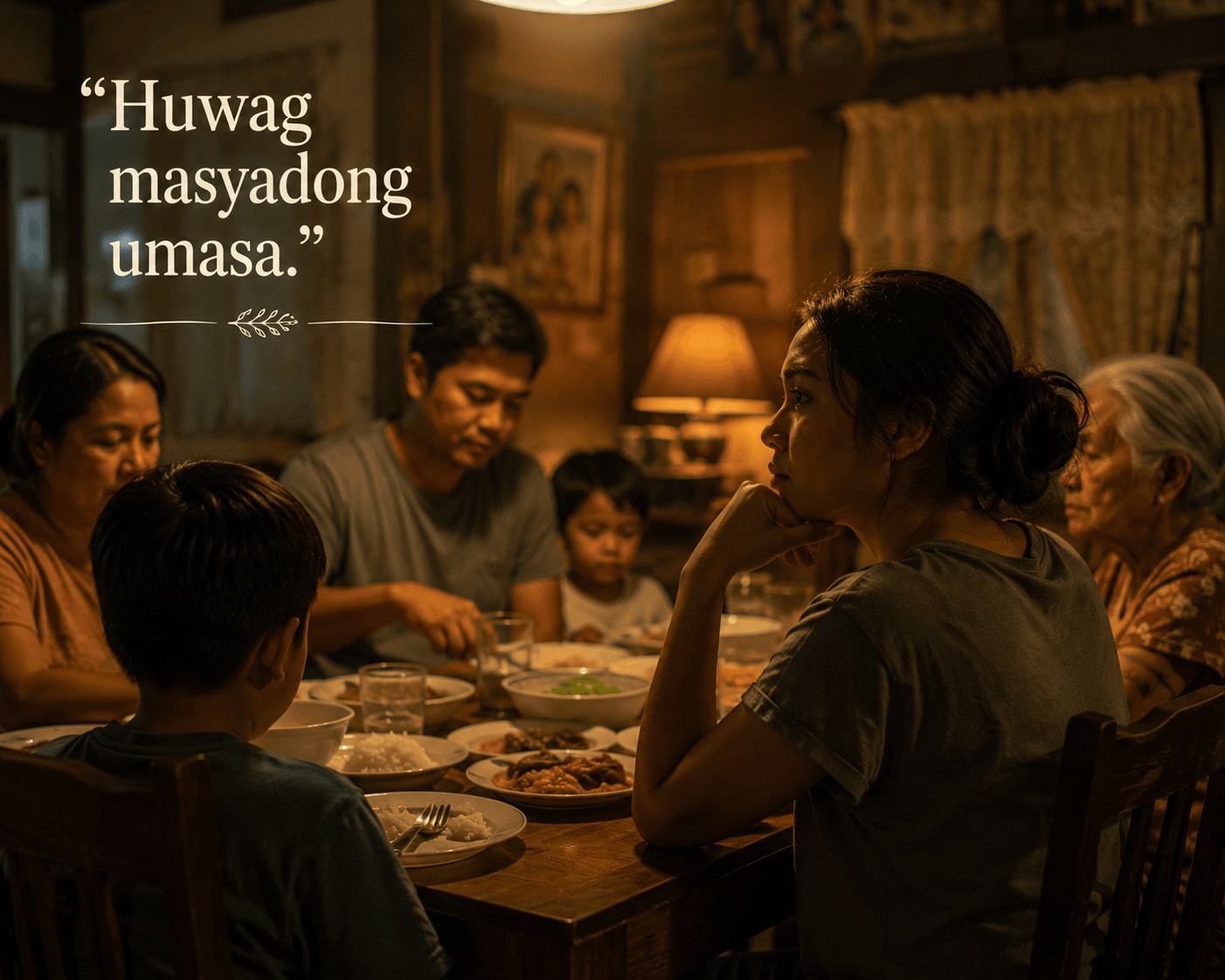
This is one of the hidden effects of long-term survival mode:
You learn how to manage disappointment
before you learn how to manage possibility.
And while caution has wisdom,
living entirely from fear creates another kind of suffering.
When Protection Becomes Limitation
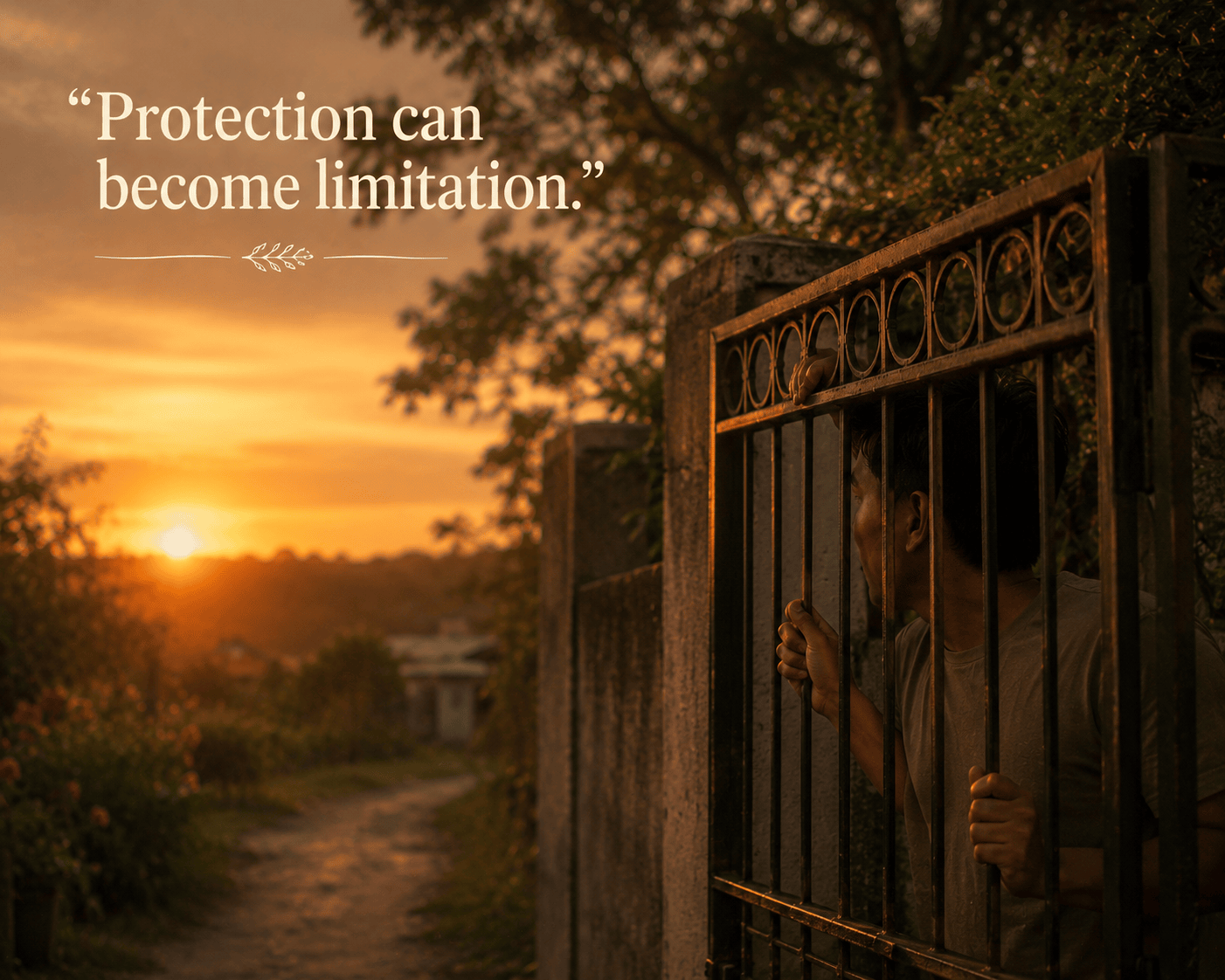
Because eventually, the same walls that protected you
begin limiting you.
You become so focused on preventing collapse
that you stop allowing expansion.
And little by little, life becomes smaller than it needs to be.
What Growth Actually Requires
The difficult part is that growth always asks for emotional stretching.
Not reckless risk.
Not blind optimism.
But willingness.
Willingness to believe
that your life can become wider
than the version you were forced to survive before.
Why Emotional Safety Matters
This is why emotional safety matters so much in financial growth.
People grow differently
when they no longer feel constantly threatened.
A person who finally feels safe enough to breathe:
Makes clearer decisions.
Learns more patiently.
Builds more steadily.
Plans more sustainably.
When Growth Stops Feeling Like Escape
Healthy growth also changes motivation.
Many people unknowingly approach success as escape.
Escape from debt.
Escape from shame.
Escape from exhaustion.
Escape from the instability they grew up with.
But growth built entirely on escape
eventually becomes exhausting too.
You keep moving—
but your nervous system never fully rests.
What Real Growth Starts Feeling Like

Real financial growth feels different.
Less frantic.
Less emotionally loaded.
Less dependent on proving something.
It allows room for mistakes
without turning them into catastrophes.
It understands that one difficult month
does not erase years of progress.
And perhaps most importantly—
it teaches you that safety is not found only in money itself.
The Kind of Safety That Lasts Longer
Sometimes, safety comes from capacity.
The capacity to adapt.
To recover.
To rebuild.
To trust yourself more than before.
Because maybe the goal is not to eliminate uncertainty completely.
Maybe the goal is simply this:
To become less fragile
in the presence of uncertainty.
When Your Relationship With Growth Changes
That realization changes the emotional experience of growth entirely.
You stop treating every opportunity
like a life-or-death decision.
You stop treating every setback
as proof that you should never have tried.
You stop assuming
that one mistake destroys everything.
A Quiet Reframe
Growth often becomes safer
not because life became predictable—
but because you are no longer facing it
with the same fear-driven version of yourself.
Finally, Something Important
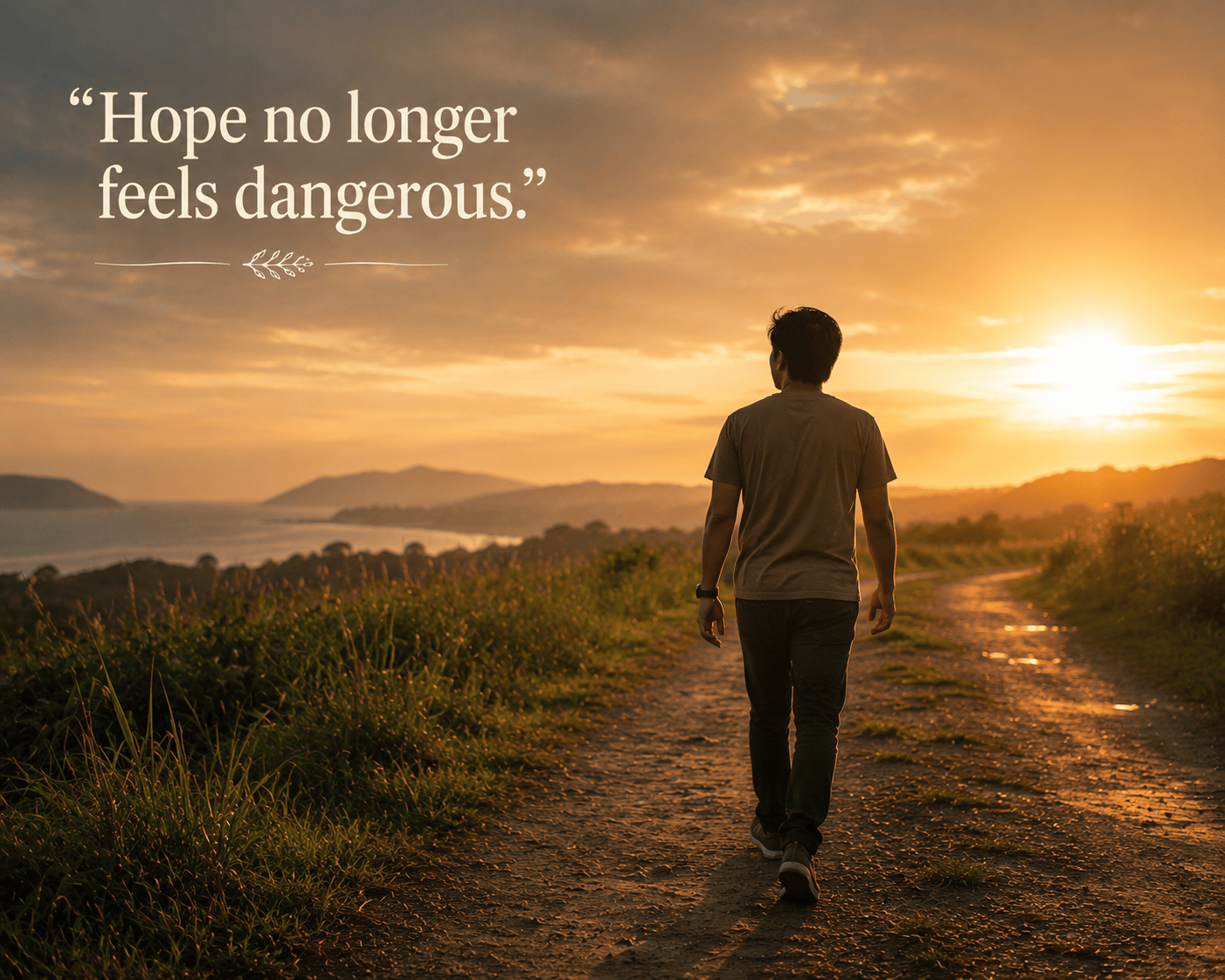
If growth has felt emotionally dangerous to you before—
that does not mean you are weak.
It may simply mean
you learned very early
how painful instability can be.
And people who lived through instability
do not approach hope casually.
Closing Reflection
Perhaps one of the quietest signs of healing
is this:
When hope no longer feels irresponsible.
When expansion no longer feels like betrayal.
When your future stops feeling fragile—
and starts feeling like something
you are finally ready to build
carefully, steadily, and without panic.
And for many people,
that is where real growth truly begins.
Because before growth becomes sustainable,
fear has to stop controlling every decision around it.
And sometimes, the deepest financial work
is not learning how to earn more—
but learning how to feel safe enough
to finally believe your life can expand.
Catch Thanjo’s personal finance column every Tuesday at 7 p.m. on IKOT.PH and across Facebook, X (Twitter), and Instagram.
DISCLAIMER:
The views and opinions of our partners and contributors expressed in this article are exclusively their own and are made in their personal capacities. They do not reflect the views, policies, or official stance of IKOT.PH, its editors, officers, or affiliates. As such, nothing contained herein shall be construed as professional advice or as an official declaration, endorsement, or position of IKOT.PH.