Many Filipinos know how to give even when they have very little.
We share food before checking if there’s enough left for us.
We send money home while postponing our own needs.
We help family, coworkers, neighbors, and friends almost automatically.
Giving often feels natural.
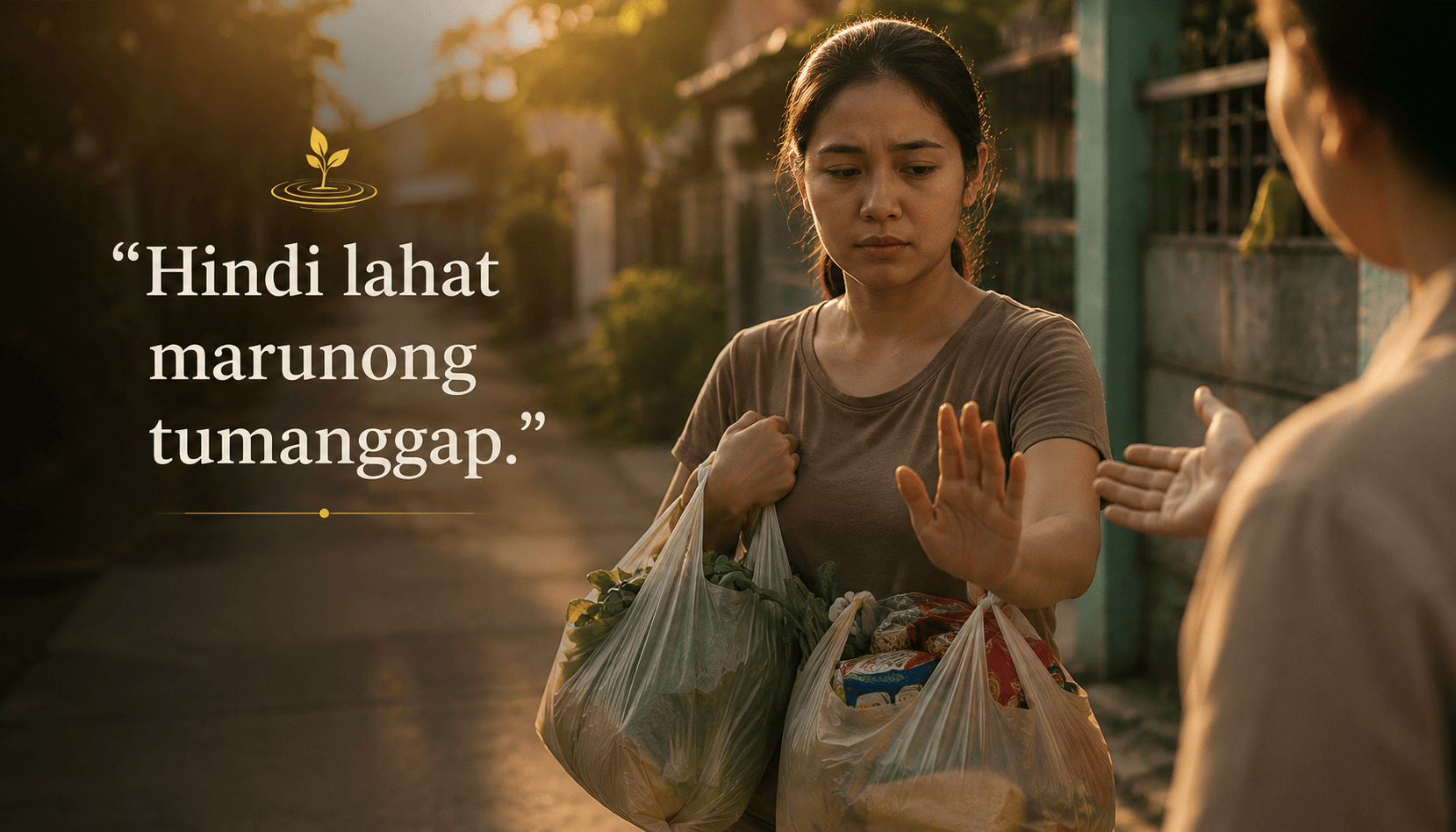
Receiving is where things become complicated.
When Kindness Feels Heavy
A compliment can feel uncomfortable.
Help can feel emotionally expensive.
Rest can feel undeserved.
Even simple kindness can quietly trigger guilt.
And for many people, this reaction is so automatic that they barely notice it anymore.
Someone offers support and the response immediately becomes:
“Okay lang ako.”
“’Wag na.”
“Nakakahiya.”
“Kaya ko pa.”
Sometimes these words are simply polite.
But sometimes, they are protective.
When Self-Reliance Becomes Identity
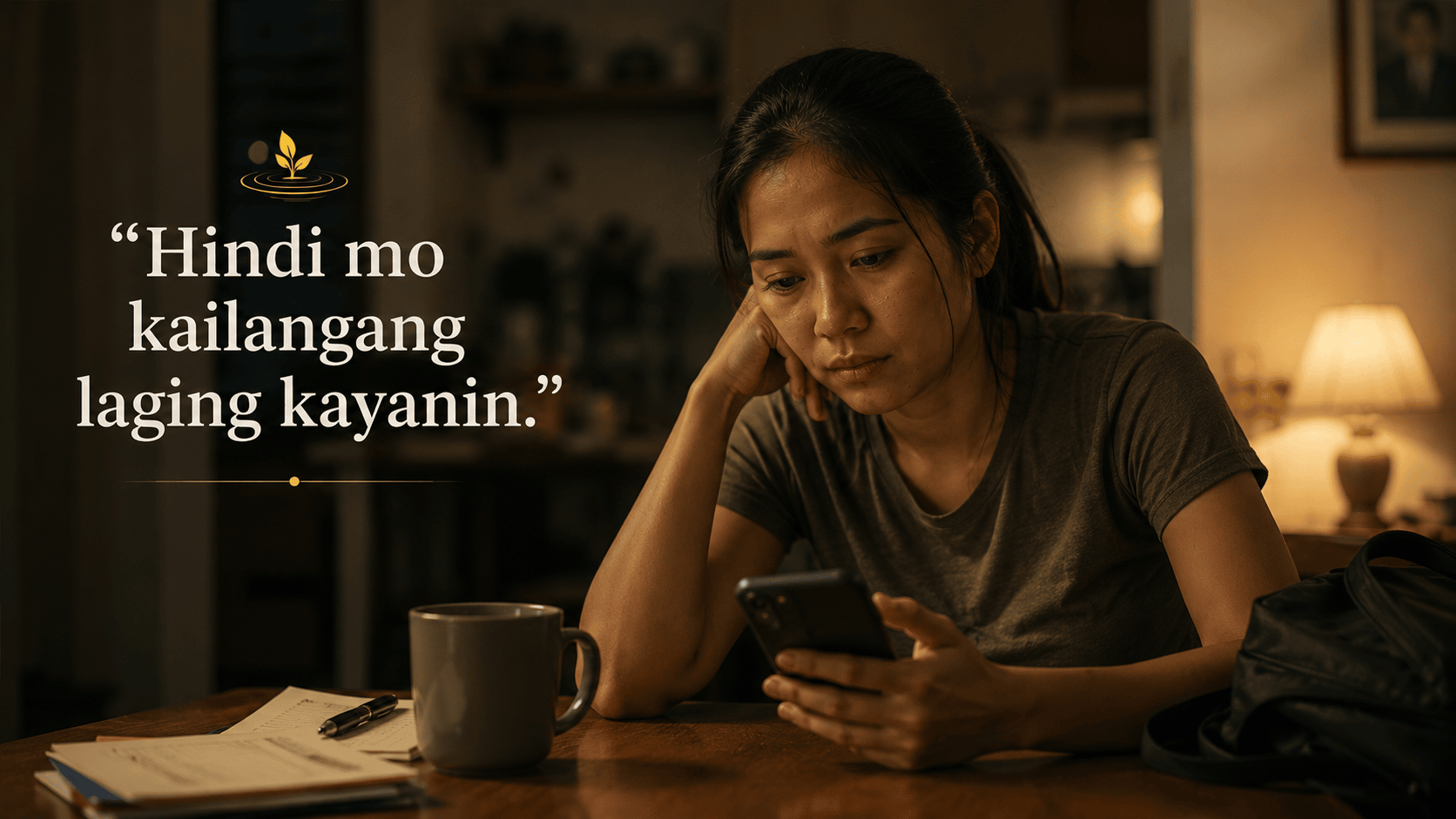
For many Filipinos, independence became emotional survival very early.
You learn not to become a burden.
You become careful not to ask for too much.
You adjust quickly.
You carry quietly.
And after enough years, self-reliance stops feeling like a skill.
It becomes identity.
Why Receiving Can Feel Unsafe
This is why receiving can feel emotionally complicated.
Some people associate receiving with utang na loob.
Others associate it with weakness.
Others simply never experienced support without guilt attached to it.
So even when life finally offers relief,
part of them struggles to let it in.
The Difficulty Is Not Only Financial
This pattern appears emotionally too.
People who are used to being dependable
often struggle to receive care.
People who constantly support others
sometimes do not know how to rest without explaining themselves.
People who spent years surviving
may unconsciously resist ease because ease feels unfamiliar.
And unfamiliar things often feel unsafe before they feel comforting.
When Familiar Hardship Feels Safer
This is why some people unintentionally push away good things.
Not because they want suffering.
But because suffering became emotionally familiar.
Predictable.
Manageable.
And strangely enough, the nervous system often prefers familiar pain
over unfamiliar peace.
The Questions People Rarely Say Out Loud
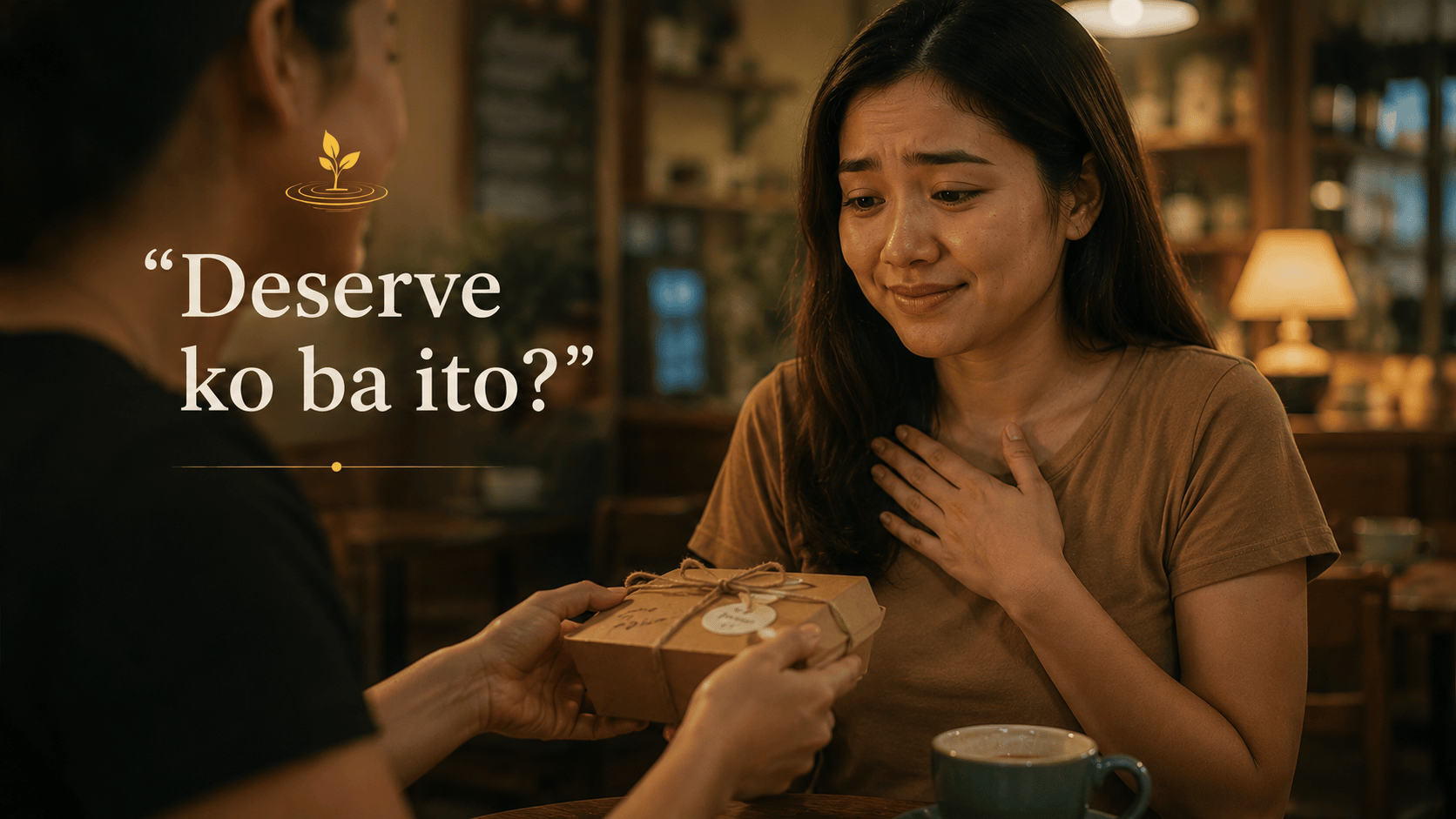
Sometimes, receiving creates an internal conflict that is difficult to explain.
Part of you feels grateful.
Another part quietly asks:
“Do I deserve this?”
“Ano kaya kapalit nito?”
“Paano kung mawala rin?”
These questions are rarely spoken directly.
But they shape the way many people experience:
Money.
Relationships.
Growth.
Opportunity.
Even joy itself.
What Survival Mode Quietly Teaches
This is one of the quieter effects of long-term survival mode:
You become more comfortable carrying
than receiving.
And while generosity is beautiful,
constantly refusing support eventually becomes another form of exhaustion.
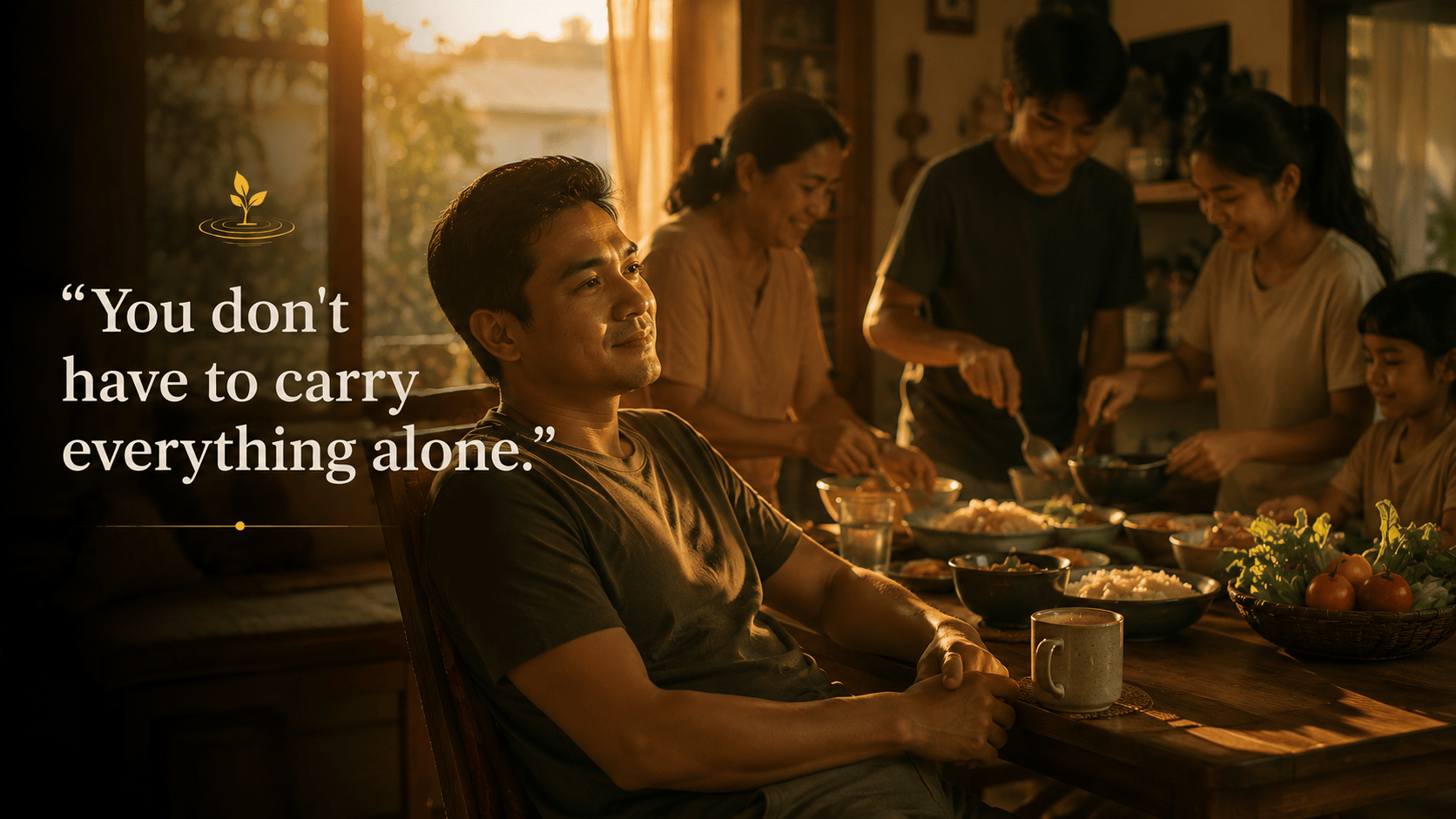
Because human beings were never meant
to carry everything alone all the time.
Even Growth Requires Receiving
Even nature understands this.
Rivers receive.
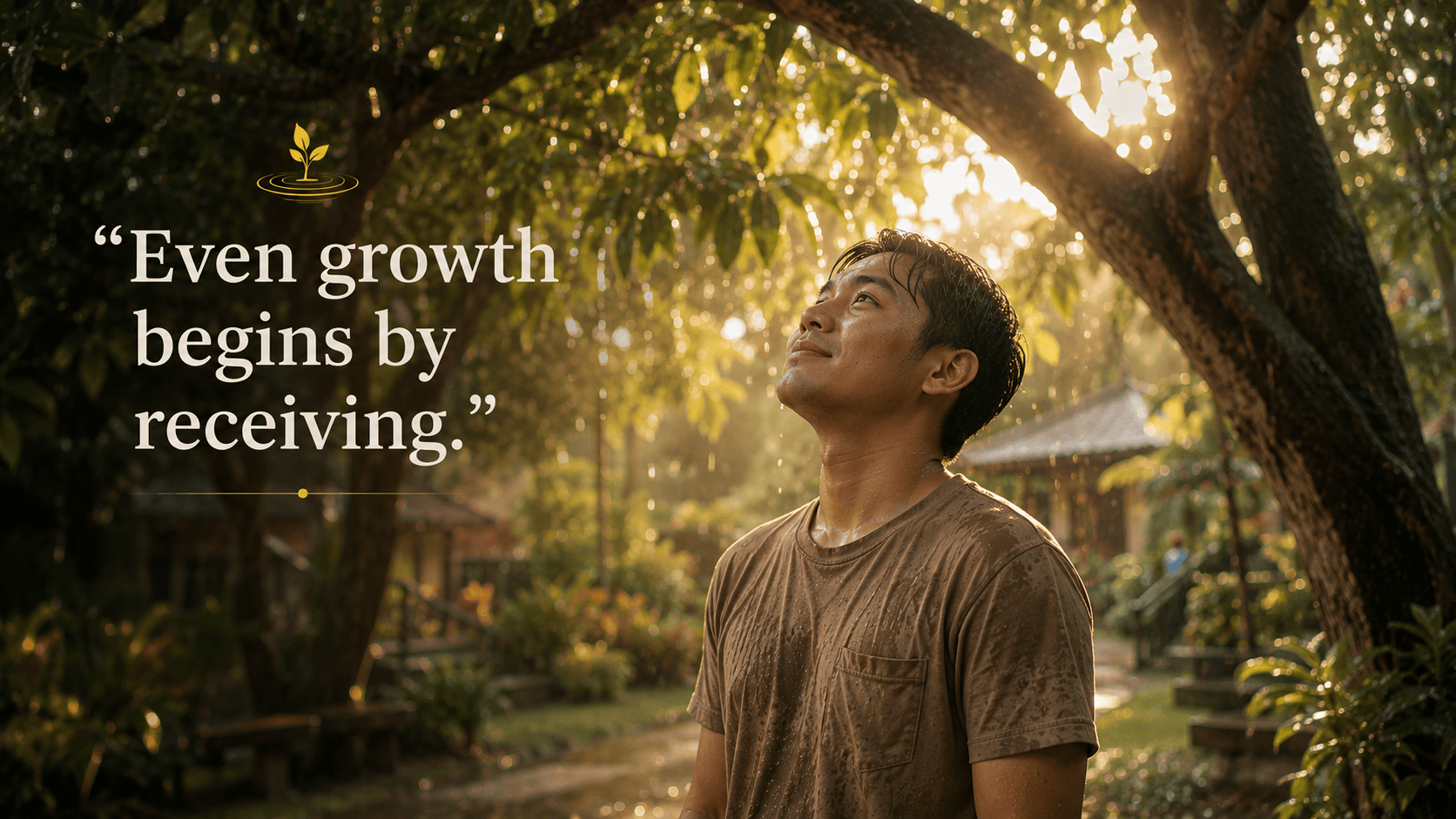
Trees receive sunlight, rain, and soil.
Growth itself depends on receiving.
And financially, this matters more than many people realize.
Because abundance is not only the ability to earn more.
Part of abundance is developing the emotional capacity
to receive without shame.
The Forms of Receiving We Resist
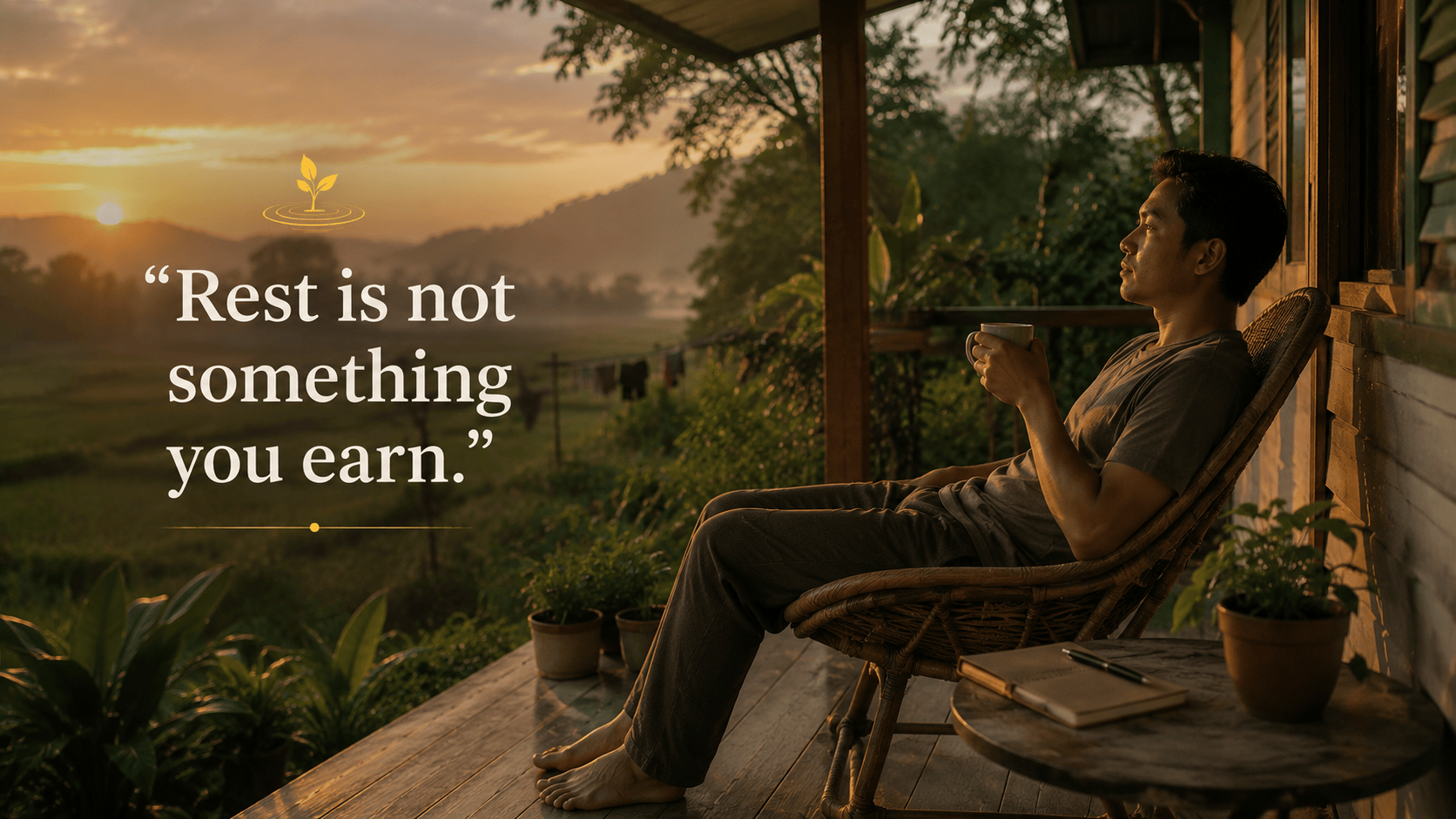
Receiving opportunities.
Receiving rest.
Receiving healthy support.
Receiving stability without immediately preparing for disaster.
These things sound simple.
But for people who spent years surviving,
they can feel deeply unfamiliar.
When Struggle Becomes Proof of Worth
Especially if you grew up believing that struggle proves responsibility.
That exhaustion means you’re hardworking.
That self-denial means you’re good.
That carrying everything silently is strength.
But exhaustion is not the same thing as goodness.
And constantly depriving yourself
is not always maturity.
The Strength of Softening
Sometimes, the strongest people
are the ones finally learning how to soften.
To accept help without overexplaining.
To rest without apologizing.
To let someone else carry something for once.
And for people who built their identity around being reliable,
that shift can feel emotional.
Even vulnerable.
What Receiving Actually Requires
Because receiving requires something many strong people struggle with:
Vulnerability.
The willingness to admit:
“Hindi ko kailangang pasanin lahat mag-isa.”
And while that realization can feel uncomfortable at first—
it can also become freeing.
When Life Stops Feeling Like a Test
Because once you stop treating support as something shameful,
life changes quietly.
You become less defensive toward kindness.
Less suspicious of ease.
Less guilty about taking up space.
And perhaps most importantly—
you stop measuring your worth
only by how much you can endure.
What Many Filipinos Were Never Taught
Many Filipinos were taught how to sacrifice.
Few were taught how to receive peacefully.
But healthy growth requires both.
Because generosity without receiving
eventually becomes depletion.
Strength without softness
eventually becomes burnout.
A Quiet Reframe
Receiving is not weakness.
Sometimes, it is simply allowing life
to stop feeling heavier than it needs to be.
Finally, Something Important
Maybe one of the deepest forms of healing is this:
When your heart no longer panics
the moment life becomes gentle.
When support stops feeling shameful.
When rest stops feeling irresponsible.
When kindness no longer feels like a debt you must immediately repay.
Closing Reflection
Little by little, receiving becomes less uncomfortable.
Not because you became selfish.
But because you are finally learning
that your life was never meant to be sustained
through survival alone.
And sometimes, growth quietly begins
the moment you stop resisting the possibility
that life can also hold you gently.
Because before money can truly create peace,
the heart often has to relearn something first:
That safety, rest, support, and gentleness
are not things you must earn through exhaustion.
Sometimes, they are simply things
you finally allow yourself to receive.
Catch Thanjo’s personal finance column every Tuesday at 7 p.m. on IKOT.PH and across Facebook, X (Twitter), and Instagram.
DISCLAIMER:
The views and opinions of our partners and contributors expressed in this article are exclusively their own and are made in their personal capacities. They do not reflect the views, policies, or official stance of IKOT.PH, its editors, officers, or affiliates. As such, nothing contained herein shall be construed as professional advice or as an official declaration, endorsement, or position of IKOT.PH.