
Senator Bong Go filed Senate Bill No. 2329 seeking to further extend the estate tax amnesty period and provide more Filipino families with additional time to settle outstanding estate tax liabilities and complete the lawful transfer of inherited properties.
The proposed measure would amend Republic Act No. 11213, or the Tax Amnesty Act, as amended, by extending the period of availment of the estate tax amnesty until December 31, 2028.
“Maraming pamilya ang nahihirapang ayusin ang mga naiwang ari-arian dahil sa gastusin at komplikadong proseso. Layunin ng panukalang ito na bigyan sila ng mas sapat na panahon at mas magaan na paraan upang maayos ang kanilang obligasyon,” Go said.
Under the bill, the amnesty would cover the estates of individuals who died on or before December 31, 2024, whether or not tax assessments had already been issued, provided that the corresponding estate taxes remained unpaid or had accrued as of the same date.
The current law covers the estates of decedents who died on or before May 31, 2022. Senate Bill No. 2329 seeks to expand this coverage to include more recent estates whose heirs, transferees, or beneficiaries have yet to settle their tax obligations.
The veteran legislator noted that many families continued to face financial and administrative difficulties in settling estates following the COVID-19 pandemic, which resulted in unexpected deaths and additional expenses for households.
“Hindi lamang pagluluksa ang dinanas ng maraming pamilya.”
“Hindi lamang pagluluksa ang dinanas ng maraming pamilya. Kailangan din nilang harapin ang mga gastusin at dokumentong kaugnay ng mga naiwang ari-arian. Bawat piso ay mahalaga, lalo na para sa mga ordinaryong Pilipinong patuloy na nahaharap sa krisis. Dapat natin silang bigyan ng makatwirang pagkakataon na maayos ang mga ito,” the seasoned lawmaker said.
The proposal would allow the executor or administrator of an estate, or the legal heirs, transferees, or beneficiaries when no administrator has been appointed, to file the required Estate Tax Amnesty Return either electronically or manually.
The return and corresponding payment may be submitted through an authorized agent bank, a Revenue District Office through its Revenue Collection Officer, or an authorized tax software provider.
The bill would also permit payment by installment within two years from the statutory payment date without civil penalties and interest. A taxpayer availing of this option would be required to make an initial payment equivalent to at least 25 percent of the total amount due.
Upon complete payment and compliance with all requirements, covered estates would be granted immunity from unpaid estate taxes, applicable increments and additions, and related civil, criminal, and administrative cases and penalties for the covered period.
The senator said the proposed extension would help families obtain clear ownership of inherited properties, facilitate property transfers, and encourage taxpayers to settle long-standing obligations.
“Kapag maayos ang mga dokumento at nabayaran ang tamang buwis, mas madali para sa mga pamilya na magamit, maipamana, o mailipat nang legal ang kanilang mga ari-arian.”
“Kapag maayos ang mga dokumento at nabayaran ang tamang buwis, mas madali para sa mga pamilya na magamit, maipamana, o mailipat nang legal ang kanilang mga ari-arian,” he said.
The measure directs the Secretary of Finance, in coordination with the Commissioner of Internal Revenue, to issue the necessary implementing rules and regulations within 30 days from its effectivity.
Go expressed hope that the proposal would provide practical relief to legal heirs and beneficiaries while supporting greater tax compliance and generating revenue from estates that might otherwise remain unsettled.
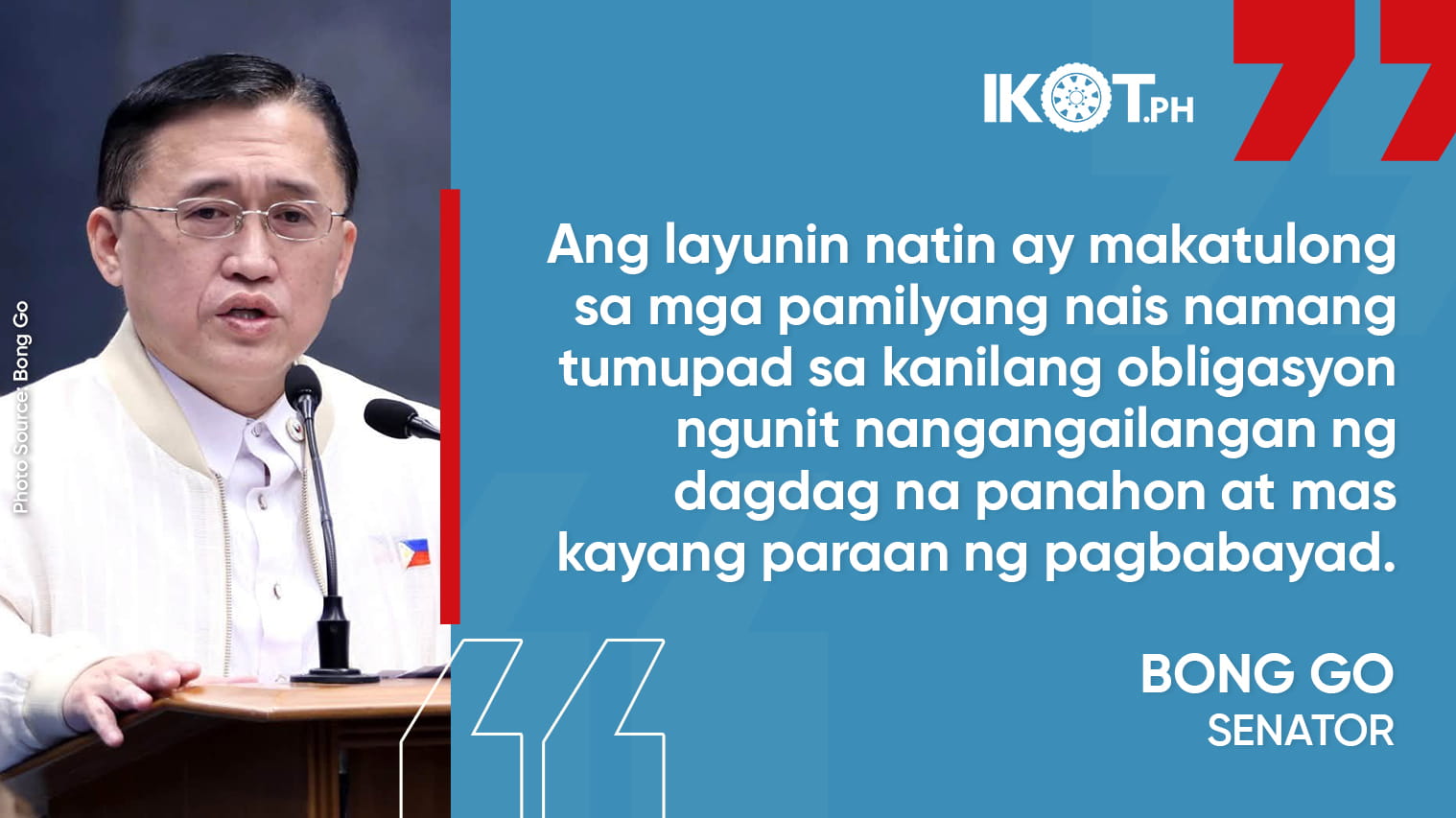
“Ang layunin natin ay makatulong sa mga pamilyang nais namang tumupad sa kanilang obligasyon ngunit nangangailangan ng dagdag na panahon at mas kayang paraan ng pagbabayad,” he concluded.