
The Department of Agriculture’s Agricultural Marketing Assistance Service is sharpening its market early-warning system to get ahead of supply disruptions, connect farmers with buyers sooner, and prevent produce from spoiling or being sold at distress prices.
The initiative builds on the initial success of emergency procurement during the height of the Middle East conflict, when the DA moved to keep agricultural products flowing to markets despite disruptions caused by a sudden surge in logistics costs.
Genevieve Velicaria-Guevarra, Assistant Secretary for Agribusiness, Marketing, and Consumer Affairs and head of KADIWA ng Pangulo, said the system would complement regional help desks by giving the government a clearer picture of what is coming down the farm-to-market pipeline.
“We want to move from reacting to problems to anticipating them.”
“We want to move from reacting to problems to anticipating them,” Velicaria-Guevarra said. “The monitoring system will give us alerts on upcoming harvests, weather disturbances, and other developments that could affect the supply chain to help us trigger assistance earlier.”
She said regular harvest projections would improve planning, while more transparent and timely farmgate price monitoring could help curb market abuses by middlemen. The system would also trigger alerts for logistics and other assistance, allowing the government to respond more quickly to emerging supply and market disruptions.
Guevarra said the DA would also intensify its information drive to make KADIWA assistance more widely known and accessible to farmers, particularly those operating in trading centers.
The DA is also looking to improve coordination with other government agencies that can serve as ready markets for highland vegetables, creating more reliable outlets when harvests surge. Better inter-agency coordination could help channel excess produce to institutional buyers and public programs instead of leaving farmers dependent on already saturated trading centers.
The goal is particularly urgent for vegetables, where seasonal harvest surges can quickly overwhelm markets. Persistent oversupply has at times forced farmers to dump unsold vegetables along roadsides rather than shoulder transport costs for produce that may not fetch enough to cover expenses.
For farmers who have already spent on seeds, fertilizer, labor, and transport, a bumper harvest can quickly turn into a financial loss when supply outstrips demand.
The early-warning system is intended to provide a bridge until longer-term infrastructure comes online, including mega cold storage and vegetable processing facilities that Agriculture Secretary Francisco Tiu Laurel Jr. considers crucial to tackling the oversupply problem.
“What happened in Benguet this year may also be called force majeure, with excessive rain hobbling the supply chain,” Tiu Laurel said.
“We have set aside funds for 2027, and those facilities will be located beside the Benguet Agri Pinoy Trading Center.”
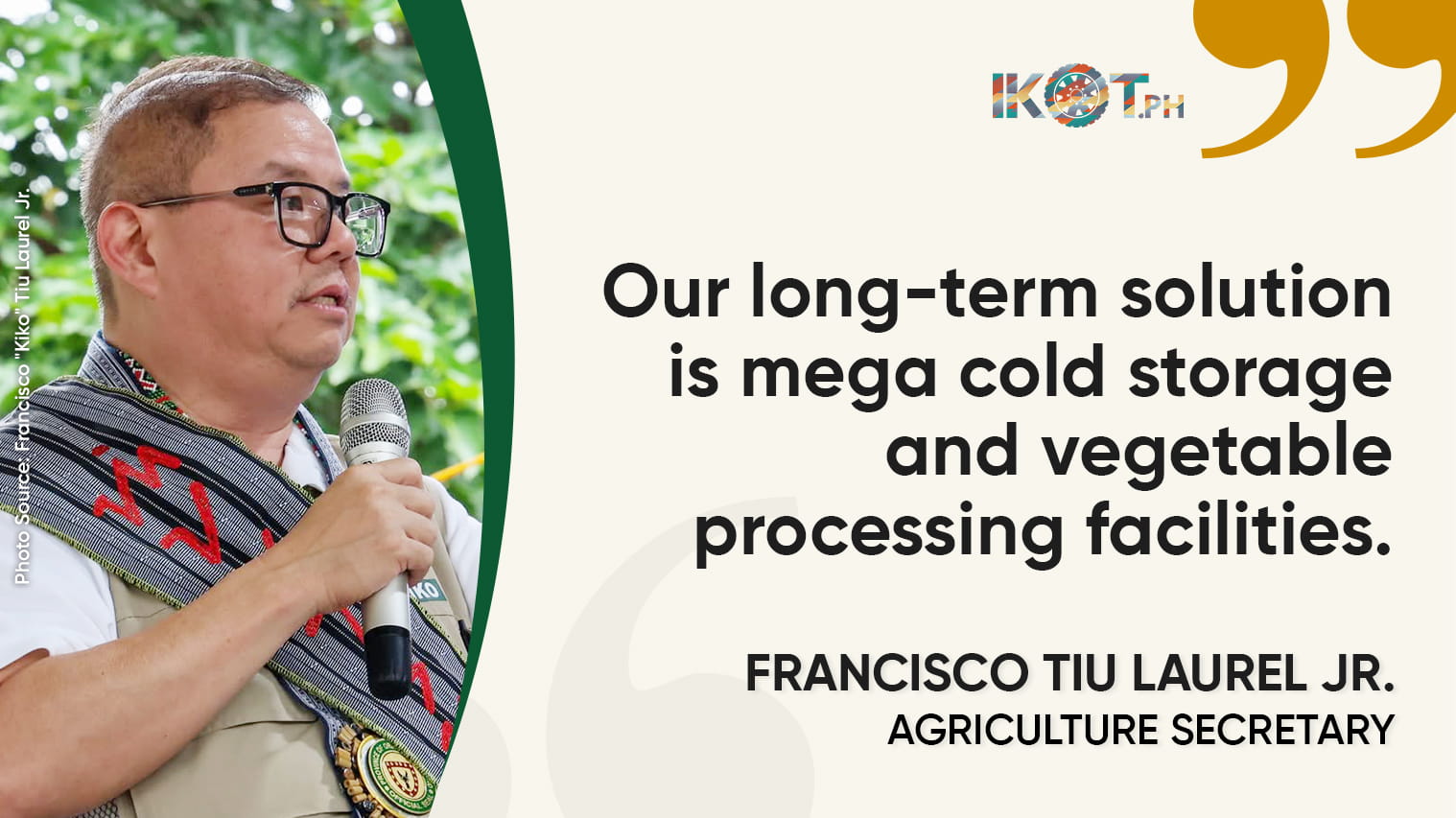
“Our long-term solution is mega cold storage and vegetable processing facilities. We have set aside funds for 2027, and those facilities will be located beside the Benguet Agri Pinoy Trading Center,” the agriculture chief added.
While Congress discusses the proposed 2027 funding, the agriculture head said the DA is pursuing interim measures, including rehabilitating existing cold storage facilities and installing smaller units to add capacity before the bigger facilities become operational.