
The Department of Agriculture (DA) and Department of Energy (DOE) are looking for cheaper and more diverse feedstock to make Philippine bioethanol competitive with imported fuel, while protecting the farmers and industries that depend on the same crops.
Agriculture Secretary Francisco Tiu Laurel Jr. and Energy Secretary Sharon Garin discussed ways to bring down feedstock costs, maximize idle distillery capacity, and expand domestic ethanol production as the government seeks to reduce dependence on imported fossil fuels.
The discussions banked on the possibility of increasing the country’s ethanol blend to 15 percent from 10 percent.
The agencies are examining different feedstock options that could support higher ethanol production, including molasses and sugarcane juice from the sugar industry, and locally produced corn.
“There is potential for them to help bring down gasoline prices.”
“We are studying these options carefully, and there is potential for them to help bring down gasoline prices,” Tiu Laurel said.
The economics are proving difficult. Officials noted that domestic feedstock has historically cost higher than imported supplies, while locally produced bioethanol prices are double that of imported bioethanol.
Every increase in feedstock costs can also translate into a roughly P1 increase in ethanol prices.
Locally-produced corn has emerged as the main alternative feedstock to compliment molasses and sugarcane juice, which currently supplies much of the country’s ethanol production.
The agriculture chief said the problem is not the availability of corn but whether it can be bought at a price that makes ethanol commercially viable.
Local ethanol production is estimated at 325 million to 385 million liters a year using sugarcane derived feedstock, while existing plants have a capacity exceeding 500 million liters.
“To protect the sugarcane industry, only the unused capacity could be sourced from corn.”
Officials said that to protect the sugarcane industry, only the unused capacity could be sourced from corn, which would accommodate additional production without displacing existing agricultural output.
The DA is studying expanded corn production through better seeds, mechanization, and contract farming between producers and ethanol plants.
Corn can be harvested within 90 to 110 days, potentially allowing supply to respond relatively quickly to increased demand. Plus, corn used for bioethanol will still have DDGS as a byproduct which feed manufacturers can use as a high protein source.
But the DA also warned against creating another price problem. Higher demand from ethanol producers could raise corn prices for livestock raisers, who rely on the crop for animal feed.
Diversifying feedstock could also reduce pressure on any single agricultural commodity, and possibly lower local bioethanol prices.
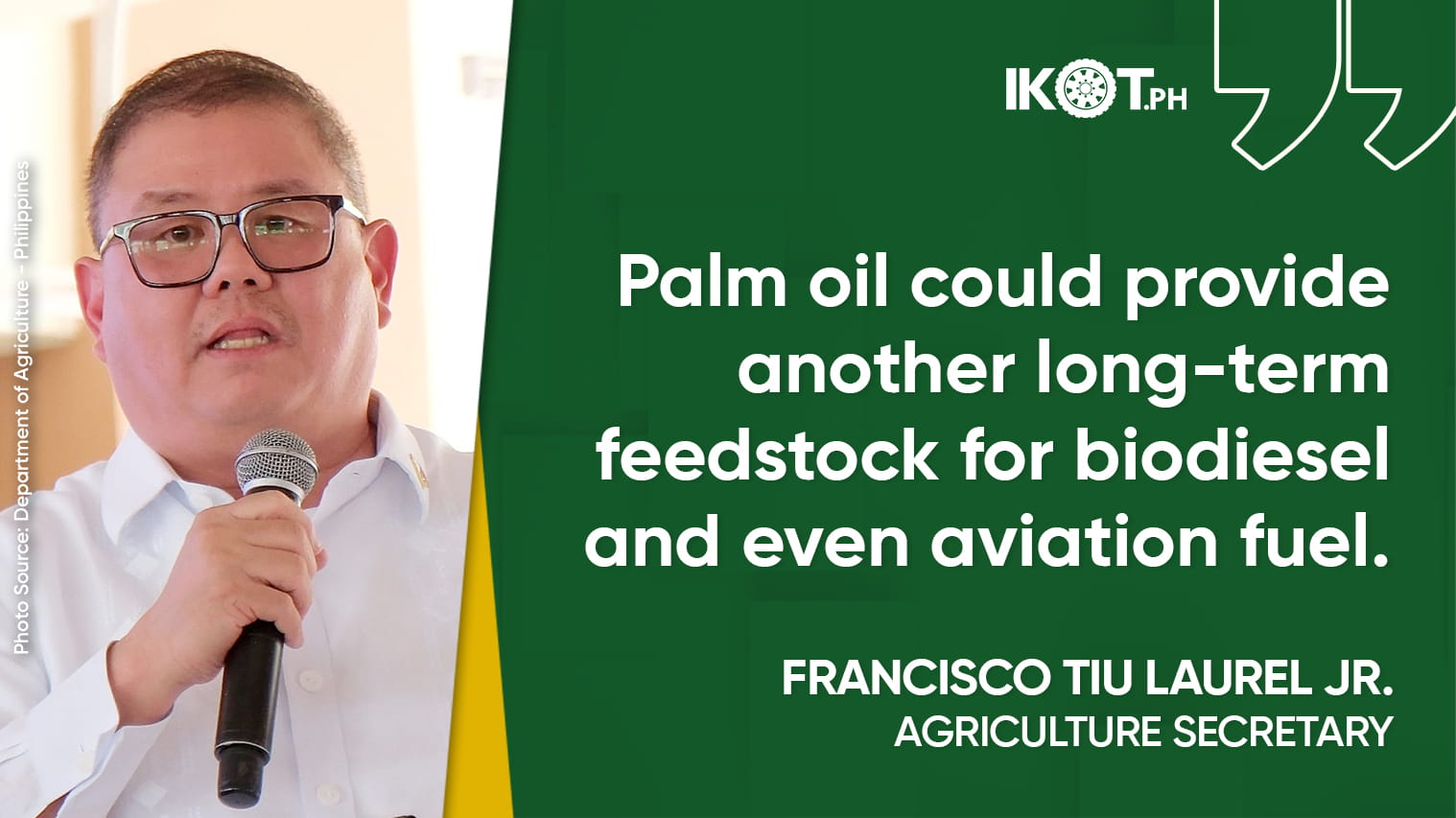
Tiu Laurel said palm oil could provide another long-term feedstock for biodiesel and even aviation fuel, although plantations would take about three years to mature.
The government is also finalizing a Philippine National Standard for bioethanol, with the draft now undergoing public consultation.