
The Department of Agriculture is looking at a major infrastructure project that could turn Pampanga’s flood-prone Candaba Swamp into a vast water storage, irrigation, and agricultural transport network, with canals potentially stretching 100 meters wide and reaching 7 meters deep.
Agriculture Secretary Francisco Tiu Laurel Jr. said the DA has commissioned a P150-million study with a Vietnamese university and engineering contractors to determine whether the swamp and other flood-prone areas can be developed into large-scale canal systems patterned after those in Vietnam’s Mekong Delta.
“This is not the small canals.”
“This is not the small canals,” Tiu Laurel said, describing waterways wide and deep enough to accommodate vessels and connected to tributaries.
The scale of the proposal points to an infrastructure undertaking that could require substantial public investment, although the government has yet to determine the project’s final design, cost, or funding structure.
“The ongoing study is expected to be completed by the end of the year and will include a funding roadmap.”
The ongoing study is expected to be completed by the end of the year and will include a funding roadmap, the agriculture chief said.
The DA has already presented the concept to President Ferdinand Marcos Jr., who is also considering other proposals that permanently address the perennial problem of flooding that affects economic activity in Central Luzon.
The DA proposal is an opportunity to address the costly problems of recurring flooding and the limited use of large areas for productive agriculture.
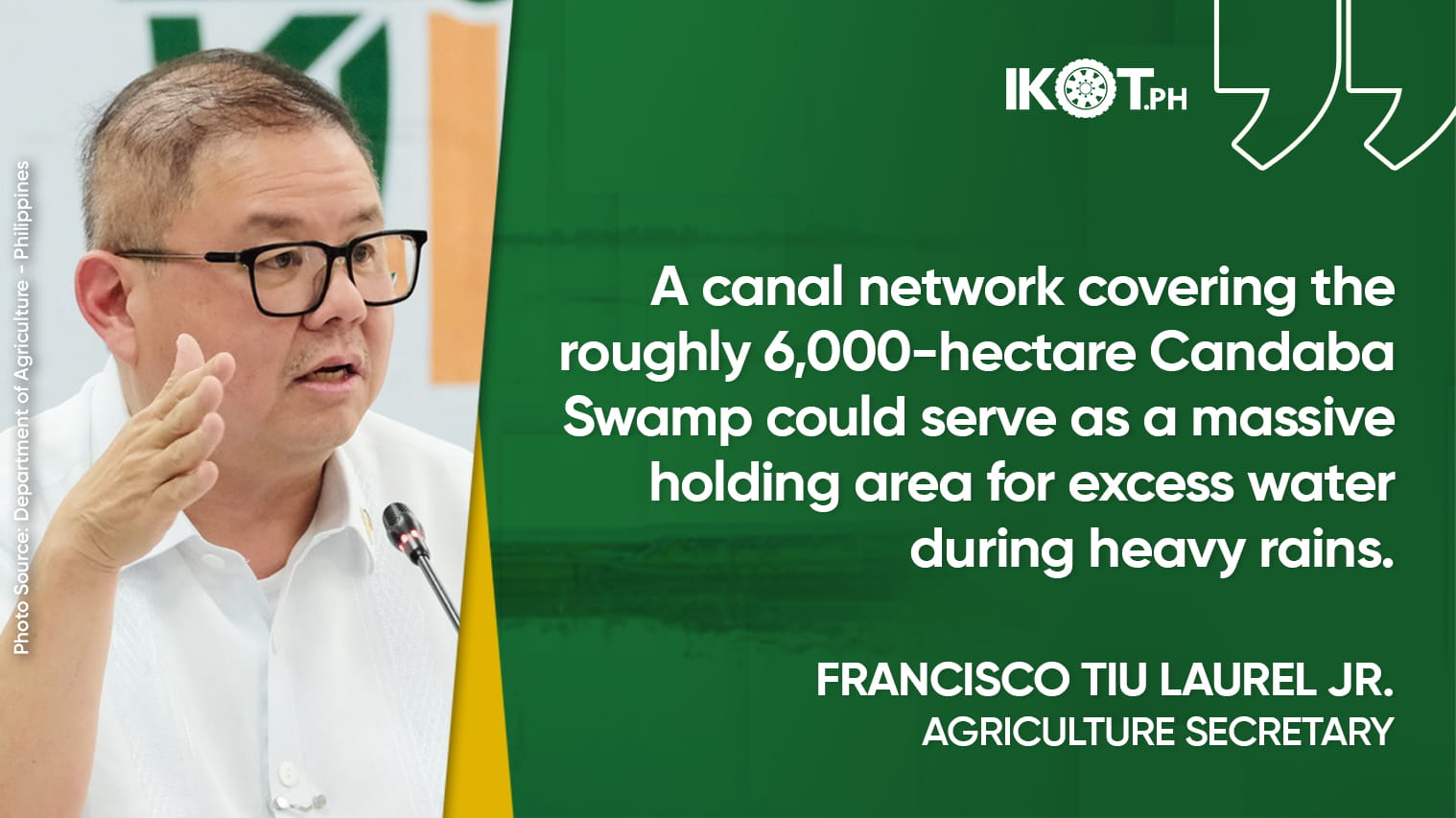
The agriculture head said a canal network covering the roughly 6,000-hectare Candaba Swamp could serve as a massive holding area for excess water during heavy rains. As water is redirected into the canals, portions of the swamp could dry out and potentially become available for cultivation.
The proposed waterways could also create an alternative logistics network for agricultural producers. Instead of moving harvests entirely by road, farmers could use the canals to transport crops and other agricultural products.
The concept is part of a broader DA effort to examine how flood-prone landscapes can be converted into productive agricultural assets. Tiu Laurel said the agency is also looking at similar possibilities in other major marshes and river basins, including the Agusan and Lingasnan marshes and the Lagayan River Basin.
The economic case, however, will depend on whether the feasibility study can demonstrate that the benefits from flood mitigation, additional agricultural land, irrigation, and cheaper farm transport justify the project’s eventual cost.
If viable, the Candaba proposal could represent a shift in flood management, using large-scale water infrastructure not only to move excess water away from vulnerable communities but also to create new capacity for agriculture and rural logistics.