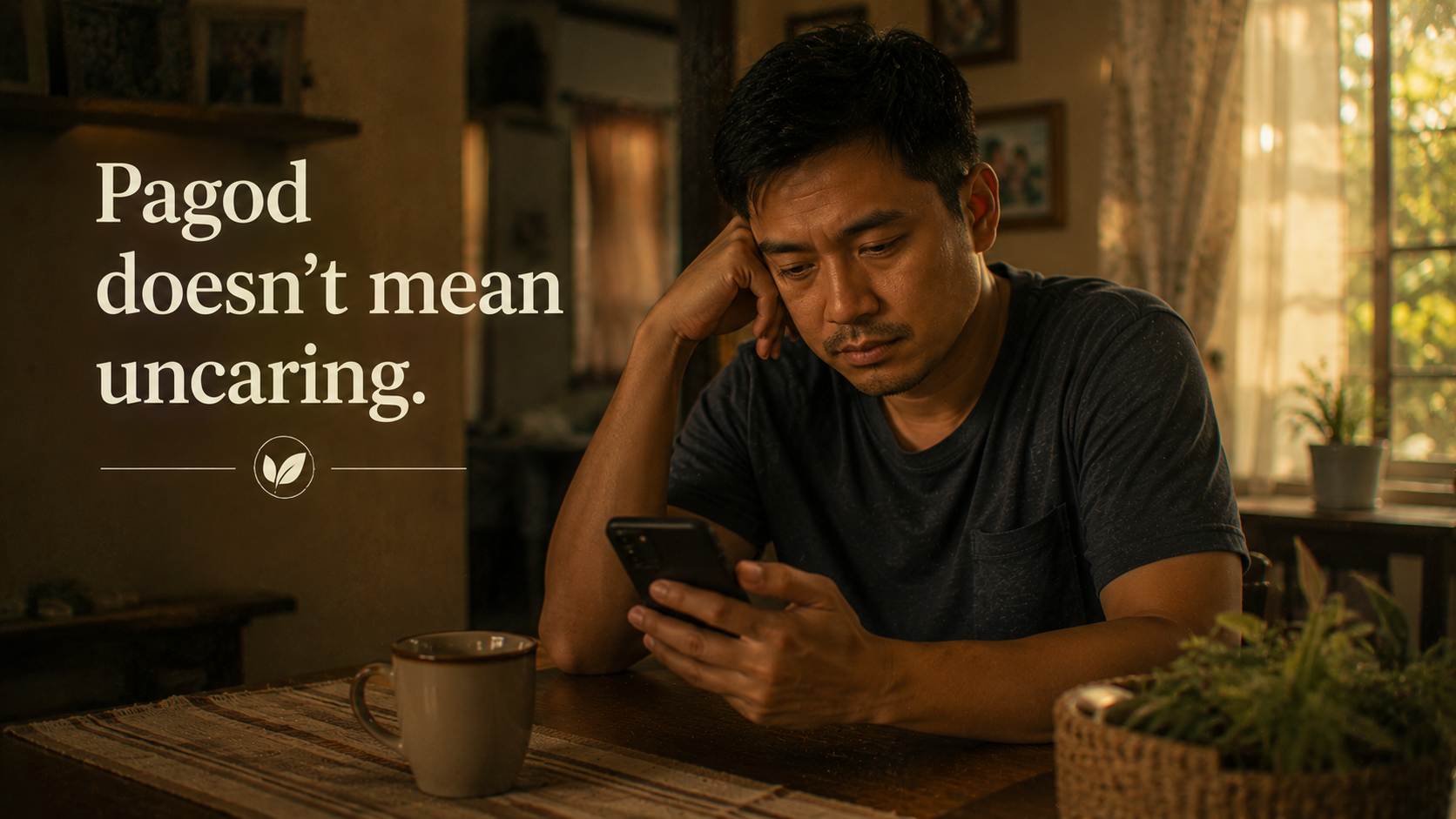
Many Filipinos are naturally generous.
We give food even when portions are small.
We help family before helping ourselves.
We contribute quietly during emergencies.
We adjust.
We sacrifice.
We show up.
And often, we do these things without being asked twice.
There is beauty in that kind of generosity.
But there is also a quieter reality many people struggle to admit:
Sometimes, giving leaves you tired in ways that have nothing to do with money.
When Generosity Starts Feeling Heavy
At first, the feeling is difficult to notice.
You still help.
You still say yes.
You still do what you’ve always done.
But something changes internally.
A request that once felt easy suddenly feels heavier.
A favor feels larger than it should.
A simple message asking for help creates an unexpected sigh.
And immediately, guilt arrives.
“Bakit parang napapagod na ako?”
The Guilt of Feeling Tired
This confuses many people because they genuinely care about the people they help.
They love their family.
They care about their friends.
They want others to be okay.
So when exhaustion appears, they assume something must be wrong with them.
Maybe they’re becoming selfish.
Maybe they’re becoming less compassionate.
Maybe they’re not as generous as they thought.
But emotional fatigue does not automatically mean your love disappeared.
Sometimes, it simply means your capacity has been stretched longer than you realized.
When Giving Becomes Your Default Setting
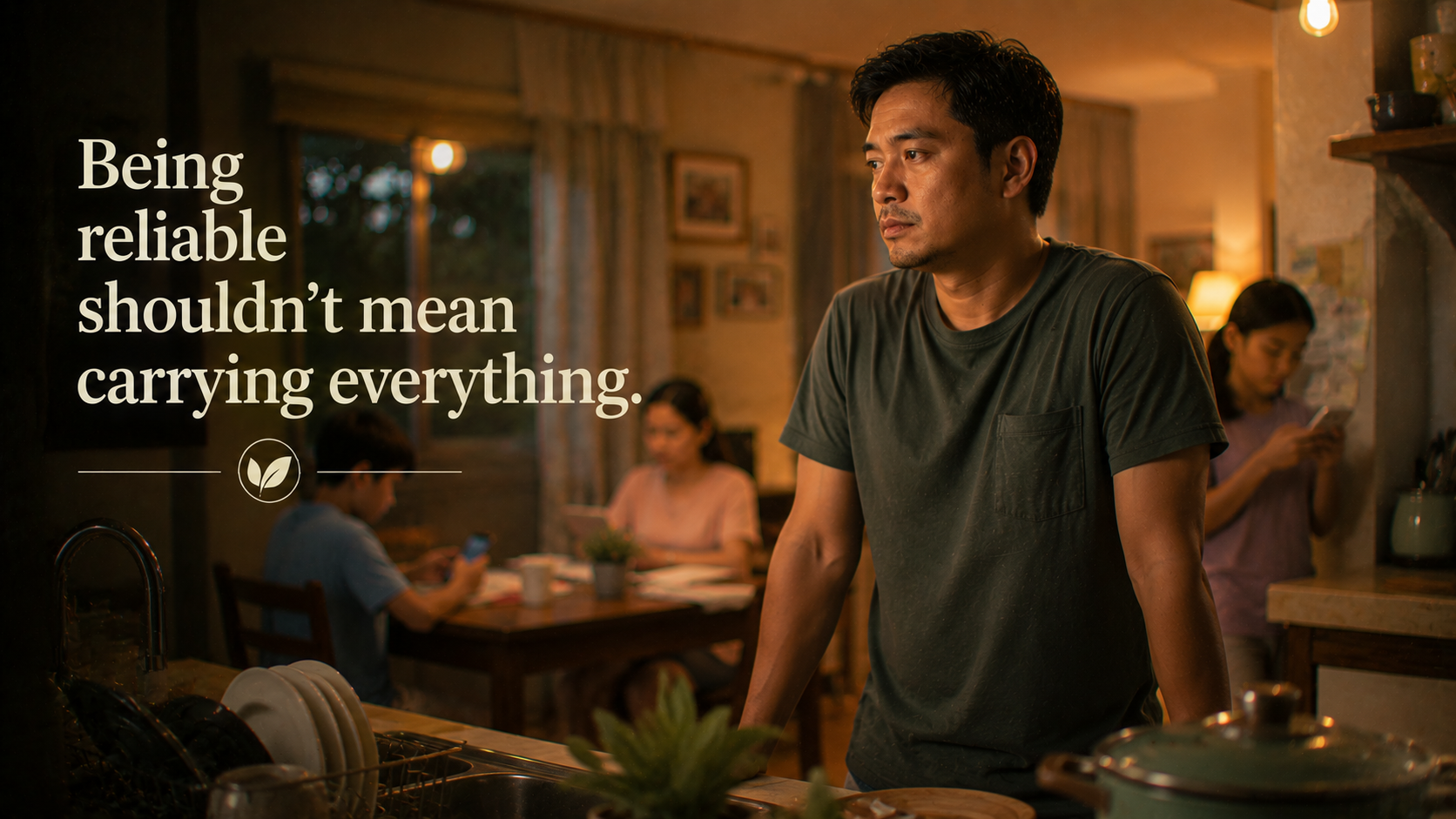
For many Filipinos, generosity is not just a behavior.
It becomes identity.
You become the reliable one.
The responsible one.
The person everyone calls when something goes wrong.
The one who finds a way.
And over time, helping stops feeling like a choice.
It starts feeling like a role you are expected to play.
The Difference Between Giving and Carrying
This is where many people become trapped.
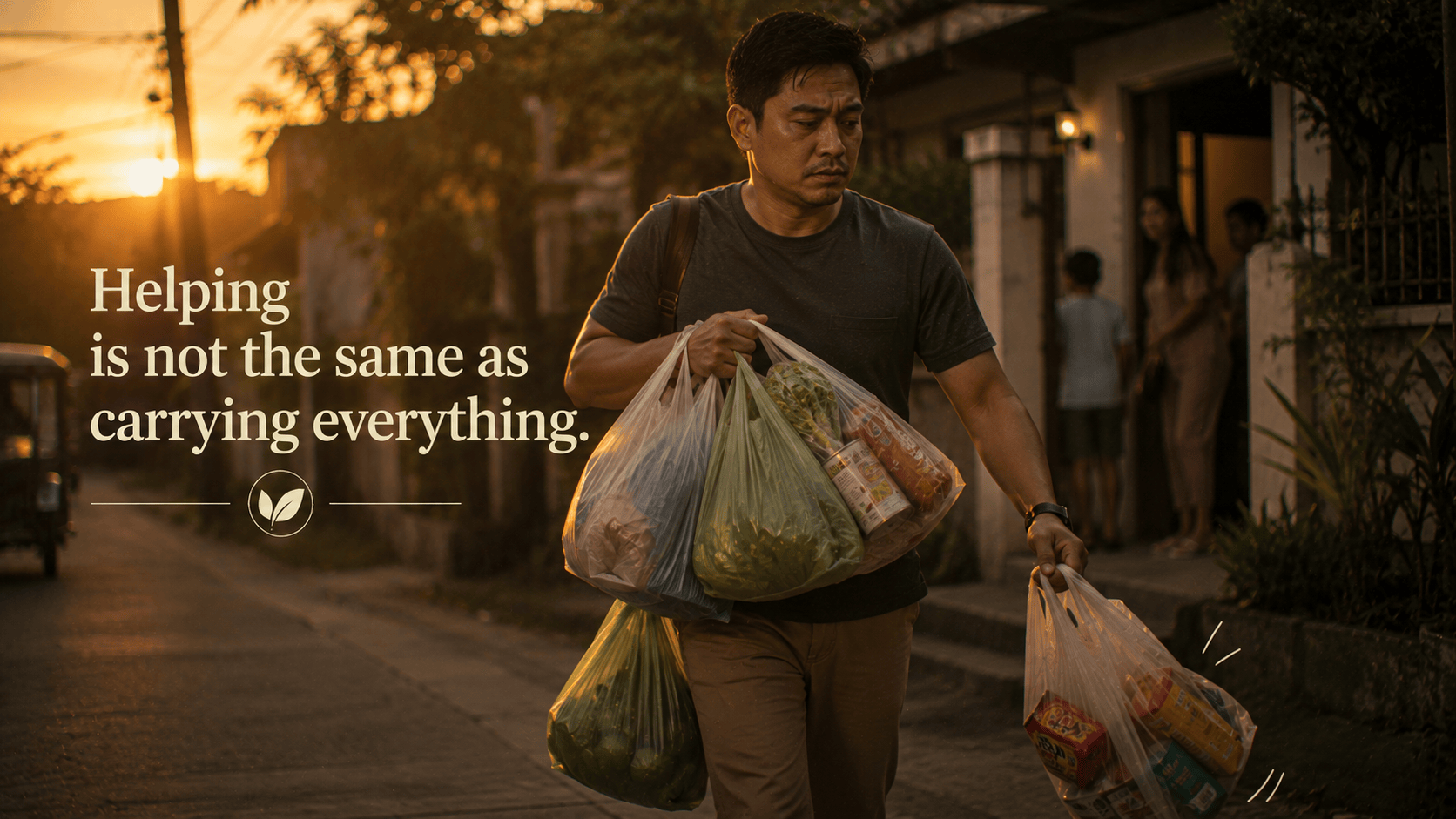
Because there is a difference between giving support and carrying responsibility.
Giving says:
“Tutulungan kita.”
Carrying says:
“Ako na ang bahala sa lahat.”
At first, the difference seems small.
Over the years, it becomes enormous.
Because support can be shared.
But carrying eventually becomes lonely.
The Weight Nobody Sees
What makes this difficult is that dependable people often hide their exhaustion well.
They continue functioning.
Continue paying.
Continue adjusting.
Continue showing up.
So everyone assumes they’re fine.
After all, they’re still managing.
They’re still smiling.
They’re still helping.
What people don’t see is the emotional cost accumulating quietly underneath.
When Responsibility Stops Expanding
One of the strangest things about long-term giving is this:
Needs rarely stop growing on their own.
If you are capable, people naturally lean toward you.
Not always out of entitlement.
Often out of trust.
Because they know you’ve helped before.
And because of that, many generous people slowly find themselves carrying responsibilities they never consciously agreed to carry.
The Cost of Becoming Everyone’s Safety Net
Over time, life can start revolving around other people’s emergencies.
Other people’s deadlines.
Other people’s financial problems.
Other people’s emotional needs.
And little by little, your own needs keep moving to the back of the line.
Not because they stopped mattering.
Because they became easier to postpone.
Until one day, you realize you’ve become available to everyone except yourself.
Why Boundaries Feel Uncomfortable
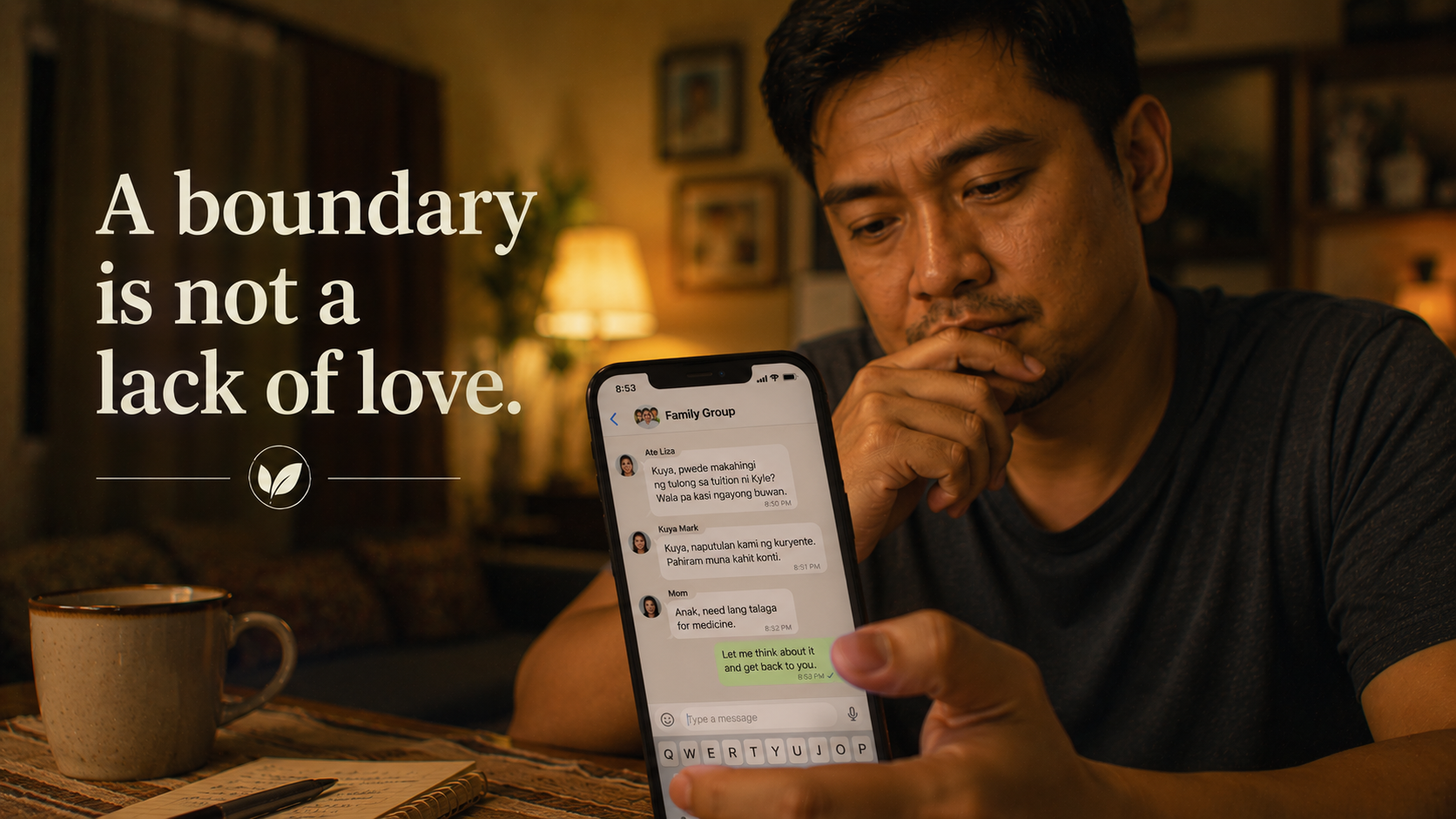
This is why boundaries feel emotionally complicated for many Filipinos.
Not because they don’t understand them.
But because boundaries often create fear.
Fear of disappointing people.
Fear of being misunderstood.
Fear of looking uncaring.
Fear of damaging relationships that matter.
And when love and obligation become deeply intertwined, saying no can feel heavier than saying yes.
Even when yes is already hurting you.
What Sustainable Generosity Actually Looks Like
This is why healthy generosity requires something deeper than kindness.
It requires stewardship.
Stewardship of your energy.
Your finances.
Your emotional capacity.
Your future.
Because generosity is not only about what you give away.
It is also about what you preserve so that your giving can continue.
The Kindness That Lasts Longer
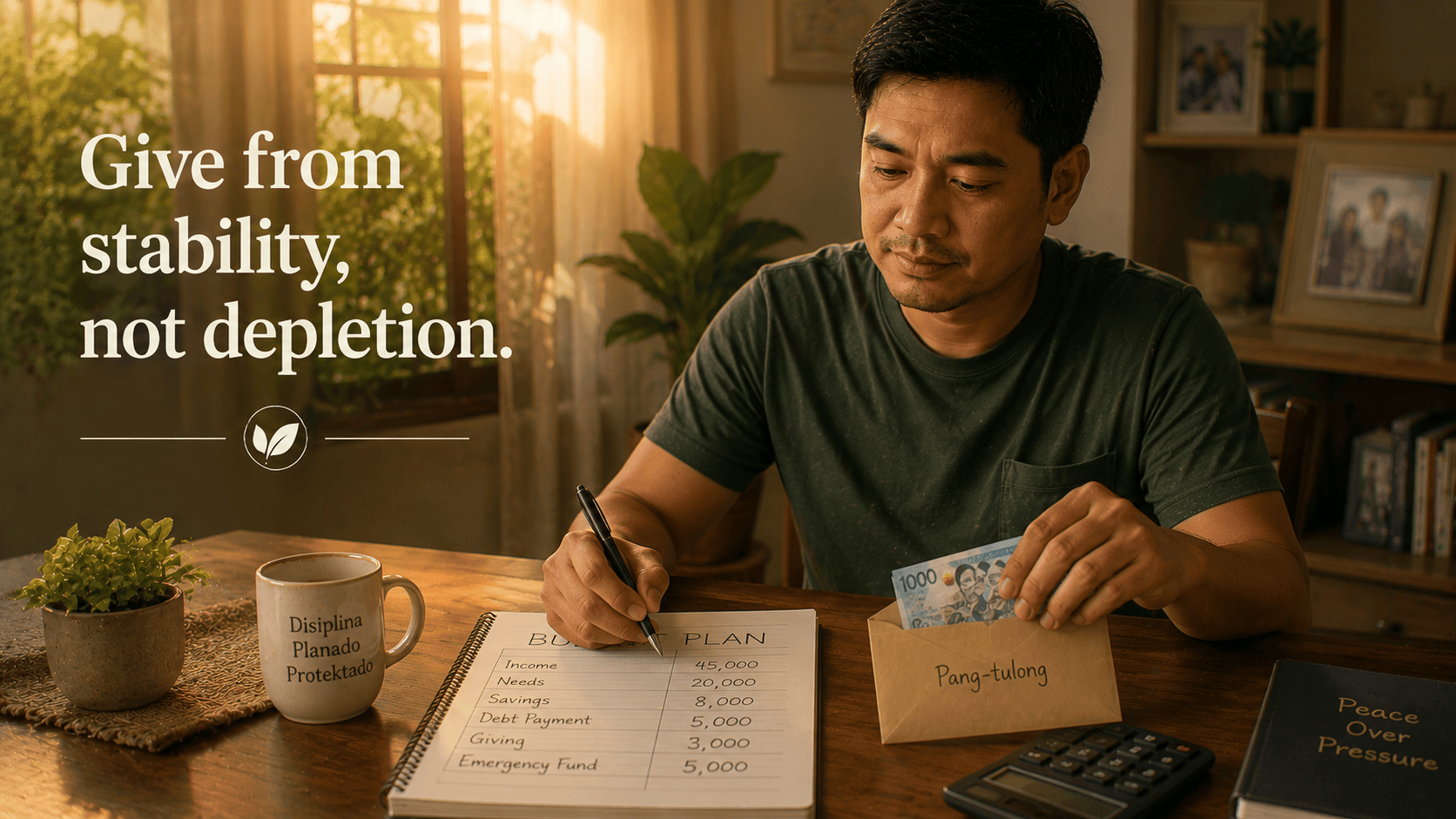
The healthiest generosity is usually less dramatic than people imagine.
It is not constant self-sacrifice.
It is not endless availability.
It is not proving your love through exhaustion.
Instead, it looks like giving from stability rather than depletion.
Helping without abandoning yourself.
Supporting without absorbing everything.
Caring without collapsing.
When Giving Feels Clean Again
Something beautiful happens when generosity becomes sustainable.
The resentment softens.
The pressure decreases.
The guilt becomes quieter.
And giving begins feeling lighter again.
Not because people stopped needing help.
But because you stopped confusing love with self-erasure.
A Quiet Reframe
Perhaps generosity was never meant to be measured by how much of yourself you can lose.
Perhaps it is measured by how long your kindness can remain healthy enough to stay.
Finally, Something Important
You do not need to completely empty yourself to prove you care.
You do not need to carry every burden to deserve love.
You do not need to become exhausted before your needs become valid.
Those are lessons many responsible people spend years learning.
Closing Reflection
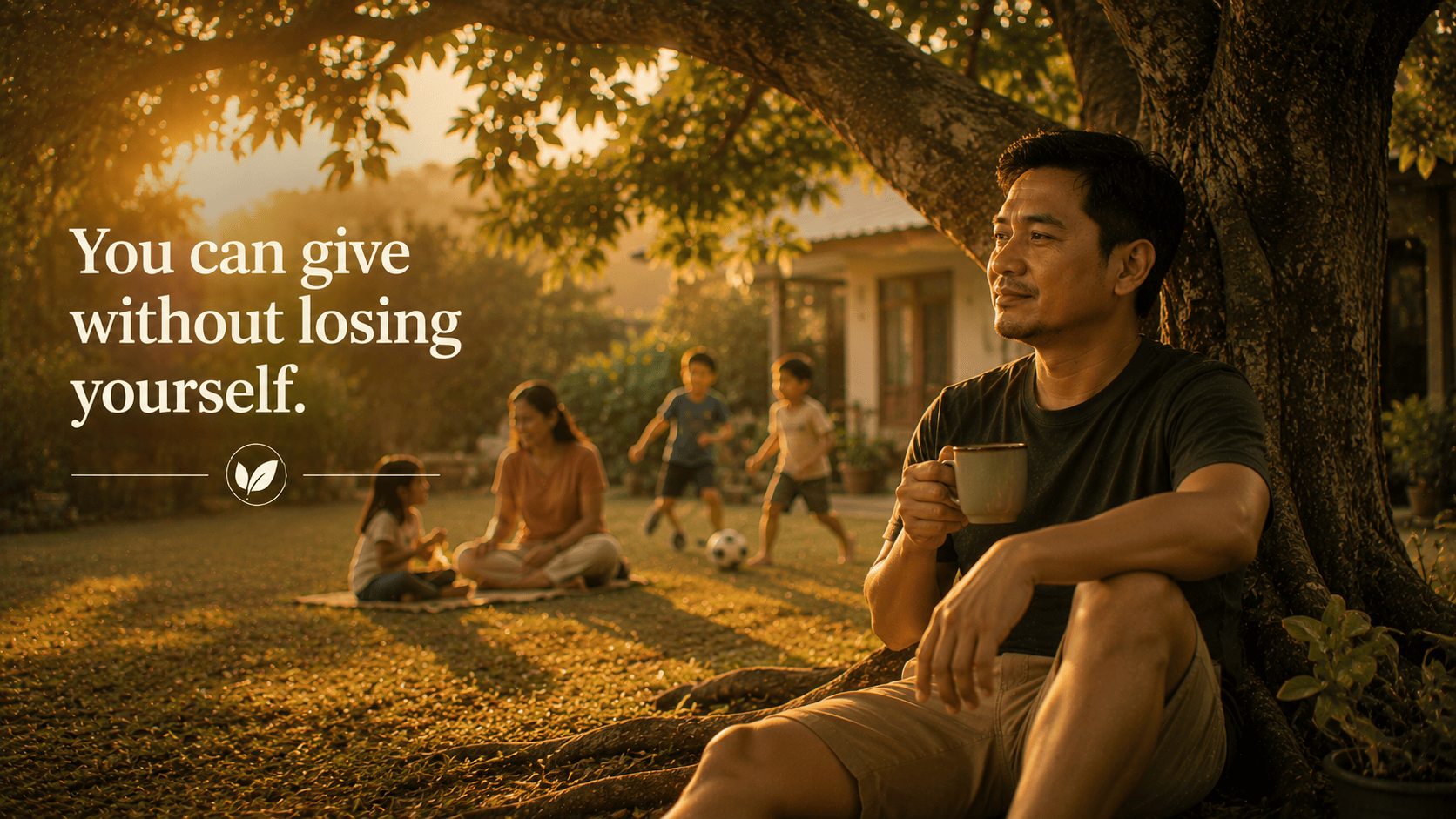
Because real generosity is not about disappearing for the benefit of everyone else.
It is about creating enough steadiness in your own life that your kindness can remain present for years—not just moments.
And maybe that is the quieter form of generosity many Filipinos are slowly discovering:
Not love that constantly bleeds itself dry.
But love that remains strong enough to keep giving without losing itself along the way.
Because growth eventually asks a difficult question:
Not only “How much can I give?”
But also:
“How do I give in a way that allows me to remain whole?”
And sometimes, that question changes both your finances and your relationships more than any amount of money ever could.
Catch Thanjo’s personal finance column every Tuesday at 7 p.m. on IKOT.PH and across Facebook, X (Twitter), and Instagram.
DISCLAIMER:
The views and opinions of our partners and contributors expressed in this article are exclusively their own and are made in their personal capacities. They do not reflect the views, policies, or official stance of IKOT.PH, its editors, officers, or affiliates. As such, nothing contained herein shall be construed as professional advice or as an official declaration, endorsement, or position of IKOT.PH.