
President Ferdinand R. Marcos Jr. celebrated the Philippines’ improved performance in the 2025 Programme for International Student Assessment (PISA), highlighting gains in Reading, Mathematics, and Science and calling for the continued implementation of reforms to build on the progress.
“Tumaas tayo sa lahat ng bagay, sa Reading, sa Mathematics, sa Science. Iilan lang daw ang bansa na natamo ang ganong klaseng improvement na kagaya ng nakikita natin sa ating educational system,” President Marcos said, hours after the Department of Education (DepEd) announced its best performance yet in the international student assessment conducted by the Organisation for Economic Co-operation and Development (OECD).
The President said the results affirmed the ability of Filipino learners and teachers, while emphasizing that the gains must be matched by sustained investments in schools.
“Kaya po ipagpapatuloy natin lahat ito; ipagpapatuloy natin lahat ng ating ginagawa. Nagsimula pa lang tayo magtayo ng classroom, nagsimula pa lang tayo nagpamigay ng internet, ng mga computer, ng mga school supply, na nagpa-imprinta tayo ng mga libro. Nagsisimula pa lang tayo, ipapagpatuloy natin ito,” President Marcos emphasized.
DepEd is now focused on sustaining the momentum through reforms that address both learning outcomes and the conditions that enable learners and teachers to succeed.
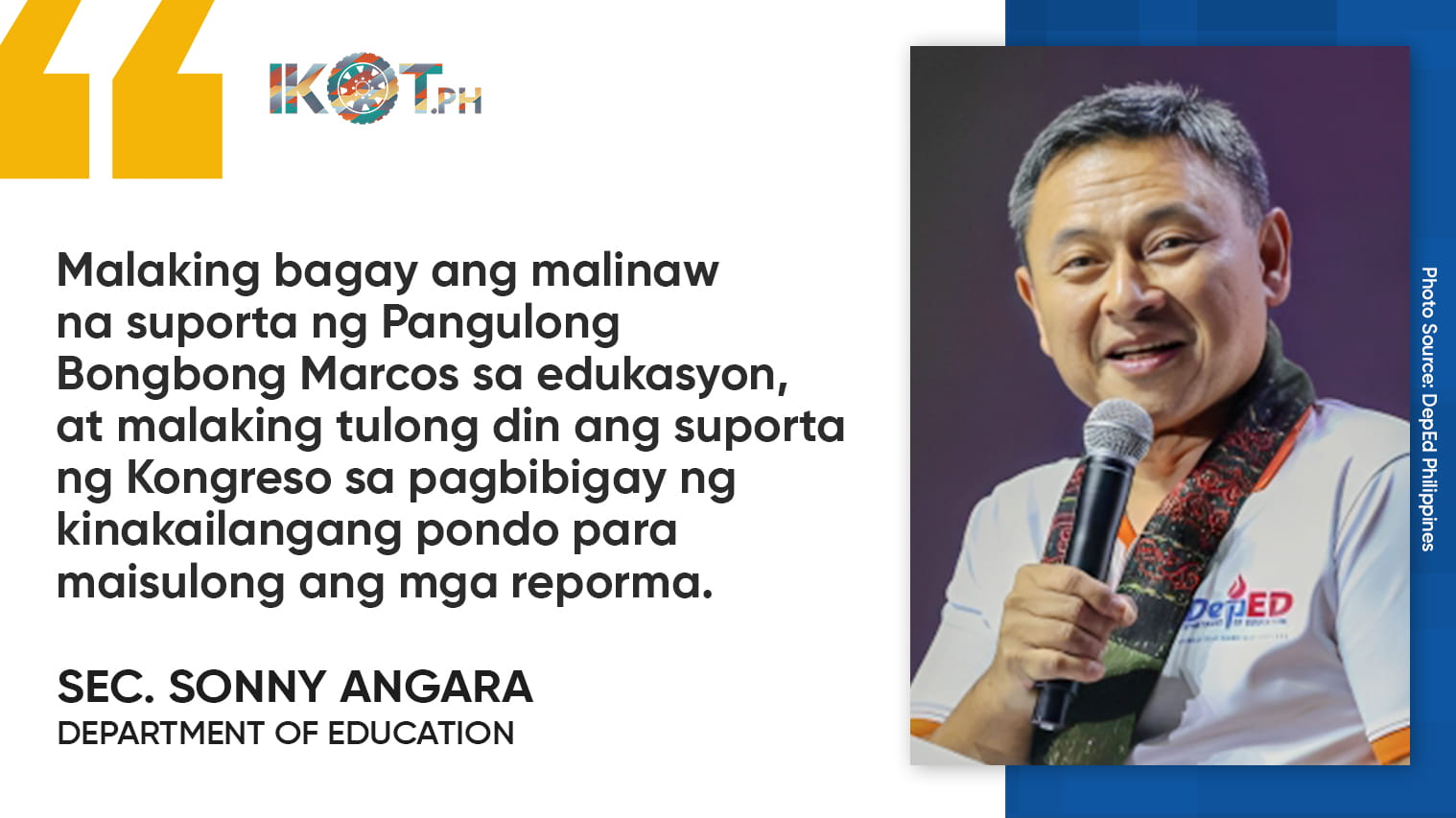
Education Secretary Sonny Angara said the improvement reflected the administration’s sustained focus on education, as well as Congress’ support for the resources required to implement reforms.
“Malaking bagay ang malinaw na suporta ng Pangulong Bongbong Marcos sa edukasyon, at malaking tulong din ang suporta ng Kongreso sa pagbibigay ng kinakailangang pondo para maisulong ang mga reporma. Magandang senyales ito na may bunga ang ating mga ginagawa, pero hindi ito dahilan para magpahinga. Kailangan nating ipagpatuloy at palakasin ang mga repormang ito para mas marami pang batang Pilipino ang makinabang,” Angara said.
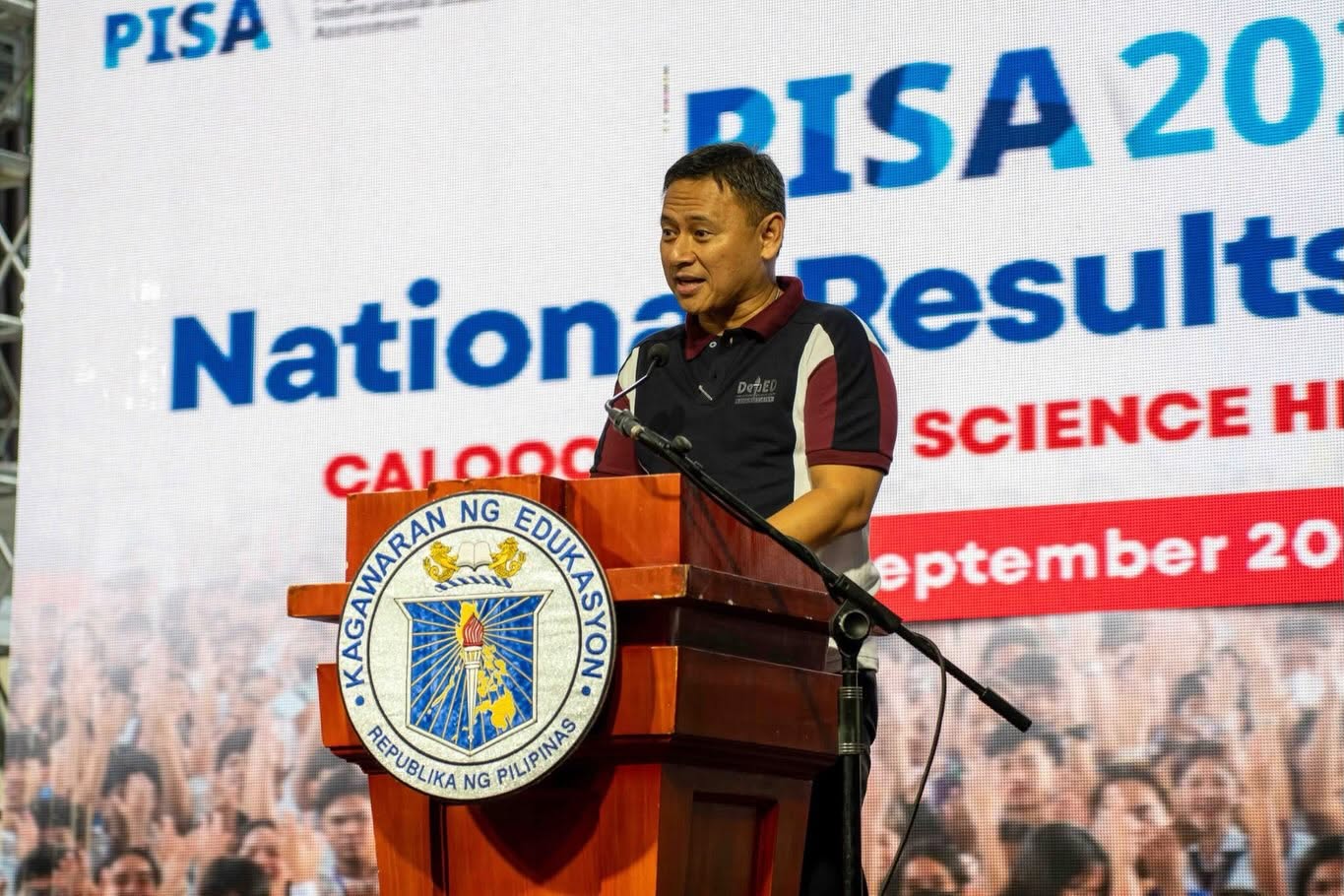
DepEd is now focused on sustaining the momentum through reforms that address both learning outcomes and the conditions that enable learners and teachers to succeed.
In a forum on Wednesday, Undersecretary for Learning Systems Carmela C. Oracion outlined continuing measures on curriculum modernization, workforce development, teacher welfare, child protection, classroom construction, digital access, learning recovery, and education technology.
The reforms include the Revised K–10 Curriculum and a strengthened Senior High School curriculum, part of efforts to provide learners with a more modern and future-ready education.
DepEd is also strengthening its workforce. To date, 82,092 teachers and school heads have been promoted, while another 135,063 positions are proposed for promotion for FY 2027.
The Department has also continued investing in basic education infrastructure. 21,900 classrooms were created from July 2022 to June 2026, while PHP49.8 billion was allocated for classroom construction for FY 2026.
Digital access has expanded as well, with 44,870 public schools connected to the internet, alongside 140,430 laptops for teachers, 77,000 Smart TVs, and 8,266 e-Learning Cart packages. Another 250,000 devices are to be provided under the President’s directive.
Learning recovery efforts are also showing progress, with the number of grade-ready learners increasing by 75 percent, from 3.3 million at the beginning of the school year to 5.8 million by the end of the school year.
Undersecretary Oracion framed the Department’s approach as moving from “Kaya ba?” to “Kaya pa!,” a push to build on the gains while continuing to address gaps in the education system. DepEd identified strengthening teacher capacity, making schools safer, and keeping the curriculum relevant as key priorities moving forward.