
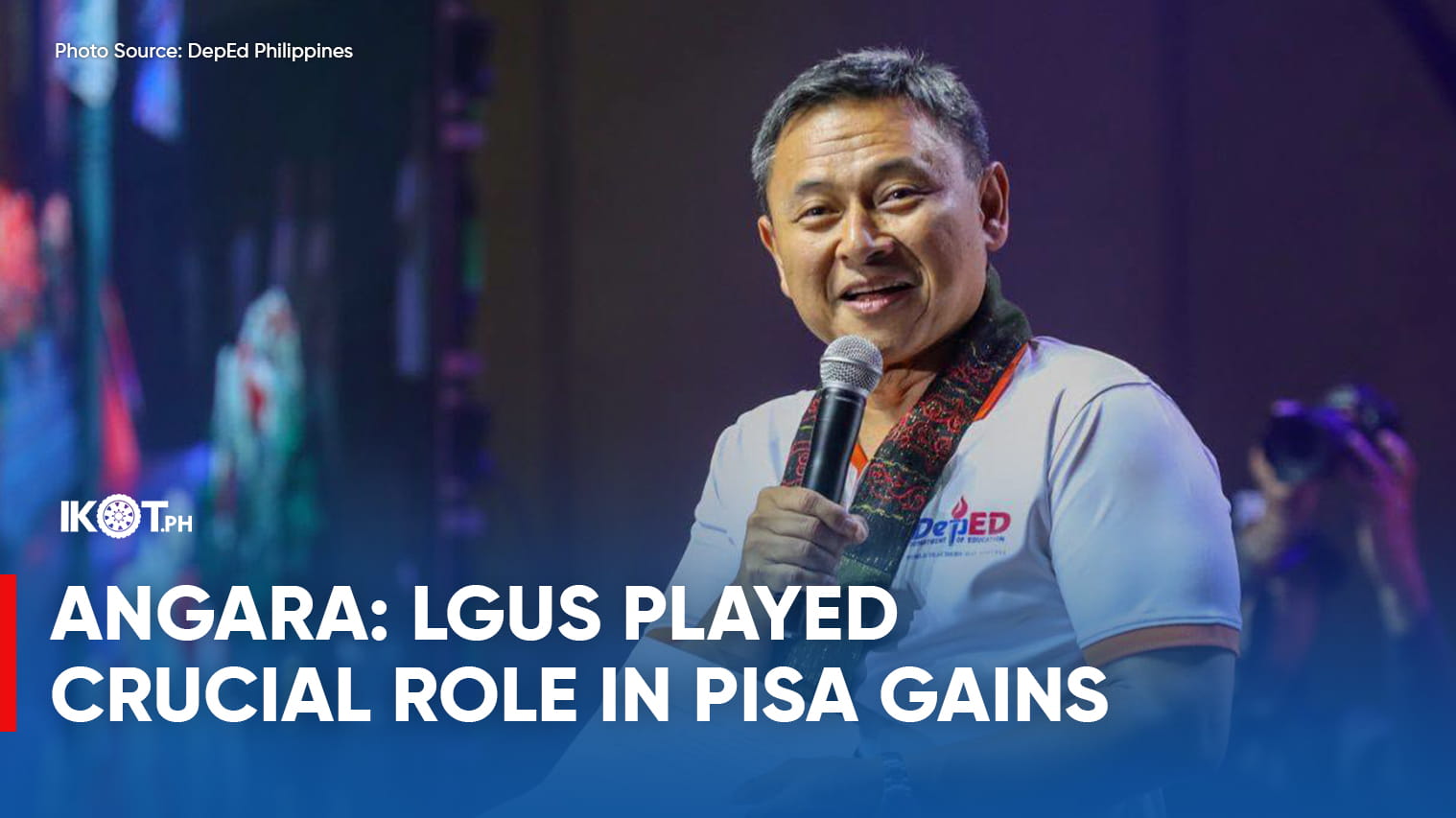
Education Secretary Sonny Angara underscored the critical role of local governments in improving learning outcomes, saying the Philippines’ gains in the Programme for International Student Assessment (PISA) 2025 were supported by the active participation of local communities, from provincial and city governments down to barangays.
“LGUs played a crucial role, from the provincial, city, and municipal levels down to our barangays. Nakipag-ugnayan sila sa mga paaralan para matiyak na maayos ang testing conditions, kabilang ang standby generators, medical personnel, at iba pang learner support,” Secretary Angara said.
“Natulungan nilang matiyak na handa ang ating mga paaralan at mag-aaral para sa assessment at sana maging tuloy-tuloy itong suporta sa edukasyon ng ating mga LGUs,” Angara added.
For Angara, the active participation of LGUs demonstrates the importance of treating education as a shared responsibility, with national and local governments working alongside schools, families, communities, and partners.
More than 170 LGUs actively participated in supporting PISA-related preparations and activities, demonstrating widespread local backing nationwide.
In Metro Manila and Luzon, LGUs such as Caloocan City, Pasig City, Provincial Government of Camarines Sur, and Ayod, Isabela provided practical support for PISA preparations, including funding, assessment room improvements, tablets, internet connectivity, laptops, generators, food, and other learner assistance.
In the Visayas and Mindanao, the Municipality of Tapaz, Capiz provided financial assistance for learners’ food and snacks, while the Tandag City Government provided internet connectivity, a generator, computer laboratory upgrades, and assistance to learners.
The Philippines recorded its strongest performance across reading, mathematics, and science since joining the international assessment in 2018. The country also improved the proportion of learners reaching at least the baseline proficiency level across all three domains.
Secretary Angara credited local leadership for these educational gains, recalling the strong engagement from governors, mayors, barangay captains, barangay officials, and other local leaders.
He highlighted that education is increasingly becoming a central priority for local leaders, expanding their involvement beyond traditional community programs to more direct support for learning and learner welfare.
Angara added that the growing commitment of LGUs to education is reflected in the evolving utilization of the Special Education Fund (SEF). Under the administration of President Ferdinand R. Marcos Jr., reforms have encouraged LGUs to allocate SEF resources toward targeted learning recovery such as the Academic Recovery and Accessible Learning (ARAL) Program, and nutrition initiatives.
More than 170 LGUs actively participated in supporting PISA-related preparations and activities, demonstrating widespread local backing nationwide.
These efforts complement DepEd’s push to address learning gaps, particularly among learners who need additional support.
The PISA findings themselves underscore why such investments matter, identifying school environments, home backgrounds, and other social conditions as continuing influences on academic achievement.
The stronger role of LGUs also aligns with the direction of DepEd reforms toward greater local participation and accountability through decentralization.
Organisation for Economic Co-operation and Development (OECD) Director for Education and Skills Andreas Schleicher similarly highlighted the importance of giving schools, regions, and communities greater capacity and flexibility to respond to the needs of their learners, while maintaining clear accountability and national standards.
For Angara, the active participation of LGUs demonstrates the importance of treating education as a shared responsibility, with national and local governments working alongside schools, families, communities, and partners.
“Kung sama-sama nating susuportahan ang learning recovery, nutrition, safe schools, at iba pang pangangailangan ng ating mga learners, mas malaki ang pagkakataon nating mapanatili at mapalawak ang magandang performance ng ating mga paaralan. Kailangan nating siguraduhin na walang maiiwang komunidad sa pag-unlad ng ating edukasyon,” Angara said.