Many people think wealth changes a home through material things.
A bigger house.
Better appliances.
New furniture.
More comfortable living conditions.
And certainly, these things matter.
Comfort matters.
Convenience matters.
Financial stability matters.
But some of the deepest changes money creates inside a home are invisible.
They happen emotionally.
In the atmosphere.
In the conversations people have.
In the things family members no longer have to fear.
The Emotional Climate of a Home
Whether families openly discuss it or not, money shapes the emotional climate of a household.
Children feel financial stress long before they understand financial concepts.
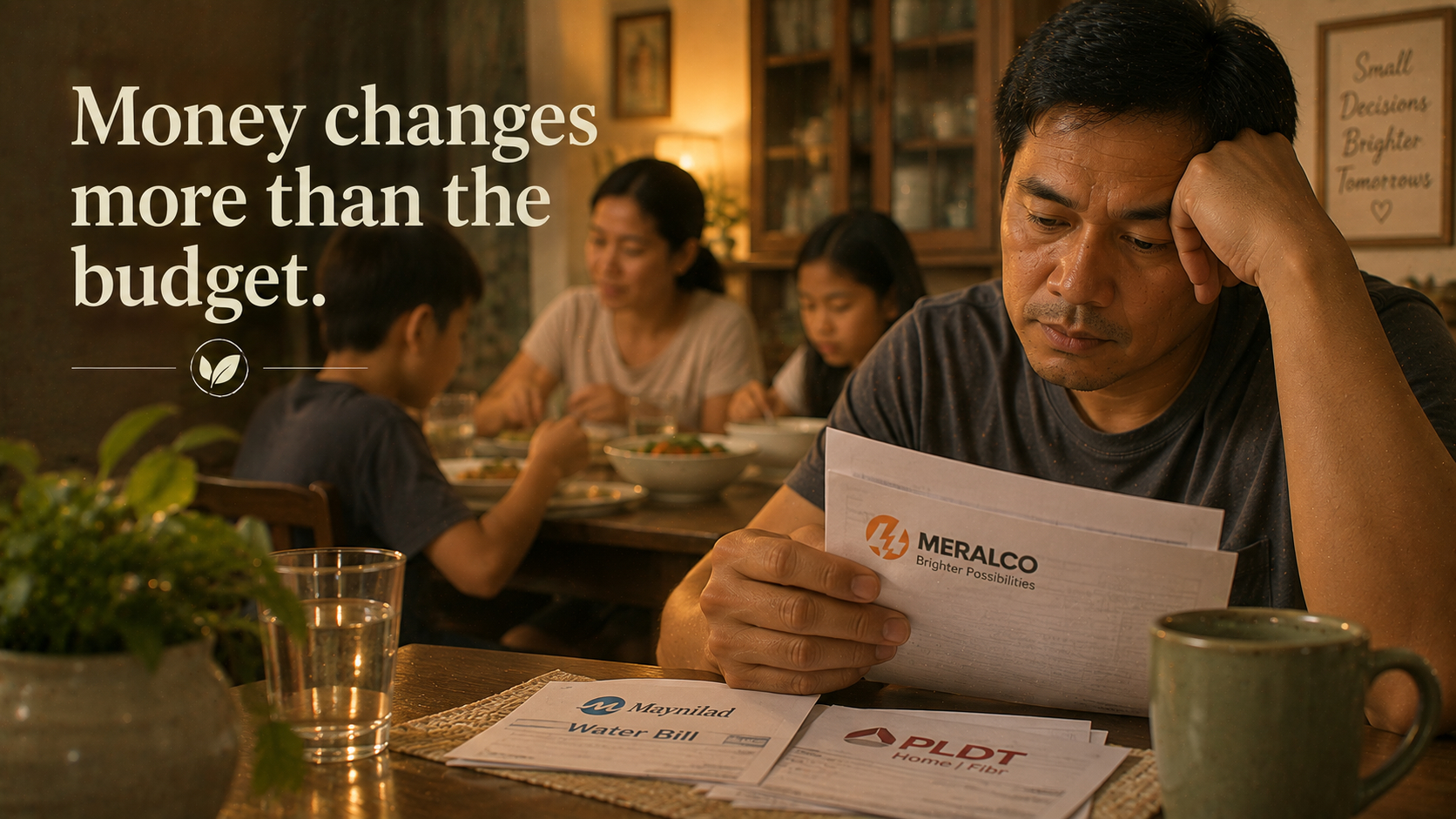
They notice the silence after bills arrive.
The tension during difficult months.
The arguments that seem unrelated but somehow always happen when money is tight.
The exhaustion in the people carrying responsibility.
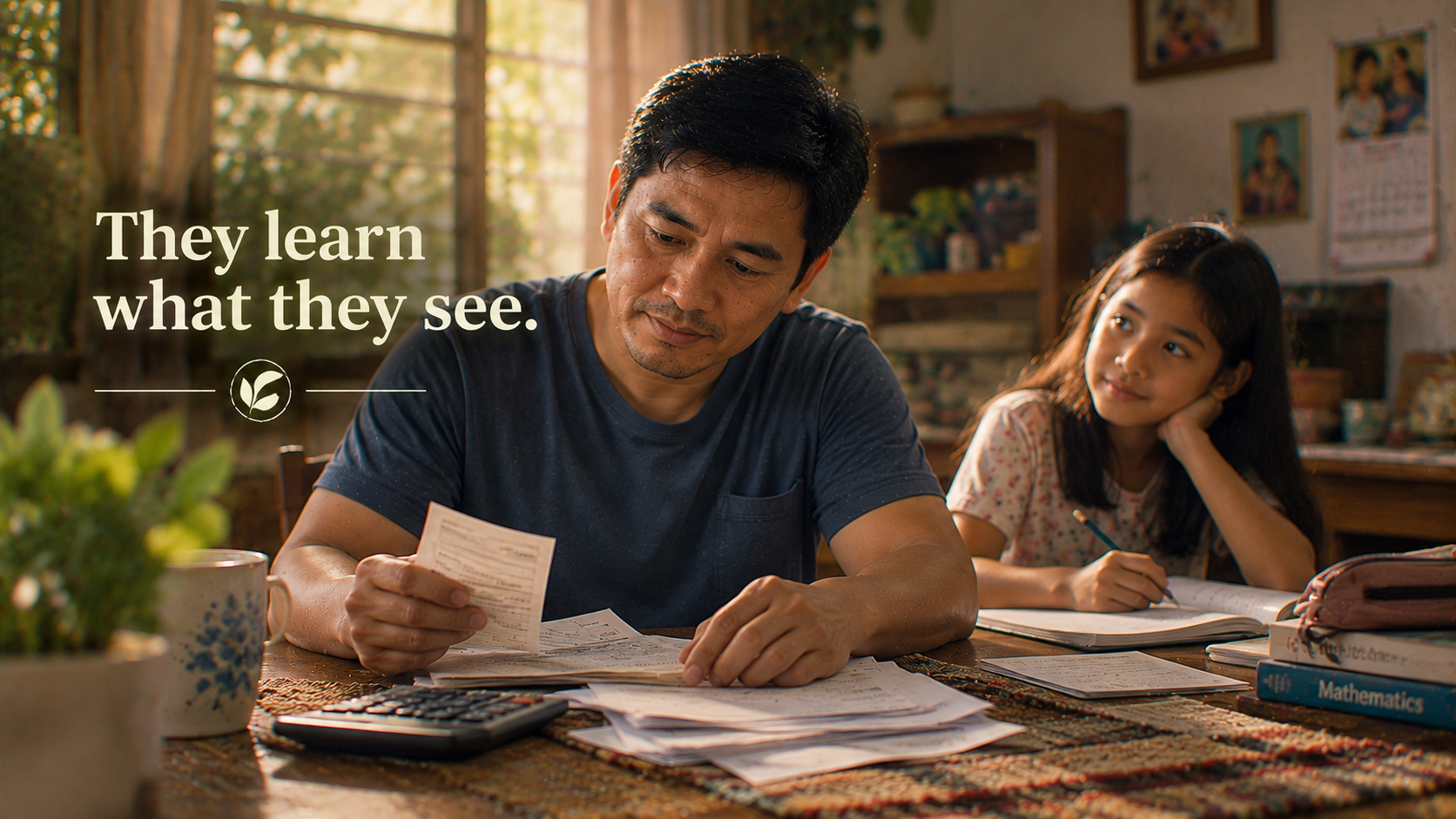
Even without explanations, homes quietly teach lessons about money every day.
The Lessons Children Absorb
Some children grow up learning:
“Money always causes stress.”
Others learn:
“Problems should be hidden.”
“Rest is dangerous.”
“Being responsible means worrying all the time.”
These lessons rarely arrive through lectures.
They arrive through observation.
Through repetition.
Through atmosphere.
And because of that, they often stay longer than people realize.
What Families Actually Pass Down
Many people think inheritance is something received later in life.
Property.
Savings.
Assets.
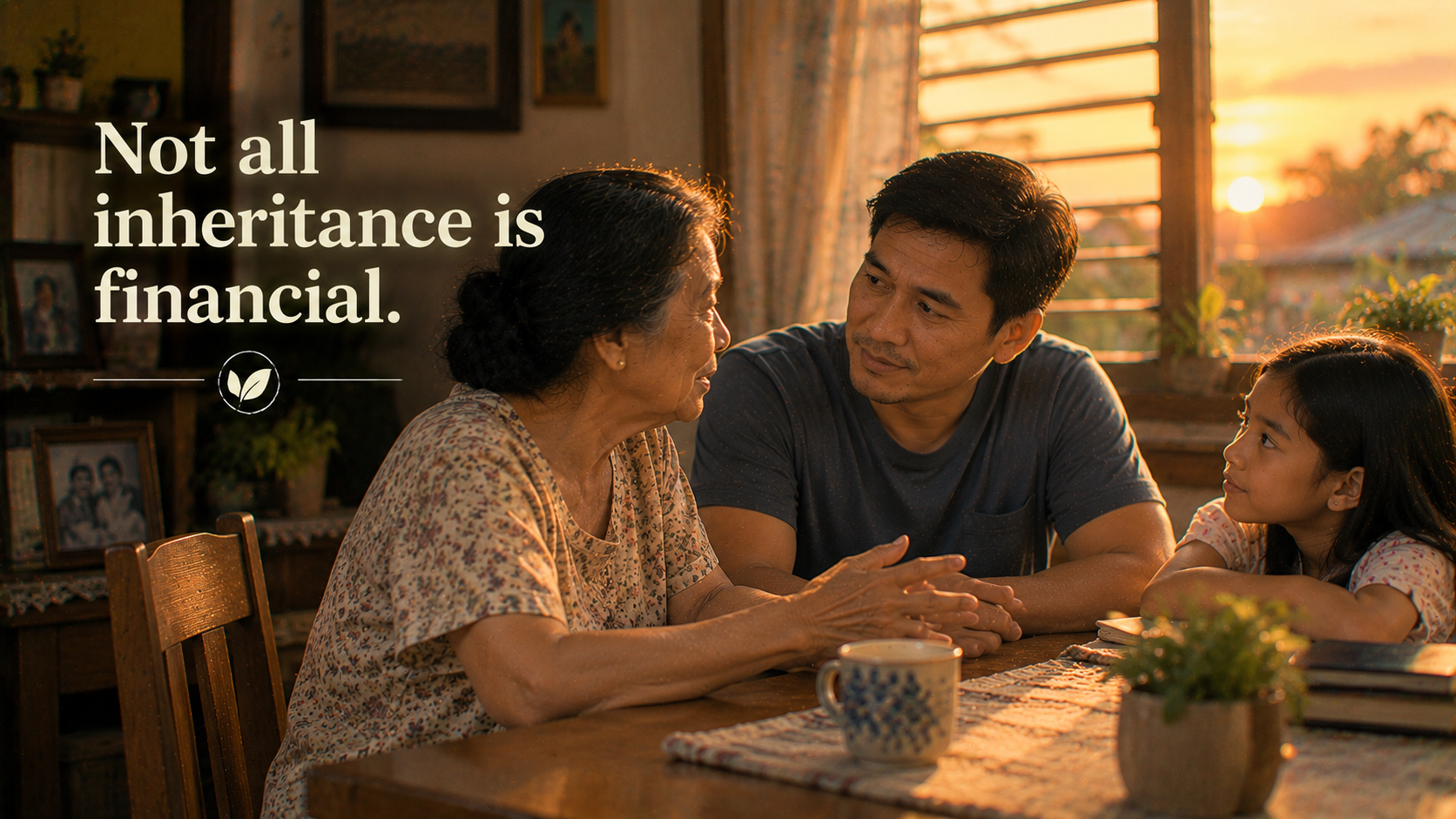
But long before financial inheritance arrives, emotional inheritance is already happening.
Children inherit attitudes.
Beliefs.
Fears.
Ways of responding to uncertainty.
Ways of talking about money.
Ways of carrying pressure.
And these inheritances often shape a person’s future more deeply than they realize.
Why Financial Healing Matters
This is why financial healing matters beyond numbers.
Because when fear slowly softens inside a home, people soften too.
A parent who no longer panics every payday changes something.
A provider who no longer carries constant desperation changes something.
A family that can discuss challenges calmly instead of reactively changes something.
The shift may seem small.
But its effects spread far beyond the present moment.
The Cost of Constant Survival
Especially in Filipino homes, financial pressure often sits quietly beneath many emotional tensions.
Sometimes arguments are not really about attitude.
Sometimes exhaustion is speaking.
The pressure of tuition.
Rent.
Utang.
Medical expenses.
Supporting extended family.
Trying to survive inflation while still remaining emotionally present for the people you love.
Many people are carrying far more invisible stress than they openly admit.
And eventually, that stress begins shaping relationships.
What Stability Makes Possible
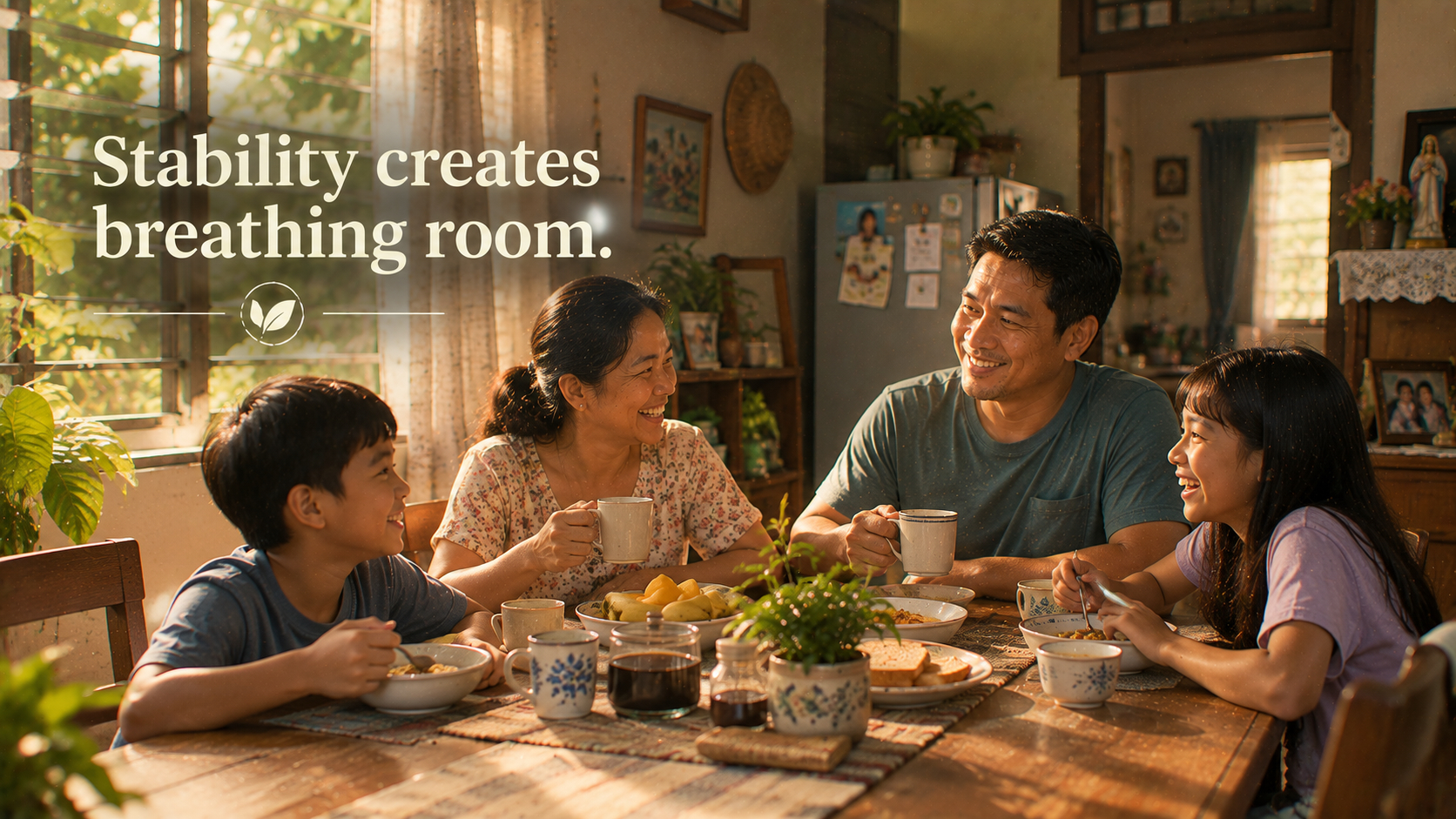
This is why stable homes are not only financially valuable.
They are emotionally restorative.
Not perfect.
Not luxurious.
Just steadier.
Steady enough that conversations no longer revolve entirely around survival.
Steady enough that children do not absorb panic every day.
Steady enough that people can think beyond the next emergency.
This kind of stability creates something precious:
Possibility.
The Wealth Nobody Brags About
Social media rarely celebrates this kind of progress.
Nobody posts:
“Hindi na kami nag-aaway tungkol sa pera.”
“Mas kalmado na ang bahay namin.”
“Hindi na ako laging kinakabahan sa katapusan ng buwan.”
Yet these are meaningful victories.
Because emotional safety changes people quietly.
What Happens When Fear Stops Leading
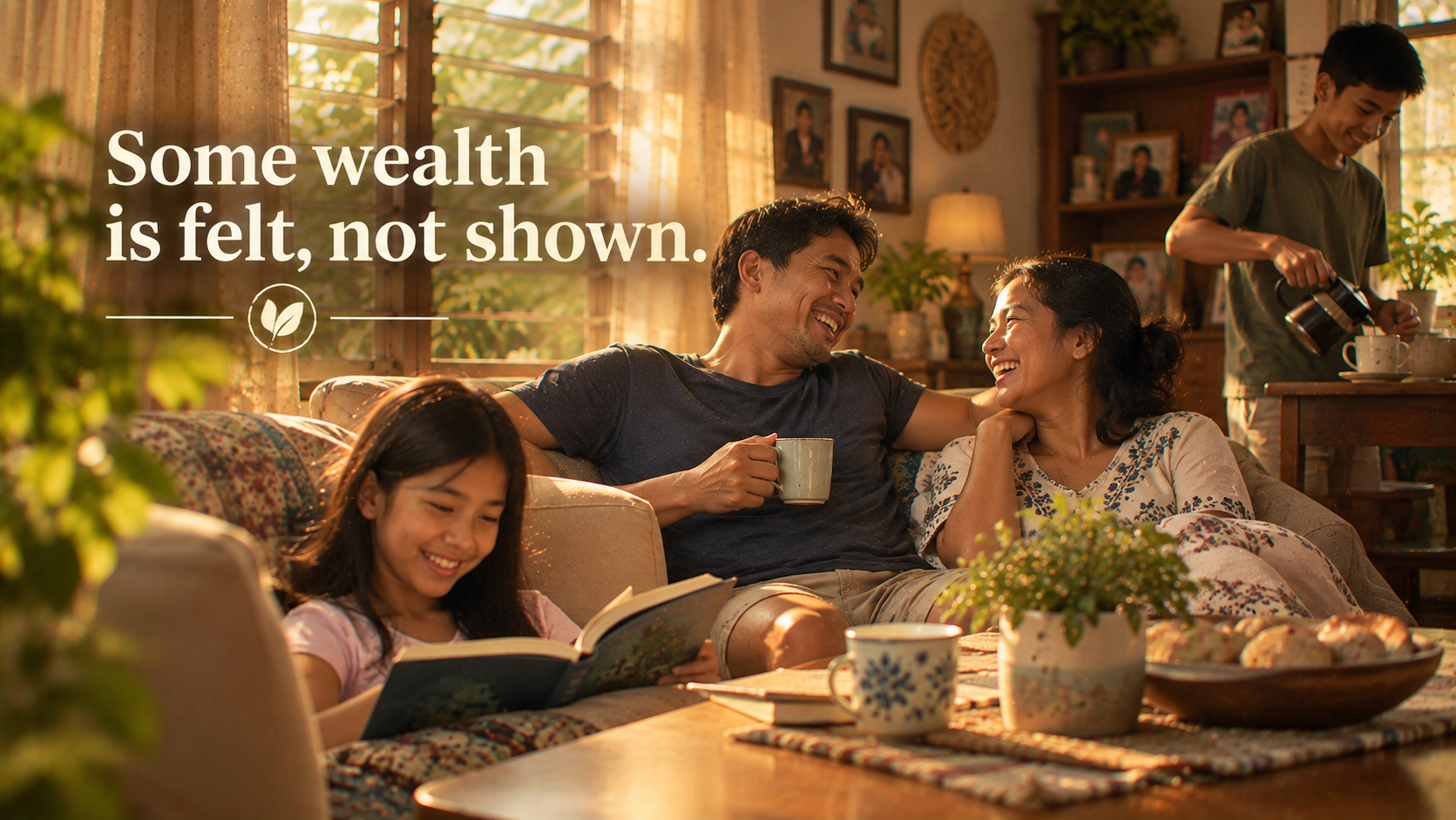
Children raised around calmer financial environments often develop healthier relationships with money later in life.
Partners become more patient with each other.
Families gain room for conversations that are not constantly interrupted by crisis.
Even ordinary moments begin feeling different.
Dinner feels lighter.
Weekends feel calmer.
Laughter returns more easily.
Not because life became perfect.
Because fear stopped occupying every room in the house.
The Deeper Purpose Behind Stability
Perhaps this is why so many Filipinos sacrifice so much for financial stability.
Parents work abroad for years.
Breadwinners endure enormous pressure.
Families postpone comfort for the sake of a better future.
Beneath all those sacrifices is often a simple hope:
“Sana mas magaan ang maging buhay nila.”
Not only financially.
Emotionally too.
A Different Definition of Wealth
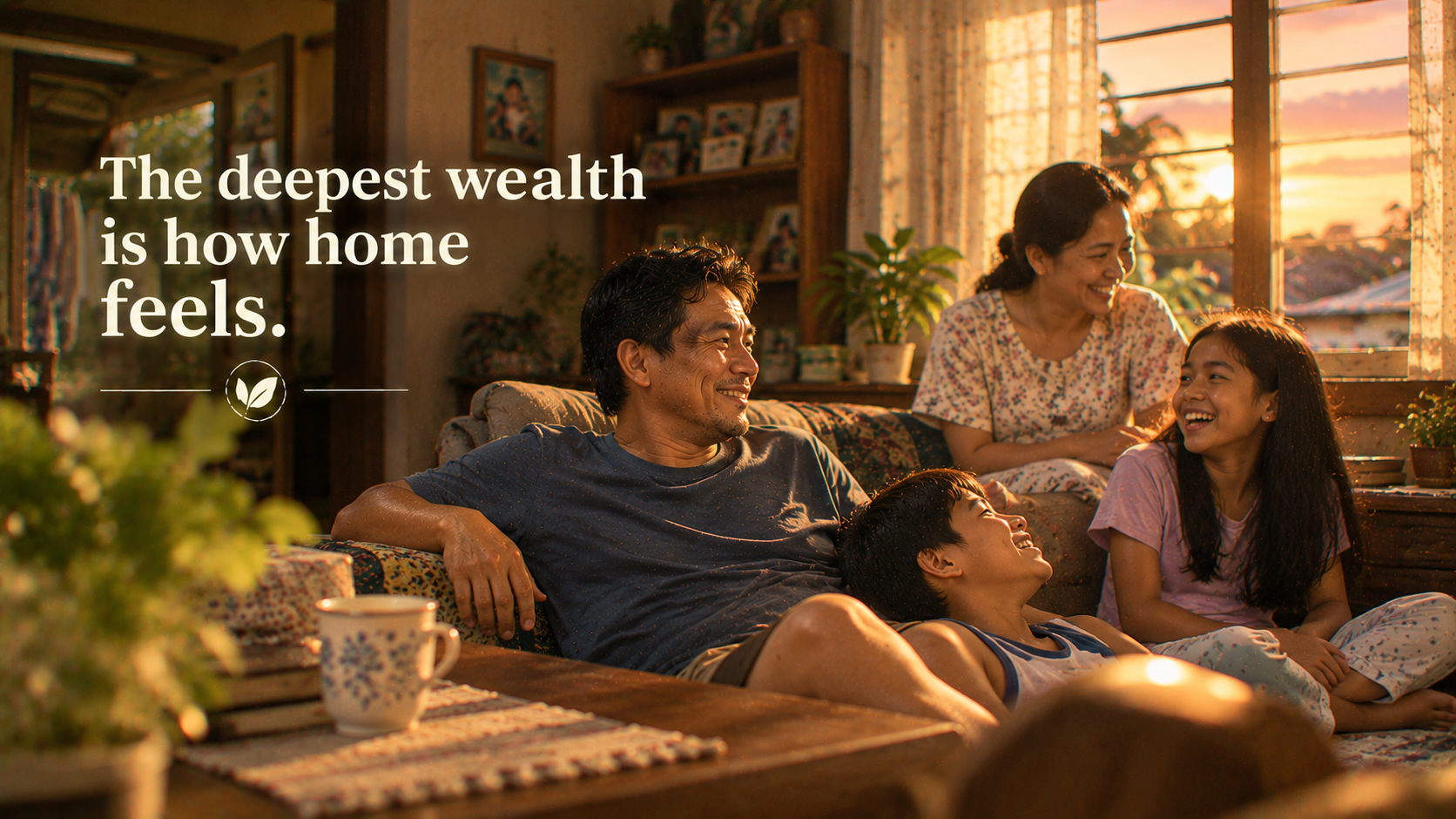
This is why peace inside a home may be one of the most meaningful forms of wealth a person can help create.
A home where mistakes do not automatically trigger panic.
A home where children feel safe asking questions.
A home where love is not constantly interrupted by financial stress.
A home where people can rest without feeling guilty for existing.
These things shape lives for years.
Sometimes for generations.
The Wealth That Lasts Longer
Because some of the most valuable forms of wealth cannot be photographed.
The ability to sleep peacefully.
The ability to discuss problems calmly.
The ability to disagree without fear.
The ability to feel safe in your own home.
These are forms of abundance too.
And they often outlast material upgrades.
A Quiet Reframe
Perhaps wealth is not only about what you can provide.
Perhaps it is also about what you no longer pass down.
The panic.
The shame.
The constant fear.
The belief that life must always feel overwhelming.
Sometimes prosperity looks like interrupting those inheritances.
Finally, Something Important
Many people spend years chasing a better lifestyle.
And there is nothing wrong with that.
But perhaps what they are really searching for is something deeper.
Not simply a richer home.
A gentler one.
A home where money no longer controls the emotional climate.
A home where children inherit less fear.
A home where relationships carry less tension.
A home where love sounds softer because survival is no longer shouting over it.
Closing Reflection
Because maybe the kind of wealth that changes a family most profoundly is not measured by what fills a house.
But by what fills the space between the people living inside it.
The calm.
The trust.
The safety.
The breathing room.
And perhaps that is one of the most beautiful forms of success a person can create:
When the people they love no longer feel like they are merely surviving together—
but finally feel safe enough to live together peacefully.
One of the quiet truths about financial growth is that its greatest impact is often invisible.
Long after specific purchases are forgotten, people still remember how a home felt.
And perhaps the deepest form of wealth is this:
Creating an environment where the next generation inherits a little less fear—and a little more peace.
Catch Thanjo’s personal finance column every Tuesday at 7 p.m. on IKOT.PH and across Facebook, X (Twitter), and Instagram.
DISCLAIMER:
The views and opinions of our partners and contributors expressed in this article are exclusively their own and are made in their personal capacities. They do not reflect the views, policies, or official stance of IKOT.PH, its editors, officers, or affiliates. As such, nothing contained herein shall be construed as professional advice or as an official declaration, endorsement, or position of IKOT.PH.