
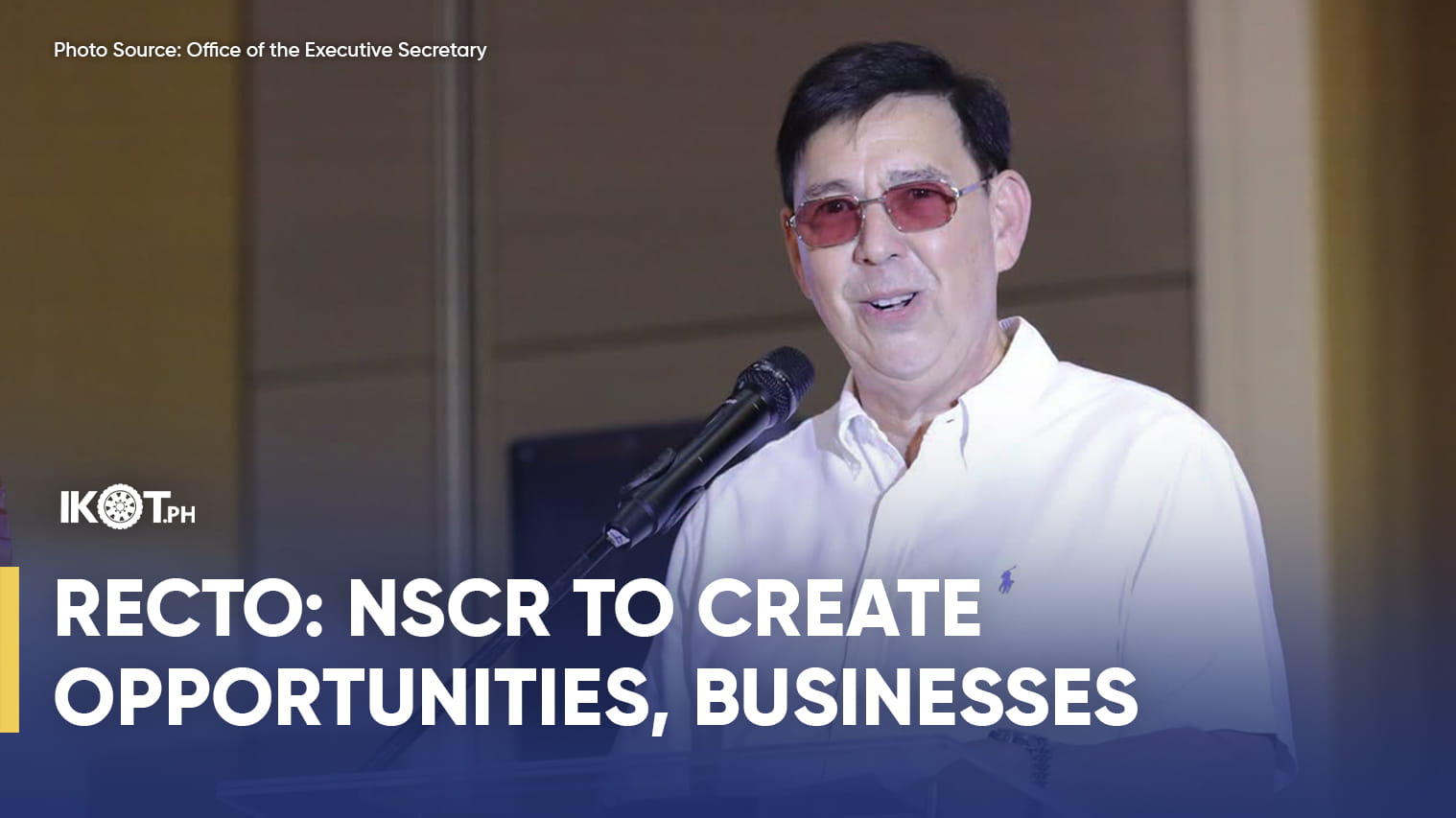
The benefits of the 147-kilometer North-South Commuter Railway (NSCR) will extend far beyond its tracks, creating economic opportunities for Filipinos and businesses across the country—from Luzon to the Visayas and Mindanao, Acting Executive Secretary Ralph Recto said.
Speaking to the media during an inspection of ongoing NSCR construction works, Recto said the railway will strengthen the country’s transport and logistics backbone, support manufacturing, attract investments, and improve the movement of people and goods to and from the country’s main economic and industrial centers.
“From Luzon to the Visayas and Mindanao, businesses, workers and producers stand to benefit from a stronger manufacturing sector, better logistics and greater access to markets.”
“The railway may be in Luzon, but its economic impact will be national. From Luzon to the Visayas and Mindanao, businesses, workers and producers stand to benefit from a stronger manufacturing sector, better logistics and greater access to markets,” he said.
The government continues to closely monitor key project milestones. The Malolos-to-Valenzuela segment is expected to be operationally ready by 2028, followed by the Malolos-to-Clark section by 2029. Full completion of the 147-kilometer railway is targeted by 2033.
Recto said the NSCR will directly support industrial zones across the Luzon Economic Corridor by improving passenger mobility and connectivity among major economic hubs.
“The NSCR is a major logistics infrastructure for the Luzon Economic Corridor,” he said.
“We need an additional leg in our stool for our economy. We need to develop more manufacturing capabilities and transition into higher-value-added manufacturing,” Recto added.
He stressed that a stronger industrial and logistics network in Luzon can create opportunities throughout the national economy, including for producers and businesses in the Visayas and Mindanao that supply raw materials, agricultural products and other inputs to processing and manufacturing centers.
For Mindanao in particular, Recto said its vast mineral resources could play an important role in the country’s push toward higher-value manufacturing.
Instead of merely exporting raw materials, the government wants to encourage more domestic processing and connect the country’s resources—including critical minerals from mineral-rich areas in Mindanao—with industries capable of producing higher-value goods.
This could help the Philippines attract global technology partners and expand domestic production in industries such as semiconductors, smartphones and consumer electronics.
“We connect our resources, industries, workers and markets so that growth is not confined to one region but shared across the Philippines.”
“This is how infrastructure in one part of the country can create opportunities in another. We connect our resources, industries, workers and markets so that growth is not confined to one region but shared across the Philippines,” Recto said.
The administration said sustained coordination between the Department of Transportation and the Department of Public Works and Highways will be essential to maintaining the project’s momentum, particularly in resolving site acquisition and right-of-way requirements.
Backed by a P252-billion cash cushion, the government remains focused on delivering the NSCR within established timelines and maximizing its contribution not only to Luzon’s development, but to long-term economic growth across the entire country.
DOTr Undersecretary Timothy John Batan, Assistant Secretary Irish Calguas, and BCDA President and CEO Joshua Bingcang were among those who joined the site inspection.