
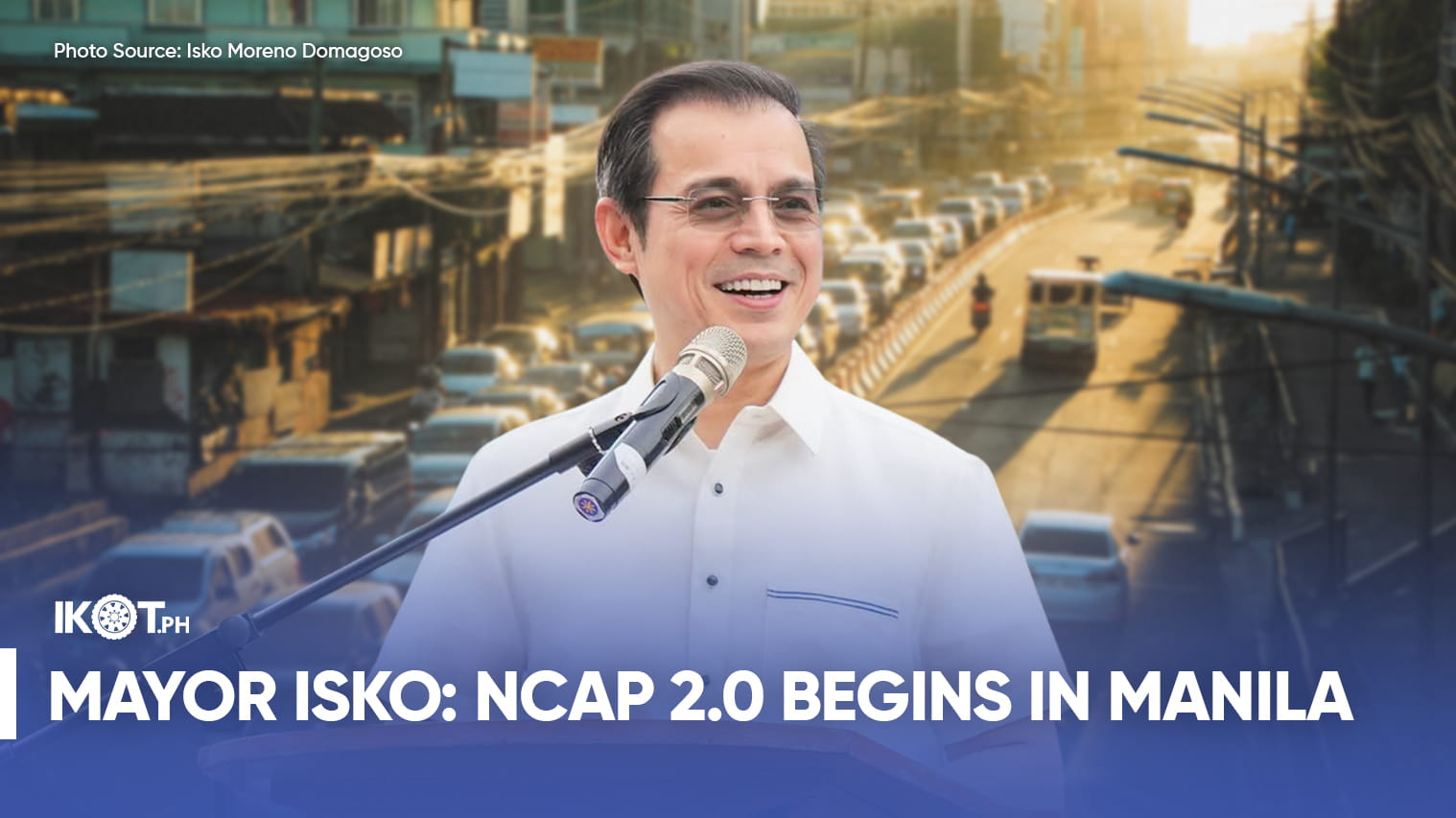
Manila City Mayor Francisco “Isko” Moreno Domagoso warned abusive motorists, including government employees, that they have no more excuses as the enhanced No Contact Apprehension Program (NCAP 2.0) began in Manila on Monday, October 5.
“Ang mga abusado sa kalsada, wala nang excuse because today, inuumpisahan na pong i-implement ang non-contact apprehension,” the mayor said in his speech during the flag-raising ceremony at city hall.
Domagoso said the program was first implemented during his first term as mayor, apprehending hundreds of thousands of motorists, and NCAP 2.0 now returns in his second term.
“Itong non-contact apprehension, kung maaalala ninyo noong first time kong maging alkalde, in-implement ko ito at maraming nahuli, by the hundreds of thousands,” he noted.
“You cannot argue with technology.”
“So, anong ibig sabihin? Talagang walang disiplina ang ilan nating mga kababayan sa pagmamaneho. You cannot argue with technology. We may argue with our enforcers, but with technology, huli. Sa huli, walang lusot,” Domagoso stressed.
NCAP 2.0 uses upgraded high-resolution cameras that capture clearer images of traffic violations.
A camera capture alone is not a violation: authorized NCAP personnel of the city government must first review and validate each incident before a Notice of Violation is issued.
Fines and penalties follow the Metro Manila Traffic Code of 2023 to avoid confusion.
Motorists who dispute a violation can file a protest online through the NCAP portal, and valid fines can be paid online or in person at the local government unit where the violation took place.
“Kaya pinapaalalahanan ko na kayo, lalo na tayong mga nasa gobyerno, na sa Maynila ngayon ay ipinatutupad ang non-contact apprehension,” Domagoso said.
“Huwag na huwag ninyong tatalikuran ang notice na darating sa inyong bahay dahil hindi niyo na ho matatakbuhan iyan at iyan ay mag-a-accumulate lang ng penalty,” he stressed.
Domagoso said ignoring a notice will only pile up penalties, but he pointed to the fairness of the system as its upside.
“Dito sa non-contact, lahat pantay-pantay. Wala nang siga, walang malapit sa kusina.”
“Pero ang maganda rito, protektado ang mahihirap, protektado ang middle class, at protektado ang mayaman sapagkat dito sa non-contact, lahat pantay-pantay. Wala nang siga, walang malapit sa kusina. Kapag ika’y lumabag, todas, penalty ka, nganga,” he added.
Domagoso said the program also leaves motorists no room to plead with or settle things with traffic enforcers.
“Kaya’t mag-ingat sa pagmamaneho dahil unti-unti nating makakamit ang certainty o kasiguruhan sa pagpapatupad ng ating mga alituntunin. Wala na kayong mapapakiusapan or maaareglong enforcer. At the same time, ang mga enforcer, most likely kung sino man sila, kung mayroon pa, wala nang mapapatungan, so magtitino at magtitino,” he said.
“Pero uulitin ko, ang non-contact apprehension ay aplikable sa lahat ng tao, anuman ang katayuan nito. Kaya tayong mga nasa pamahalaan ay maging ehemplo nawa ng pagsunod sa mga batas trapiko,” Domagoso concluded.