
Senate Committee on Social Justice, Welfare and Rural Development Chairman Erwin Tulfo raised the alarm over an impending “Super El Niño” emphasizing that severe dry spells, skyrocketing prices of basic goods, and declining livelihoods can be mitigated through early planning and dedicated funding.
Citing Department of Agriculture (DA) data on P6.87 billion in agricultural losses affecting 223,214 farmers as of September 26, 2026, Tulfo said that there’s no time left to waste in mitigating potential harm.’
“It is time to stop managing disasters after they happen, and start executing a decisive, proactive survival strategy.”
“Let us not wait for our fields to turn to ash, our taps to run dry, and our people to collapse from the heat before we scramble for solutions. We have the science. We have the warnings. It is time to stop managing disasters after they happen, and start executing a decisive, proactive survival strategy,” the legislator from Palawan said.
While acknowledging the administration’s El Niño Task Force, the lawmaker noted that government focus must extend beyond farmer protection and land irrigation.
“A task force must be more than a coordinating body.”
“A task force must be more than a coordinating body. It must have a clear plan, clear responsibilities, and, most importantly, the resources to act before the crisis paralyzes our communities,” the senator further said.
With this, he formally brought the concern to the Senate Floor, where it was referred to the Reinvigorate Investment and Sustainable Economic Growth (RISE) Ad Hoc Committee.
The said special panel was created by the Upper Chamber to address is a special Senate panel created to address the Philippines’ economic slowdown, rising living costs, and weakening purchasing power.
Tulfo highlighted that his intent is not to spread fear, but to ensure a concrete roadmap is in place so that every Filipino is prepared for the worst.
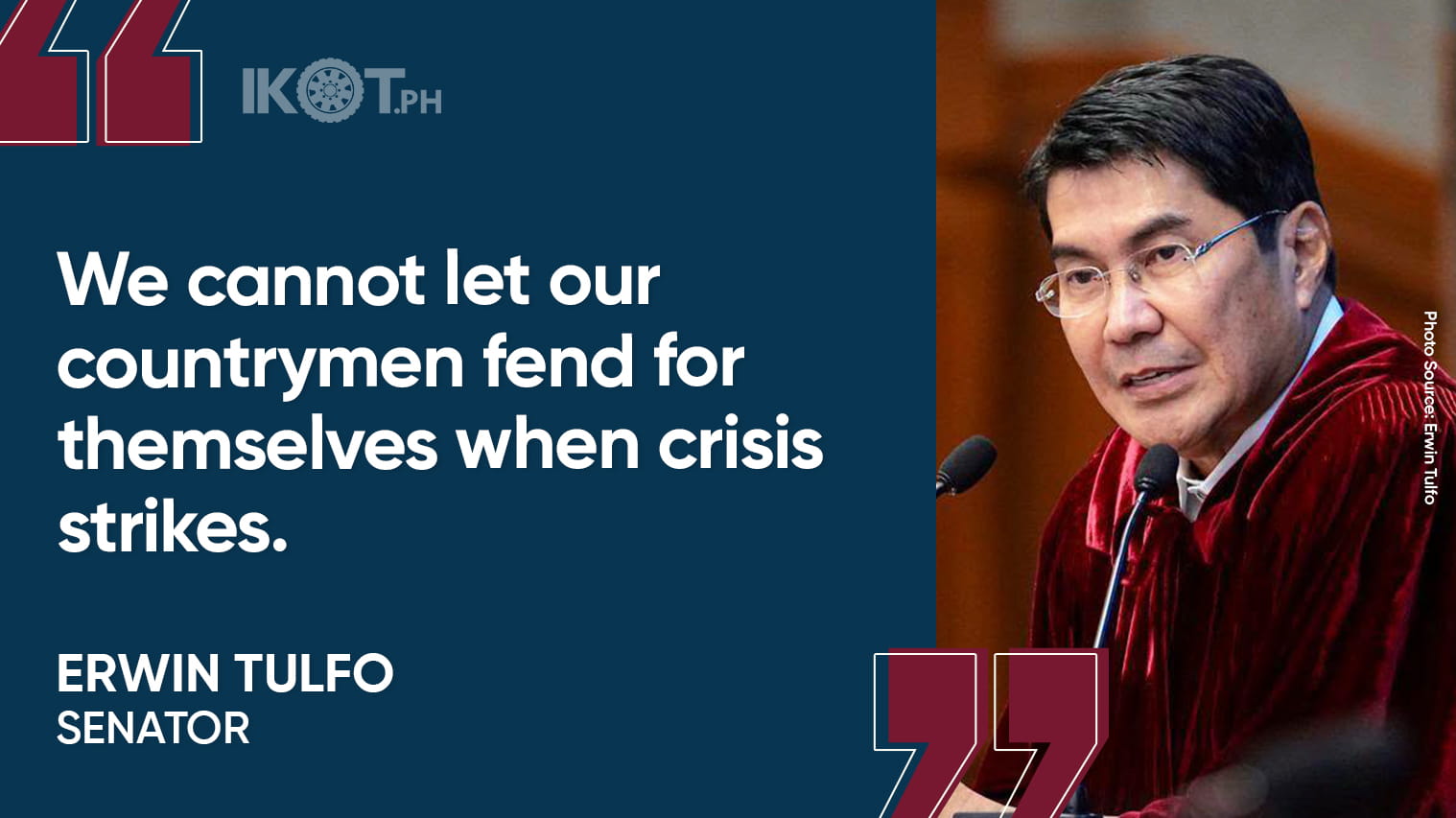
“We cannot let our countrymen fend for themselves when crisis strikes,” he said.
“They deserve a government they can rely on—especially since they pay taxes for services that they are rightfully entitled to,” Tulfo concluded.