
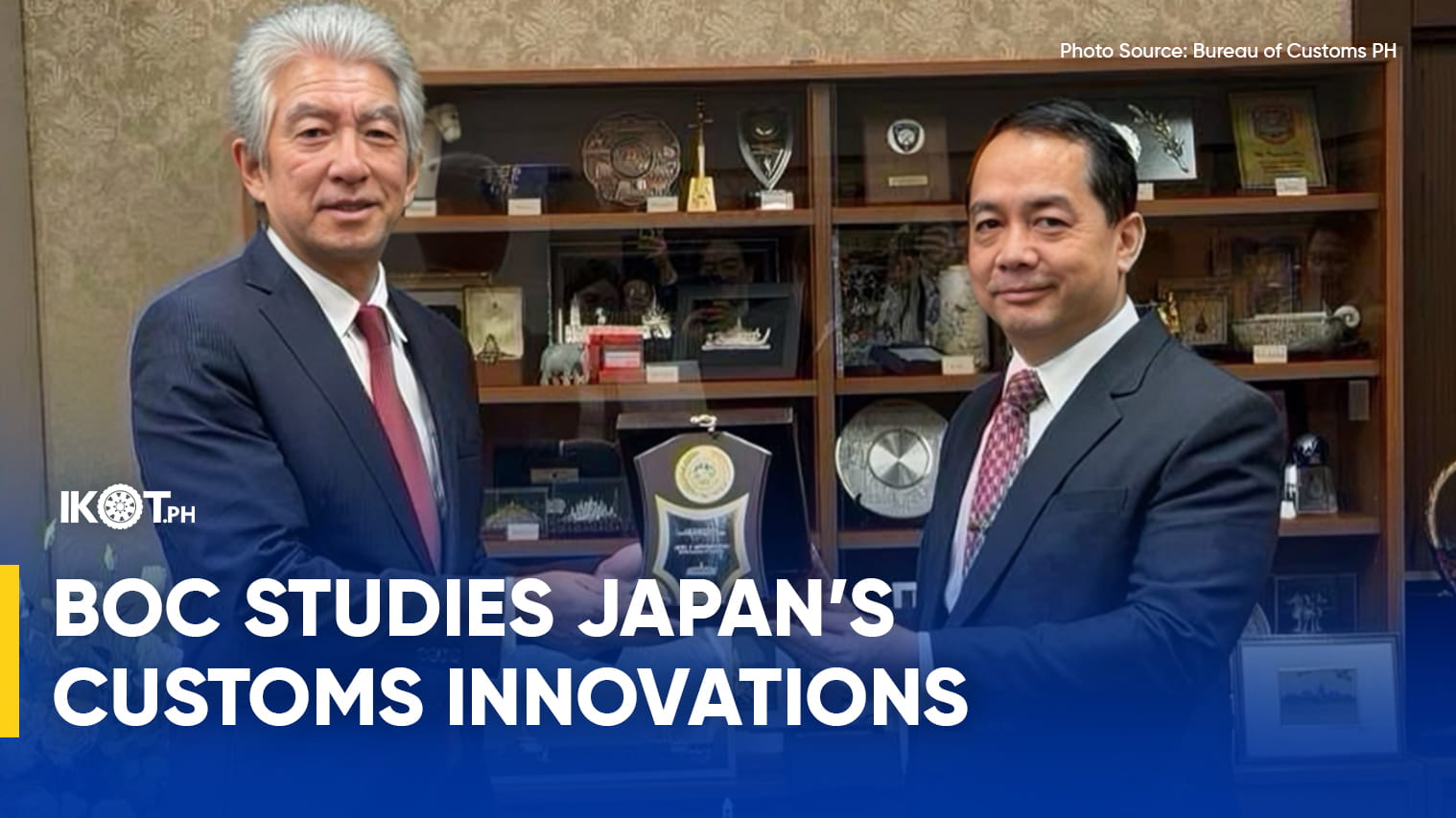
Faster cargo release, more efficient trade processes, and stronger border protection are among the goals driving the Bureau of Customs’ (BOC) continuing modernization efforts.
To support these reforms, Commissioner Ariel Nepomuceno led a delegation to Japan recently to gain insights into advanced customs technologies, digital systems, and operational practices that can help improve the delivery of customs services in the Philippines.
The three-day visit included engagements with Japan’s Customs and Tariff Bureau (CTB), the Regional Intelligence Liaison Office for Asia/Pacific (RILO A/P), Tokyo Customs, Yokohama Customs, and the Japan International Cooperation Agency (JICA), aimed at strengthening operational efficiency, border security, and trade facilitation.
A key highlight of the engagement was Japan’s Nippon Automated Cargo and Port Consolidated System (NACCS), an integrated digital platform that streamlines customs and trade-related transactions. The lessons gained from NACCS are expected to support the Bureau’s ongoing efforts to enhance its Customs Processing System (CPS) and further modernize customs operations.
“Customs modernization is ultimately about delivering better services to stakeholders and supporting the country’s economic competitiveness.”
The delegation also engaged with the Regional Intelligence Liaison Office for Asia and the Pacific on intelligence sharing and coordinated enforcement against transnational smuggling, while observing Tokyo Customs’ cargo clearance procedures, large-scale X-ray inspection equipment, and surveillance technologies identifying practices that could further strengthen risk-based inspection and border protection.
Nepomuceno emphasized that customs modernization is ultimately about delivering better services to stakeholders and supporting the country’s economic competitiveness.
“By learning from Japan’s experience, we can adopt practical solutions that improve trade facilitation, strengthen border security, and enhance the quality of services we provide.”
“Our goal is to make customs processes faster, more efficient, and more responsive to the needs of businesses and the public. By learning from Japan’s experience, we can adopt practical solutions that improve trade facilitation, strengthen border security, and enhance the quality of services we provide,” he stressed.
The visit concluded with discussions at JICA Headquarters on potential areas for continued technical cooperation and capacity-building, building on existing collaboration in customs modernization initiatives.
Through partnerships with international counterparts and the adoption of proven global practices, the Bureau of Customs continues to pursue reforms that support businesses, facilitate legitimate trade, strengthen border security, and deliver better services to the Filipino people in line with President Ferdinand Marcos Jr.’s vision of a more efficient, modernized, and globally competitive government.