
Senator Mark Villar is seeking stronger regulation of pet aftercare services to protect Filipino pet owners and ensure the proper, sanitary, and dignified handling of deceased companion animals following the discovery of dumped pet remains in San Jose del Monte, Bulacan.
Villar filed Senate Bill No. 2595, or the Proper Aftercare and Memorialization of Pets’ Remains (PAMPER) Act, which seeks to establish clear standards for pet crematoriums and other aftercare service providers, strengthen government oversight, and impose stiffer penalties for the unauthorized dumping, abandonment, or improper disposal of animal remains.
“Ang ating mga alaga ay bahagi na ng ating pamilya, kaya nararapat lamang na matiyak na ang huling paalam sa kanila ay may dignidad, malasakit, at paggalang.”
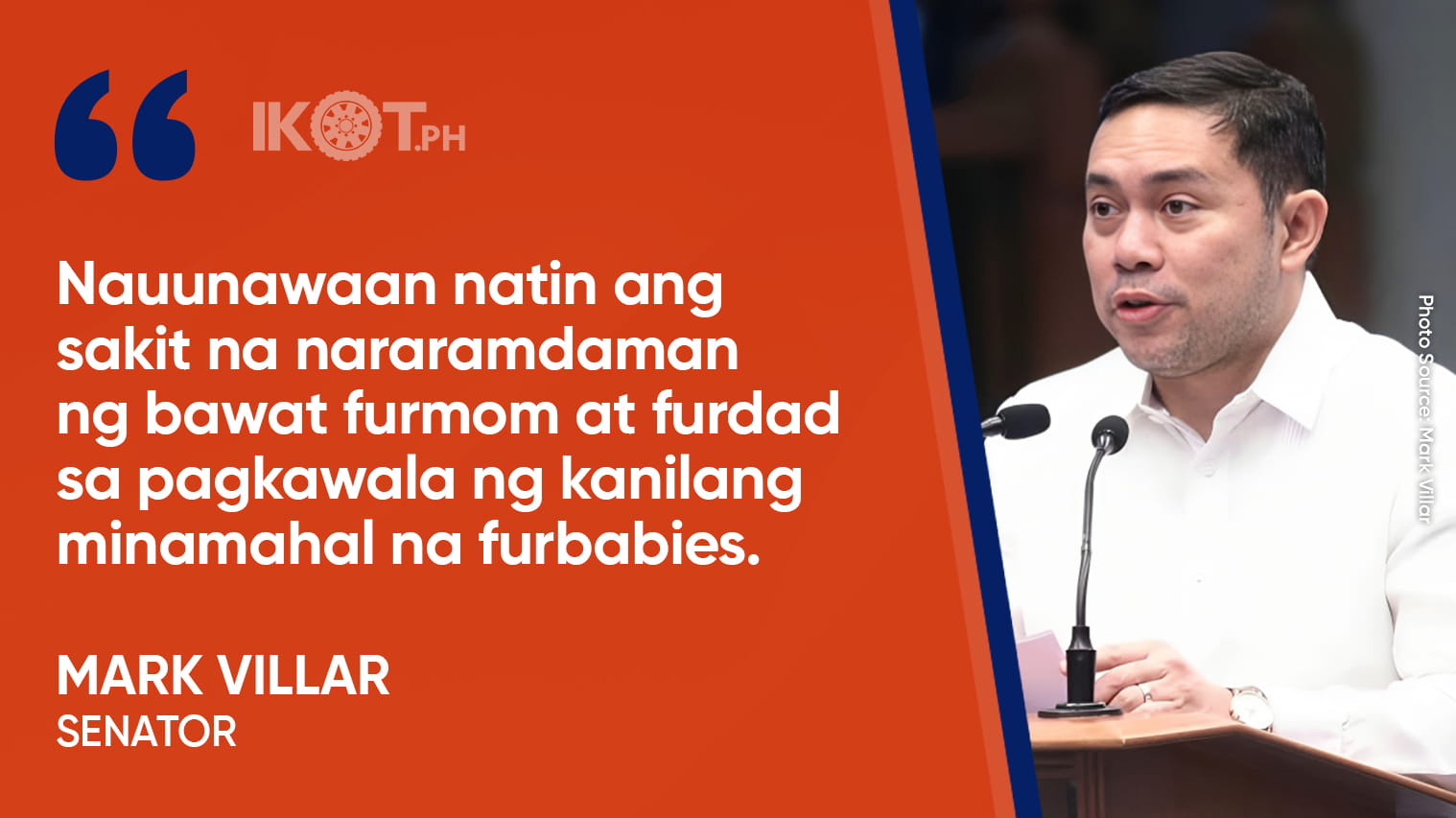
“Nauunawaan natin ang sakit na nararamdaman ng bawat furmom at furdad sa pagkawala ng kanilang minamahal na furbabies. Ang ating mga alaga ay bahagi na ng ating pamilya, kaya nararapat lamang na matiyak na ang huling paalam sa kanila ay may dignidad, malasakit, at paggalang,” the legislator said.
The lawmaker’s measure comes amid the controversy involving a pet aftercare provider in Bacoor, Cavite, following the discovery of 29 animal remains—26 dogs and three cats—stuffed in plastic bags and abandoned along a roadside in San Jose del Monte, Bulacan.
The senator said the incident underscores the need for a dedicated regulatory framework for pet aftercare services, particularly as existing animal welfare laws do not expressly provide comprehensive standards governing the handling and disposal of deceased companion animals.
Under the proposed PAMPER Act, the Department of Agriculture (DA), through the Bureau of Animal Industry (BAI), in coordination with the DOH, DENR, DILG, and DTI, will establish accreditation guidelines and operating standards for animal aftercare service providers.
Local government units (LGUs) will serve as the primary implementing agencies, responsible for issuing business licenses and permits and maintaining a registry of licensed establishments.
Providers must comply with requirements on sanitation, storage, handling and transportation of animal remains, chain of custody, environmental protection, facility maintenance, and transparency in service methods, fees, and final disposal procedures.
The measure also authorizes LGUs, in coordination with concerned national agencies and law enforcement authorities, to lead regular and unannounced inspections and, subject to due process and applicable laws, suspend or revoke the accreditation and local business permits of establishments found violating the measure. Providers operating without the required accreditation, license, or permit will face fines ranging from P100,000 to P500,000.
For unauthorized dumping, abandonment, or improper disposal of animal remains, the bill prescribes progressively heavier penalties: imprisonment of one to two years and/or a fine of at least P100,000 for the first offense; two to five years imprisonment and/or a fine of at least P250,000 for the second offense; and five to ten years of imprisonment and a fine of at least P500,000 for third and succeeding offenses.
Through the PAMPER Act, Villar hopes to put in place aftercare services that are more accountable and transparent, ensuring that pet owners receive the services they paid for and that establishments entrusted with their companions’ remains are held responsible for their actions and that their families are given the peace of mind that their final farewell has been handled with the respect they deserve.
“Hindi dapat samantalahin ang kanilang pagmamahal at tiwala, lalo na sa panahong nagluluksa sila.”
“Ang pagpanaw ng ating mga alagang hayop ay isa nang mabigat na pagsubok para sa kanilang mga pamilya. Hindi dapat samantalahin ang kanilang pagmamahal at tiwala, lalo na sa panahong nagluluksa sila,” he stressed.
“We owe every furmom, furdad, and family the assurance that the furbabies entrusted to these service providers will be treated with care, dignity, and respect,” Villar concluded.