
“Teachers will be able to check in about 15 minutes whether a child may need extra help with learning or speech using a new Department of Education (DepEd) screening tool designed to ensure children receive timely specialist care”, Education Secretary Sonny Angara said.
Called Project SABAY or Screening using AI-Based Assistance for Young Children, the tool uses artificial intelligence to readily screen Grade 2 learners for risks of learning and communication difficulties, a massive improvement over traditional methods, like the Multi-Factored Assessment Tool (MFAT), that can take up to two hours per learner.
“Technology must work for our most vulnerable learners and the teachers who guide them,” Secretary Angara said. “Project SABAY allows us to catch learning and communication difficulties much earlier, transforming what used to be an exhausting process into an engaging, positive experience for the child while significantly easing the workload of our teachers and giving parents greater peace of mind.”

Angara stressed that the AI-based tool is meant to empower educators and give parents clear insights to support their child’s development.
“By providing them with transparent, data-driven tools that show step-by-step results, we are giving our teachers the confidence and clarity they need to partner effectively with parents and secure early interventions,” Angara said.
Developed by the Bureau of Learning Delivery–Student Inclusion Division (BLD-SID) and the Education Center for AI Research (ECAIR), Project SABAY transforms the typically tedious screening process into an engaging, story-driven experience that makes young children feel comfortable and stress-free.
“By providing them with transparent, data-driven tools that show step-by-step results, we are giving our teachers the confidence and clarity they need to partner effectively with parents and secure early interventions.”
Through a teacher-assisted application, learners complete gamified speech tasks such as picture naming, word dictation, nonsense word dictation, and spontaneous vocalization. Its interactive format makes screening more natural and less stressful for young learners.
Local educators are already seeing the profound impact of this innovation firsthand. “Napapadali po nito ang trabaho ng isang teacher,” shared Ms. Maelou Jean Salve, Master Teacher II from Lawaan III Elementary School in Talisay City, Cebu, noting how a smoother process directly benefits the children being assessed.
She also noted that Project SABAY helps identify learners who may need additional support much earlier, allowing them to receive appropriate interventions sooner.
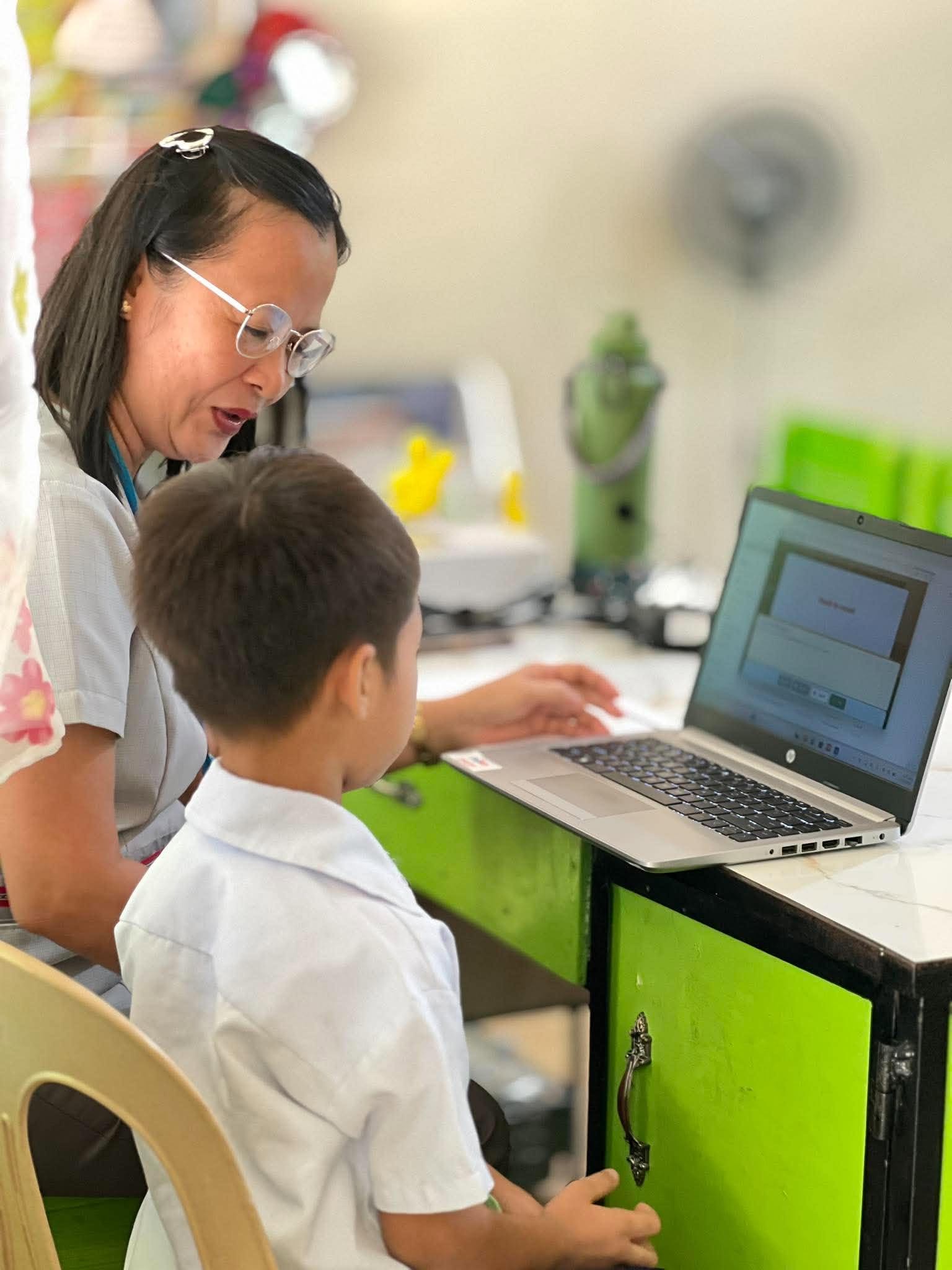
“As a teacher, when it comes to administering the ECCD (Early Childhood Care and Development) Checklist and MFAT, it is time consuming because we still need to prepare materials. But with Project SABAY, the assessment tool is already given and prepared. It saves a lot of time and effort,” Salve added.
School heads and teachers have praised the platform’s transparency, noting that its step-by-step analytical breakdown helps them clearly explain screening results to parents and build stronger partnerships for learner intervention.
The system also addresses a critical bottleneck in the country’s healthcare and educational support network.

With severe shortages of developmental specialists resulting in waiting lists that can stretch up to a year or more, early identification is vital to prevent delays in intervention efforts. Project SABAY aims to ease this burden through a faster and accessible screening method, ensuring that at-risk learners are flagged immediately so expert attention reaches the children who need it most.
Following its initial pilot testing in the National Capital Region, DepEd has expanded data collection across Visayas, Mindanao, and upcoming regions in Luzon to ensure the AI tool adapts effectively to the country’s diverse cultural and linguistic landscape.
As the project moves toward nationwide deployment, it promises a brighter, more inclusive educational future where every Filipino child receives adequate and timely support.