The Department of Budget and Management (DBM) and the country’s local government leagues have agreed to strengthen coordination in accelerating the implementation of local development projects and addressing concerns regarding the Fiscal Year (FY) 2026 CollectiveNegotiation Agreement (CNA) Incentive guidelines.
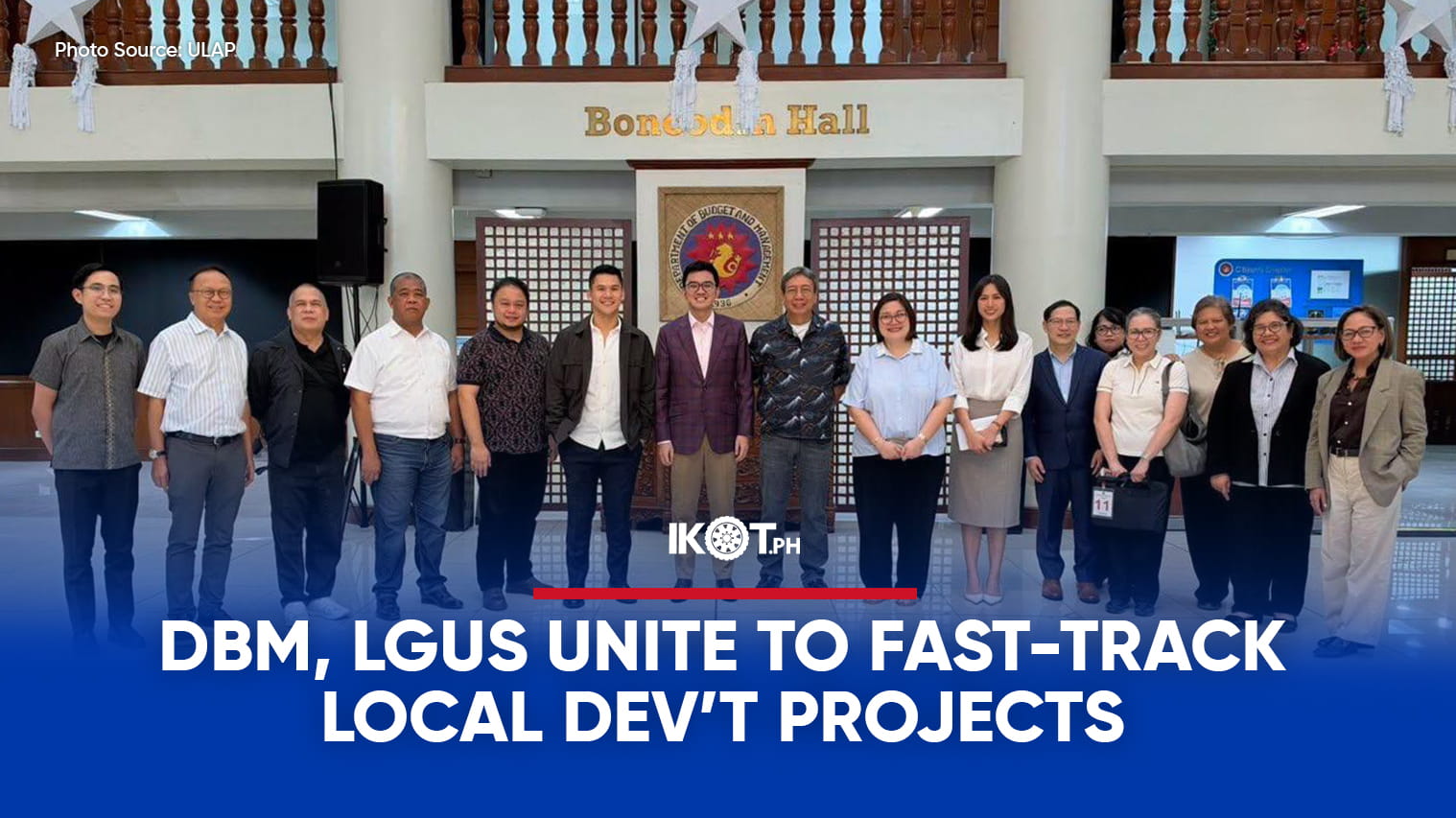
The common position was reached during a meeting between DBM Secretary Kim Robert C. De Leon and representatives of the League of Municipalities of the Philippines (LMP), League of Cities of the Philippines (LCP), League of Provinces of the Philippines (LPP), and Union of Local Authorities of the Philippines (ULAP) on Thursday, November 19, 2026.
The DBM and the leagues affirmed that the CNA Incentive is not an automatic bonus, but a performance-based incentive that recognizes collective employee contributions to the attainment of organizational outputs and prescribed performance targets, improved productivity, operational efficiency, and the implementation of cost-saving measures, subject to the availability of allowable funds and compliance with applicable requirements.
They emphasized that the incentive rewards measurable organizational accomplishments and collective efforts to deliver approved programs, activities, and projects efficiently and at lower cost.
The parties reiterated their shared commitment to safeguarding the integrity of the incentive system, strengthening local government performance, and ensuring that public funds translate into tangible benefits for communities.
Under previous CNA guidelines, LGUs were already required to accomplish at least 75 percent of the targets under their approved programs, activities, and projects, including applicable local development initiatives.
The FY 2026 guidelines further make explicit the requirement for LGUs to obligate at least 75 percent of their approved appropriations for the 20 percent Development Fund as of September 30, 2026.
The parties emphasized that performance accountability is not a new principle in government incentive systems. The CNA Incentive has long been linked to organizational accomplishments, while the utilization of local development funds has likewise been assessed under established governance frameworks.
In particular, the Seal of Good Local Governance (SGLG) has included the utilization of the 20 percent Development Fund among its assessment indicators, with a 100 percent disbursement benchmarkunder its applicable technical guidelines.
Although the SGLG assessment is currently suspended, this demonstrates that monitoring the use of local development funds has long been part of government accountability measures.
While accomplishment, obligation, and disbursement are distinct measures, they reflect the longstanding expectation that public funds allocated for development should translate into actual projects and services for communities.
Shared commitment to local development
The DBM and the leagues further affirmed the mandate under Section 287 of Republic Act No. 7160, or the Local Government Code of 1991, requiring LGUs to appropriate no less than 20 percent of their annual National Tax Allotment for development projects.
The DBM acknowledged the concerns raised by LGUs regarding procurement delays, failed biddings, calamities, and other circumstances that may have affected their ability to meet the prescribed Development Fund obligation requirement
Recognizing this statutory responsibility, the leagues committed to encourage and mobilize their member-LGUs to accelerate the implementation of approved local development programs and projects, address avoidable delays, and ensure the timely and responsible use of development funds.
Joint action on implementation concerns
At the same time, the DBM acknowledged the concerns raised by LGUs regarding procurement delays, failed biddings, calamities, and other circumstances that may have affected their ability to meet the prescribed Development Fund obligation requirement.
To address these concerns, the DBM and the leagues agreed to work together on a coordinated catch-up and assessment mechanism, under which concerned LGUs may submit documented explanations, updated implementation status, and catch-up measures for evaluation.
The DBM will consider these submissions on a case-by-case basis, subject to applicable laws, budgeting and accounting rules, and the existing CNA Incentive guidelines.
Any consideration of subsequent catch-up efforts after September 30, 2026 shall be subject to careful evaluation of the circumstances and supporting documents, consistent with applicable laws, rules, and regulations, without automatically guaranteeing eligibility for the CNA Incentive.
This approach seeks to provide a fair and transparent process for addressing legitimate implementation concerns while upholding performance standards and fiscal accountability.
Protecting employees while strengthening accountability
The DBM and the leagues emphasized the need for fair and consistent implementation of the CNA Incentive guidelines, taking into account legitimate circumstances beyond the direct control of individual government employees.
They reaffirmed that the incentive recognizes collective contributions to organizational performance and efficiency, while underscoring the responsibility of LGUs to deliver their approved programs and projects.
The parties reiterated their shared commitment to safeguarding the integrity of the incentive system, strengthening local government performance, and ensuring that public funds translate into tangible benefits for communities.