
When a sudden medical emergency occurs in a gym, a classroom, or at home, having someone nearby who knows how to help can mean the difference between life and loss. The passing of former PBA player PJ Simon, and the memories it brought back of basketball legend Samboy Lim, has renewed public attention on emergency response and life-saving skills.
In light of these concerns, the Department of Education (DepEd) reaffirmed its commitment to learner and public safety by highlighting that life-saving Cardiopulmonary Resuscitation (CPR), first aid, and basic life support (BLS) training are already integrated across basic education curriculum, supported by partnerships with health agencies and local government units to fund equipment and teacher training.
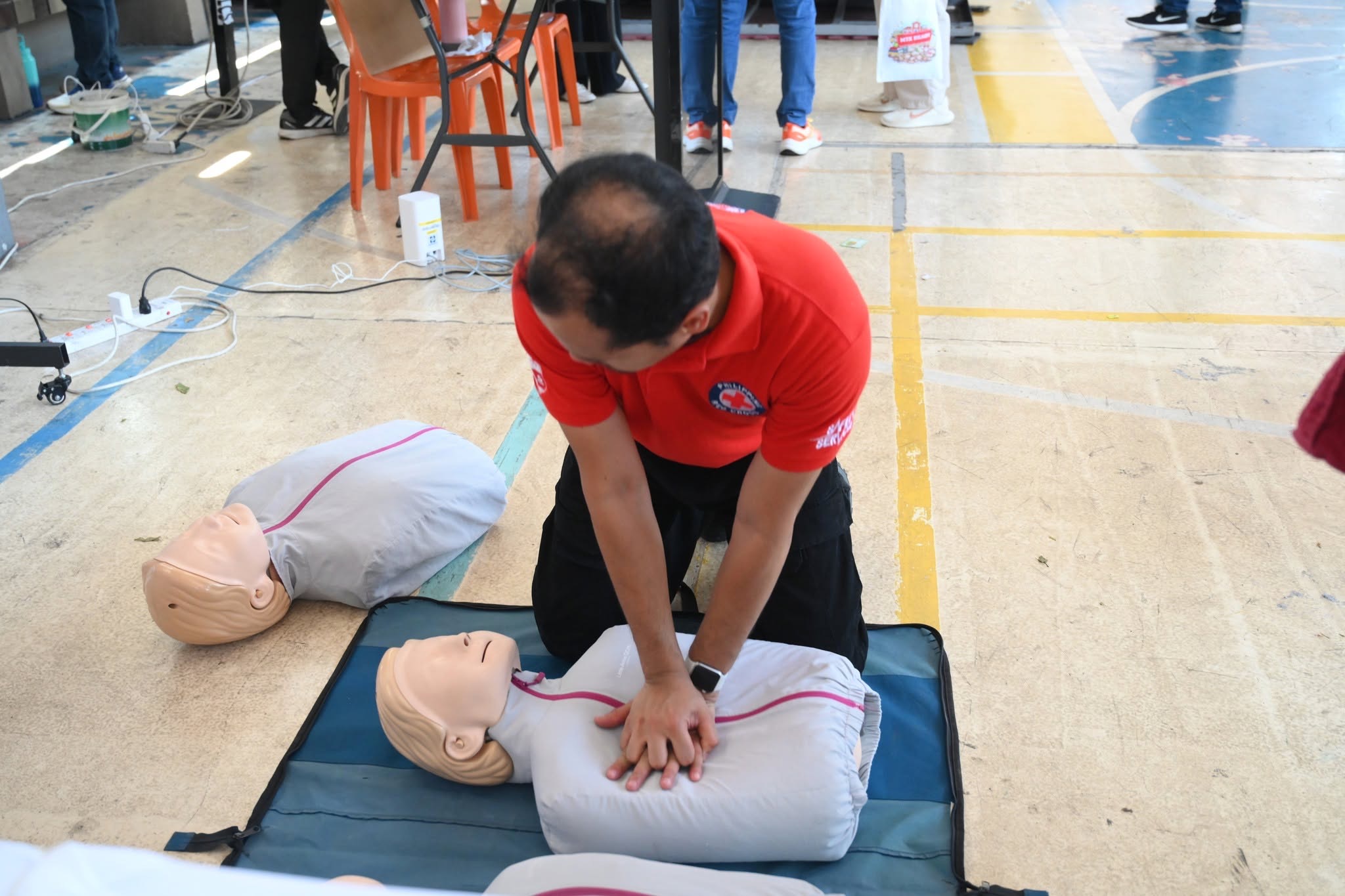
DepEd clarified that Republic Act No. 10871 or the Basic Life Support Training in Schools Act, commonly known as the Samboy Lim Law in honor of the PBA icon whose medical emergency helped spur school-based emergency training, is embedded across basic education through the Revised K to 10 Physical Education and Health curriculum and the Strengthened Senior High School (SHS) program.
Education Secretary Sonny Angara emphasized that teaching life-saving skills is fundamentally about protecting loved ones and caring for one another in critical moments.
In Senior High School, subject to school offerings and partner programs, learners undergo training in responder-level skills.
“Sa bawat medical emergency, may pamilyang dumadalangin na sana may dumating na saklolo. Kaya natin dinadala ang practical first aid at CPR training sa ating mga paaralan, para bigyan ang ating mga kabataan ng lakas ng loob at totoong kasanayan para saklolohan ang kanilang mga kaklase, pamilya, at kapitbahay sa mga oras na kailangan sila,” Angara said.
“Nakatutok na ang ating Health at PE classes sa batayang kaalaman para sa basic life support. Katuwang natin ang DOH, mga LGU, at mga health advocates para magkaroon ng hands-on training ang ating mga guro at magkaroon ng sapat na gamit ang mga paaralan, hanggang sa maging automatic na sa bawat mag-aaral ang pagtulong at pagpapanatili ng buhay,” Angara added.
To ensure that emergency care skills are built thoughtfully over time, the curriculum establishes a progressive, age-appropriate learning continuum from elementary school through senior high school.
Elementary learners in Grades 4 to 6 start with foundational safety awareness and basic injury prevention. In Junior High School, learners build on these basics by mastering first aid principles and immediate care for common injuries, environmental emergencies, and road and water safety. By Grade 10, learners gain practical training in Basic Life Support and emergency care procedures.
In Senior High School, subject to school offerings and partner programs, learners undergo training in responder-level skills, such as compression-only CPR, Automated External Defibrillator (AED) operation, rescue breathing, foreign body airway obstruction maneuvers, and mass casualty response protocols, with an opportunity to earn official certification from recognized and accredited health organizations.
To support nationwide implementation, DepEd encourages Schools Division Offices to maximize available local funds and build public-private and community partnerships, such as with the Department of Health (DOH), local government units (LGUs), and accredited health organizations, to standardize training, expand access to life-support equipment, and help schools and communities can respond promptly during emergencies.