
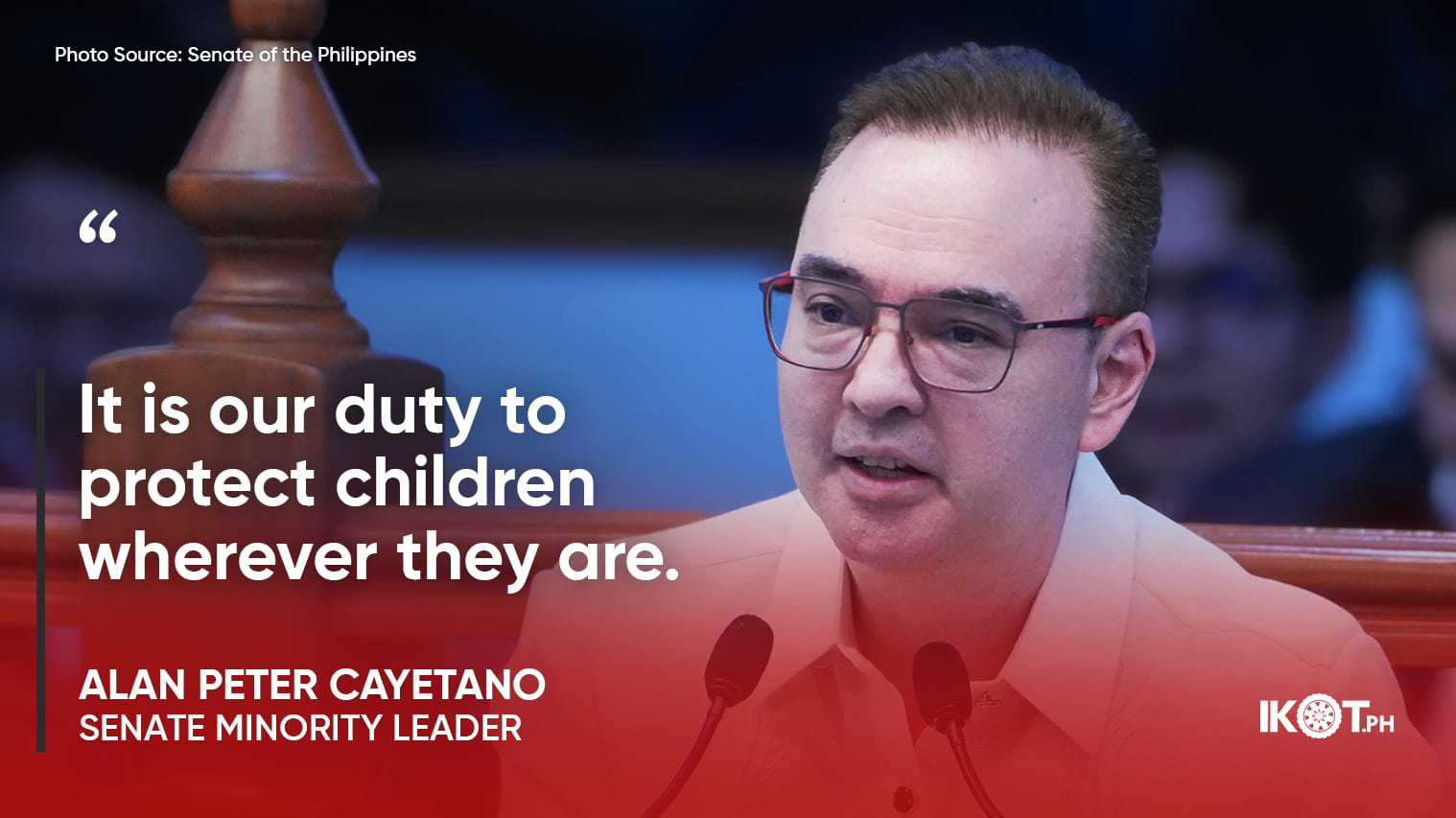
Senate Minority Leader Alan Peter Cayetano signed Senate Bill No. 1926 under Committee Report No. 39 endorsing the proposed “Child Tourist Safety Act” or “Sandy’s Act,” a measure that would require tourism establishments to adopt mandatory emergency and risk mitigation plans to protect children and other tourists.
“There’s no better gift to people than the Lord’s gift of children. It is our duty to protect them wherever they are,” Cayetano said.
“There’s no better gift to people than the Lord’s gift of children.”
The bill was inspired by the tragic story of Sandy Garovillas, a young girl who died in October 2023 after a jellyfish sting at a resort. Garovillas passed away without receiving proper medical attention, highlighting the urgent need for stronger safeguards for minors in tourism areas.
Sandy’s Act seeks to prevent, mitigate, and respond to risks affecting minors while on vacation, engaging in leisure, or participating in tourism-related activities.
The bill recognizes that children “require special attention” and protection from neglect, abuse, cruelty, exploitation, and other conditions that may harm their development.
“All tourism-related establishments that accept minors, whether accredited or not, are be required to develop and implement a Tourism Emergency and Risk Mitigation Plan.”
Under the proposed law, all tourism-related establishments that accept minors, whether accredited or not, would be required to develop and implement a Tourism Emergency and Risk Mitigation Plan.
These plans must ensure adequate and age-appropriate access to medical and emergency services and provide protection from risks such as marine hazards, drowning, abuse, exploitation, and trafficking.
Public tourism sites such as beaches, waterfalls, and natural parks would fall under the responsibility of the concerned local government units.
The measure also directs key agencies to jointly develop and maintain an annual Tourist Safety Risk Map identifying areas with hazards and threats to tourists, especially children.
These agencies include the Department of Tourism, Department of Health, Department of Environment and Natural Resources, Department of the Interior and Local Government, Council for the Welfare of Children, and the Philippine Statistics Authority.