

We talk about money a lot in the Philippines.
We talk about salaries and prices, investments and hustles, side gigs and survival strategies. Money is everywhere in our conversations—at the dinner table, in group chats, in quiet late-night calculations.
But there is one conversation we rarely have:
How we actually experience money.
And that, I believe, is where many of our struggles quietly begin.
Most of us start with the same hope. If I just earn more, we tell ourselves, everything will finally feel easier. Bills will be manageable. Savings will grow. Stress will go down. Life will feel lighter.
But for a surprising number of people, that relief never comes.
We get pay raises. We improve our systems. We follow the rules we were taught. Yet inside, something still feels off—a constant sense of being behind, of needing to do more, of never quite catching up.
At some point, we have to ask the question we often avoid:
If the numbers are improving, why doesn’t it feel better?
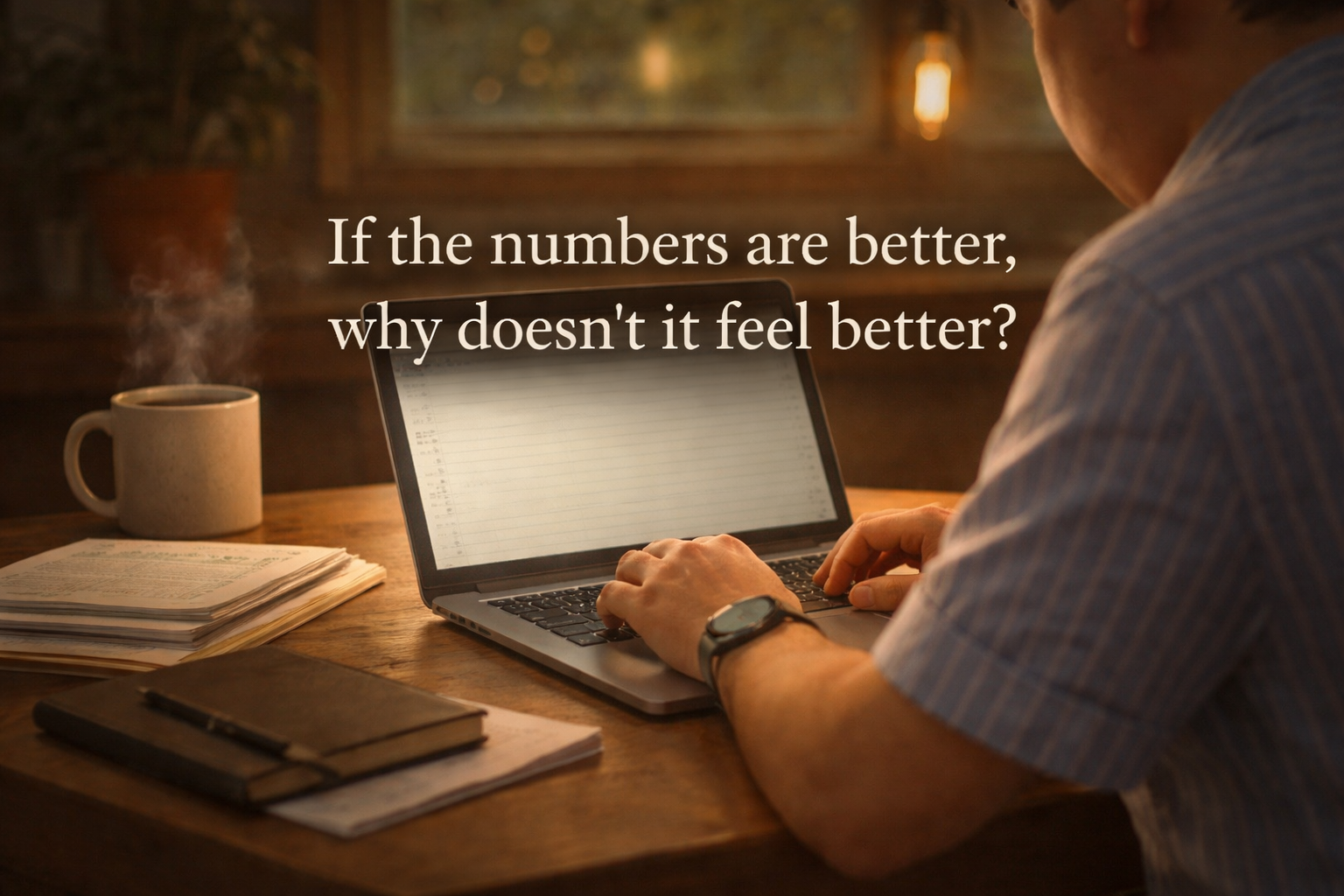
This was a realization that took me decades to accept myself—that growth on paper does not always translate to ease in real life.
Through years of working with people and their finances, I’ve learned this: the way we feel about money often matters just as much as the way we count it.
Too often, we treat money like a problem to be solved only with formulas and discipline. We rush into budgeting apps, spreadsheets, and rigid plans—without first pausing to understand what money actually represents in our lives.
Because for many of us, money is not just currency.
Money is tied to responsibility and fear. To family expectations and past mistakes. To the quiet pressure to prove—to others, and to ourselves—that we are doing okay.
When we ignore these emotional and personal realities, even the best financial systems can start to feel heavy. Budgets feel like punishment. Saving feels like deprivation. Planning feels like another source of stress instead of support.
That is why understanding must come before counting.
Understanding asks different questions.
Not “How much should I save?” but “What am I trying to protect?”
Not “Why did I overspend?” but “What was I feeling when I made that decision?”
Not “How do I control my money?” but “What kind of life am I trying to build?”
When we take the time to reflect on these questions, something important shifts.
Money stops being only about restriction and starts becoming about intention. Structure stops feeling like control and begins to feel like guidance.
This does not mean ignoring the numbers.
Counting still matters. Planning still matters. Discipline still matters.
But they work far better when they are built on clarity rather than pressure.

Financial peace is not created by perfect systems alone. It grows when our choices are aligned with our values, our realities, and our long-term well-being. When we understand why we are doing what we are doing, consistency becomes easier—not because we are forcing ourselves, but because the direction finally makes sense.
Perhaps the most overlooked part of financial growth is this: it is also emotional growth. It requires honesty about our fears, patience with our progress, and compassion for our mistakes.
Before we master the math, we often need to understand ourselves.
And that understanding—more than any formula—is what finally makes counting work.
Catch Thanjo’s personal finance column every Tuesday at 7 p.m. on IKOT.PH and across Facebook, X (Twitter), and Instagram.
DISCLAIMER:
“The views and opinions of our partners and contributors expressed in this article are exclusively their own and are made in their personal capacities. They do not reflect the views, policies, or official stance of IKOT.PH, its editors, officers, or affiliates. As such, nothing contained herein shall be construed as professional advice or as an official declaration, endorsement, or position of IKOT.PH.”