Senator Bong Go commended the Chinese General Hospital and Medical Center (CGHMC) and Renji Hospital for successfully performing the first pediatric liver transplant for a Filipino patient under their partnership, a milestone he described as “a breakthrough moment for Philippine healthcare.”
The patient, a two-year-and-two-month-old boy, was diagnosed with biliary atresia, a condition in which a child’s bile ducts are blocked. The life-saving procedure, carried out at Renji Hospital in Shanghai, China, marks a historic achievement in China–Philippines medical cooperation, coinciding with the 50th anniversary of diplomatic relations between the two countries.
More importantly, Go emphasized that it represents renewed hope for Filipino children suffering from severe liver diseases who previously had limited access to highly specialized treatment.
“Hindi lamang ito tagumpay ng isang ospital, tagumpay ito ng bawat Pilipinong nangangarap ng mas maayos at mas abot-kayang serbisyong medikal.”
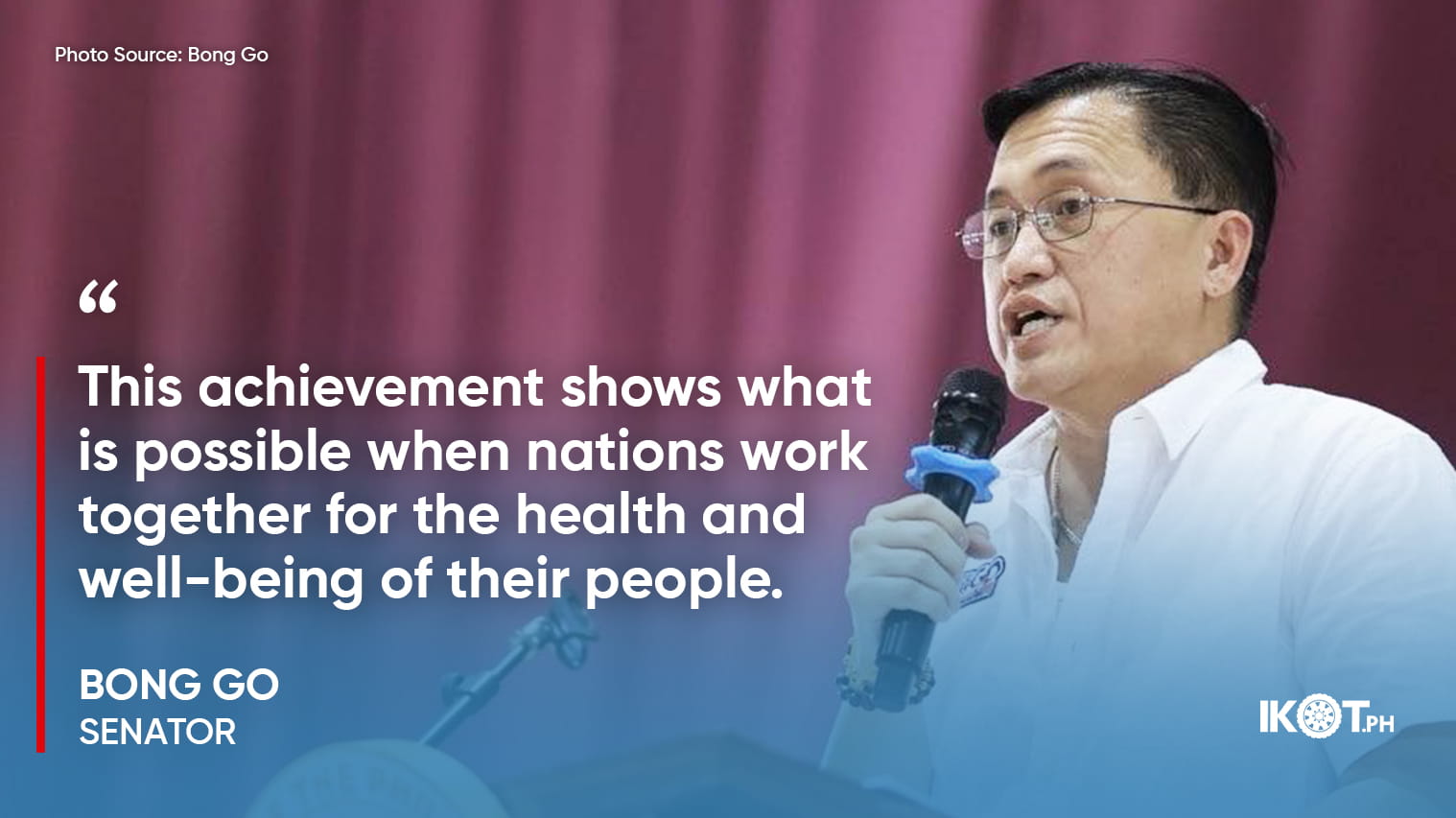
“This achievement shows what is possible when nations work together for the health and well-being of their people,” the veteran legislator said. “Hindi lamang ito tagumpay ng isang ospital, tagumpay ito ng bawat Pilipinong nangangarap ng mas maayos at mas abot-kayang serbisyong medikal.”
On February 24, the seasoned lawmaker personally joined the Chinese New Year Thanksgiving Dinner hosted by CGHMC, where he once again lauded the hospital’s leadership and medical team for their dedication to advancing specialized healthcare in the country. During the event, the veteran legislator also recognized the vital role of the Filipino-Chinese community in nation-building.
The senator also recalled previous cases where the government stepped in to help Filipino children battling biliary atresia. In 2018, Go met Xia Kazumi Ngo from Taguig City, who later underwent a liver transplant in India and has since recovered well.
“Ngayon po ’yung bata very jolly, naglalakad, masaya, malusog na po.”
“Meron na rin po kaming natulungan noon, taga-Taguig, and it was a success story. Ngayon po ’yung bata very jolly, naglalakad, masaya, malusog na po,” he shared.
In 2020, during the administration of former President Rodrigo Duterte, the government also facilitated the liver transplant of young patient Yazumi Viray in India as part of efforts to save children afflicted with the same condition. Other children assisted by the government included Eren Arabella Crisologo from Butuan City and Dionifer Zephaniah Itao from Cebu, both diagnosed with biliary atresia.
Go also cited earlier government initiatives to build local capacity for pediatric liver transplantation.
In 2020, he welcomed the signing of a memorandum of agreement between the Department of Health (DOH), the Philippine Children’s Medical Center (PCMC), and The Medical City (TMC). Under the agreement, PCMC identifies qualified indigent patients, TMC performs the transplant procedures, and DOH facilitates funding support. The arrangement serves as an interim solution while the National Kidney and Transplant Institute (NKTI) continues to build its capacity to independently conduct pediatric and adult living donor liver transplants.
As part of the long-term strategy, the government also committed to upgrading NKTI’s facilities and sending specialists for training at Kaohsiung Chang Gung Memorial Hospital in Taiwan to further strengthen the country’s transplant program.
As Vice Chairman of the Senate Committee on Health, Go underscored that this milestone aligns with ongoing reforms aimed at strengthening the Philippine healthcare system. He highlighted his role as one of the authors and principal sponsor of Republic Act No. 11959, or the Regional Specialty Centers Act, which mandates the establishment of specialty centers within existing Department of Health (DOH) regional hospitals across the country.
According to Go, the successful pediatric liver transplant exemplifies how such reforms are beginning to materialize in meaningful ways.
As a health reform advocate, his numerous appeals during Senate hearings in 2024 and 2025 likewise resulted in major enhancements to the Z Packages under the Philippine Health Insurance Corporation (PhilHealth) for kidney-related illnesses. Peritoneal dialysis and kidney transplantation now enjoy increased support, alongside additional reforms such as comprehensive packages for ischemic heart disease, covering emergency intervention through post-surgery rehabilitation.
“Kung magsasama-sama tayo — gobyerno, pribadong sektor, at ating mga international partners, mas marami pa tayong Pilipino na mabibigyan ng pag-asa at bagong pagkakataon sa buhay,” he stated.