
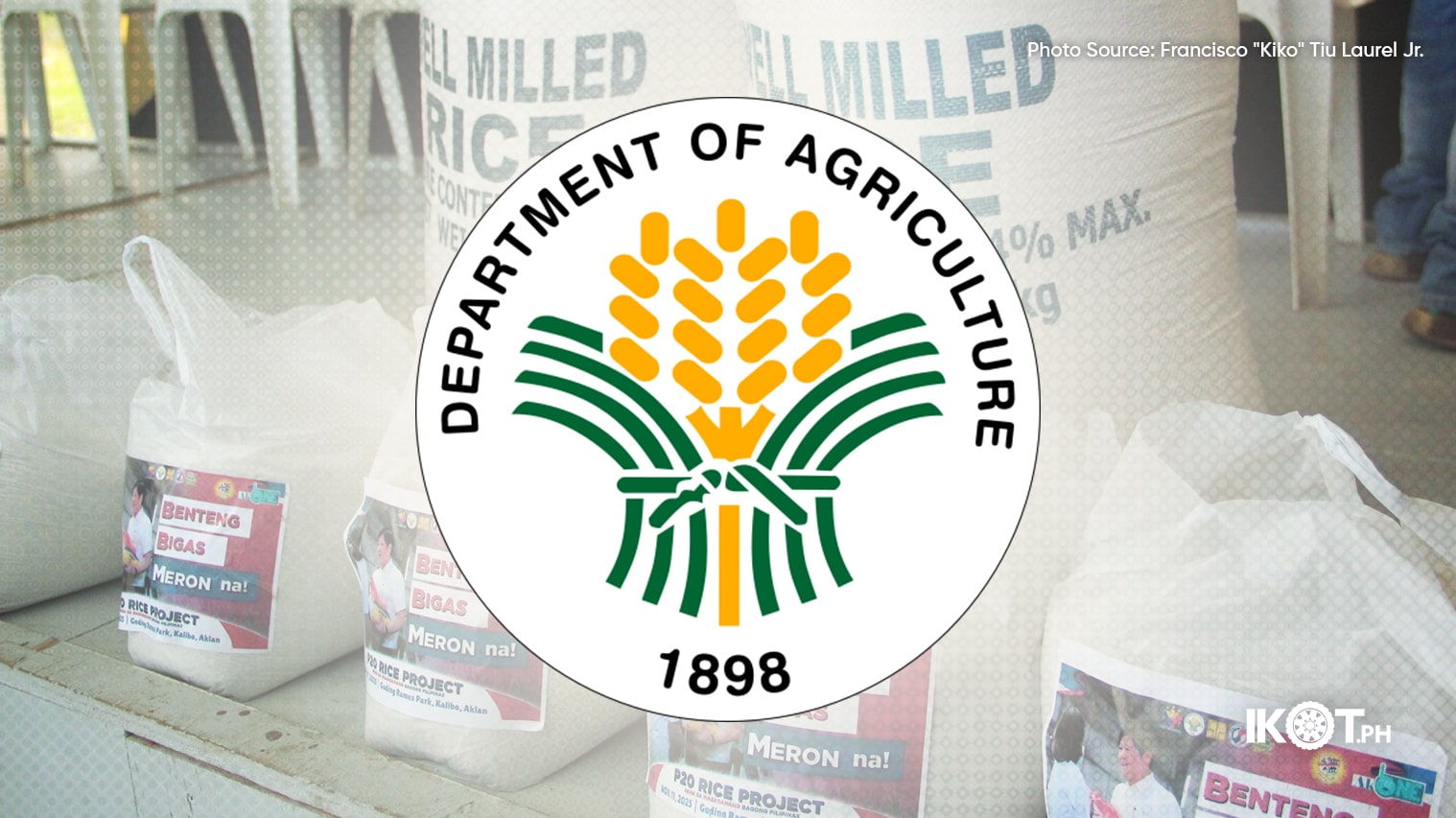
Agriculture Secretary Francisco Tiu Laurel Jr. announced an expansion of the government’s P20-per-kilo rice program, with a province-wide rollout in Pangasinan scheduled for January.
The initiative is part of President Ferdinand Marcos Jr.’s administration plan to reach 15 million households by the end of 2026.
Branded “Benteng Bigas, Meron Na!”, the flagship food security program aims to curb food inflation, increase access to affordable staples, and support farmgate prices for palay.
Initially targeting society’s most vulnerable sectors, the program is now set for a broader reach.
The government has allocated P23 billion in 2026 to subsidize the P20 rice program. This amount could decrease with the approval of pending legislation granting the National Food Authority (NFA) greater authority to manage rice supply and demand more efficiently.
“We started with the most vulnerable—4Ps beneficiaries, persons with disabilities, single parents, and senior citizens,” Tiu Laurel said. “Then we expanded to TODA members, farmers, fisherfolk, minimum-wage earners, teachers, and non-teaching personnel. Millions have already benefited. By 2026, our target is 15 million households, or roughly 60 million Filipinos.”
Pangasinan will serve as the pilot for the next phase, marking a shift from limited distribution to full provincial coverage. Once implemented, all eligible middle-income and lower-income households in the province will be able to purchase rice at P20 per kilo.
“This is a provincial-level launch.”
“This is a provincial-level launch,” the agriculture chief said. “By January, all qualified households in Pangasinan should already have access. This is a massive rollout.”
Following Pangasinan, the Department of Agriculture (DA) plans to expand the program to three cities in the Visayas and Mindanao—including Davao City—and six additional provinces between January and February. These areas were prioritized based on available NFA stocks and logistical readiness.
The January–February expansion is projected to cover around 780,000 households, or approximately 3.2 million Filipinos.
To sustain momentum, the DA will release a weekly implementation schedule covering the entire year.
Purchase limits will remain in place to manage supply. Senior citizens will continue to be allowed up to 30 kilos per month, while other beneficiaries will be capped at 10 kilos.
“There are real bottlenecks—supply, transport, and distribution,” the agriculture head said. “This is especially true if we scale up further or if the President wants to increase volumes.”
Most rice will be sourced from the NFA, which presents challenges in delivering stocks to remote and island communities, particularly those without NFA warehouses. The expansion will require additional trucks, drivers, cashiers, and close coordination with local governments to control costs and ensure accountability.
“At the end of the day, we must answer to COA.”
Beneficiaries will be required to register via QR codes to streamline distribution and auditing. “At the end of the day, we must answer to COA,” he added.
Distribution will leverage the existing 740 Kadiwa ng Pangulo stores, public markets, and LGU-run outlets, with a target of at least one access point per municipality. The government aims to expand Kadiwa stores to 3,000 by 2028.
“This is a whole-of-government effort,” Tiu Laurel said, citing partnerships with LGUs, DepEd, and DOLE. “This is the President’s promise—and we are delivering.”