
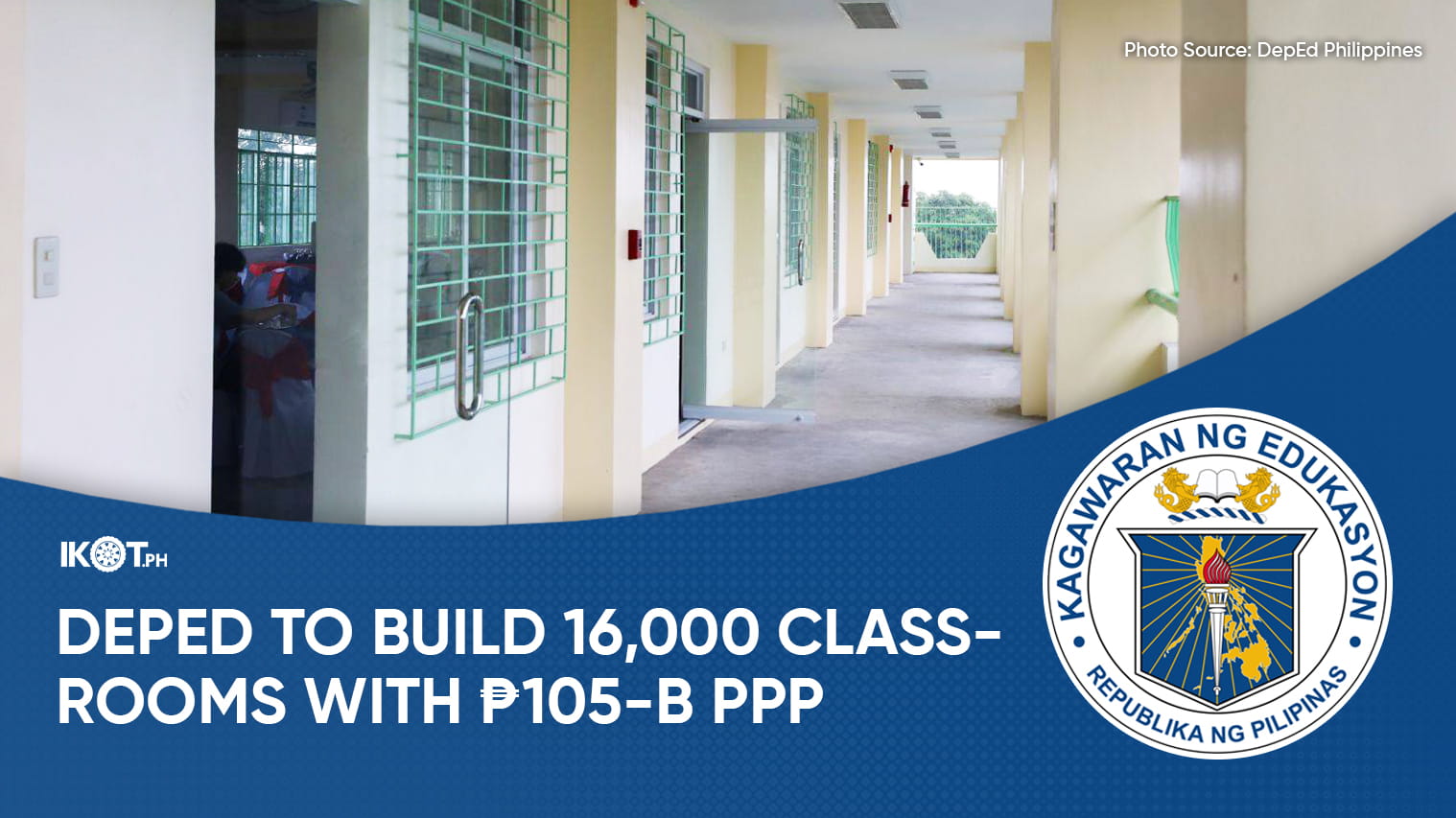
Education Secretary Sonny Angara announced the rollout of P105.7-billion public-private partnership (PPP) to build 16,459 new classrooms in much-needed areas to end congestion of learners and the slow progress of school infrastructure.
Angara and a team from the Department of Education (DepEd) recently approved the Public-Private Partnership for School Infrastructure Project Phase III (PSIP III) from the Economy and Development Council (ED Council) chaired by President Ferdinand Marcos Jr.
“Hindi na pwedeng umasa lang tayo sa iisang paraan.”
“Hindi na pwedeng umasa lang tayo sa iisang paraan. PSIP is one of our horses in this race to deliver classrooms faster to our communities,” the education chief said.
“Every classroom we build reduces congestion, improves safety, at nagbibigay ng sapat na espasyo para makapag-aral nang maayos ang mga bata at makapagturo nang epektibo ang mga guro,” the education head added.
According to him, thePSIP III is part of the broader reforms implemented by DepEd to hasten the construction of classrooms and improve the management of school infrastructure.
This will be included in the nearly 24,000 classrooms already programmed in the 2026 national budget, as well as programs allowing local government units to directly build classrooms.
These are in response to the estimated 165,000-classroom backlog all over the country.
“Sa pamamagitan ng PSIP III, binubuksan natin ang pintuan sa isang whole-of-nation approach.”
“Sa pamamagitan ng PSIP III, binubuksan natin ang pintuan sa isang whole-of-nation approach—pakikipagtulungan sa pribadong sektor para mas mabilis at mas episyenteng makapaghatid ng mga silid-aralan, at kasabay nito’y mapasigla ang lokal na industriya,” Angara explained.
It is estimated that more than 57,000 jobs will be created from these projects.
Angara said the DepEd team, together with the economic team, the PPP Center, and experts from the Asian Development Bank, are actively working to hasten the construction of classrooms, in response to the call of the President to assign green lanes for PPP projects in DepEd.
When it becomes operational, it is expected that 800,000 students will directly benefit from the new classrooms. Millions will also benefit from the decongestion that will happen in the country’s more than 1,000 public schools.
Because of this, the classroom population is expected to be reduced from 50 to 39 learners per class, resulting in a safer, more orderly and better learning environment.
This will also result in doing away with multiple-shift schedules and devoting real time for students to learn in classrooms, for less exhausted teachers leading to safer and better school operation.
It will also have a positive effect on government funds. The government is expected to save around P40.15 billion under the PSIP III.
The project will be implemented through solicited public-private partnership using the build-lease-and-transfer scheme, the implementation of which is supervised by DepEd to ensure project follow education standards and timelines.
Mahigit isang dekada na ang lumipas mula nang ipatupad ang
PSIP I and II have been implemented got more than a decade, collectively delivering 13,391 classrooms.
With the goal of hastening the delivery of classroom expansion, the PSIP III is set to make the biggest classroom PPP in the history of the Philippines.
Based on the indicative timeline, bidding is expected to begin in March 2026 following its approval in January.
The contract signing is eyed in Agosto 2026, while construction is set to begin on Marso 2027, based on the Public-Private Partnership Code.
The project is expected to finish the construction of all classrooms within 19 months after the contract signing and is expected to be completed in Marso 2028.