
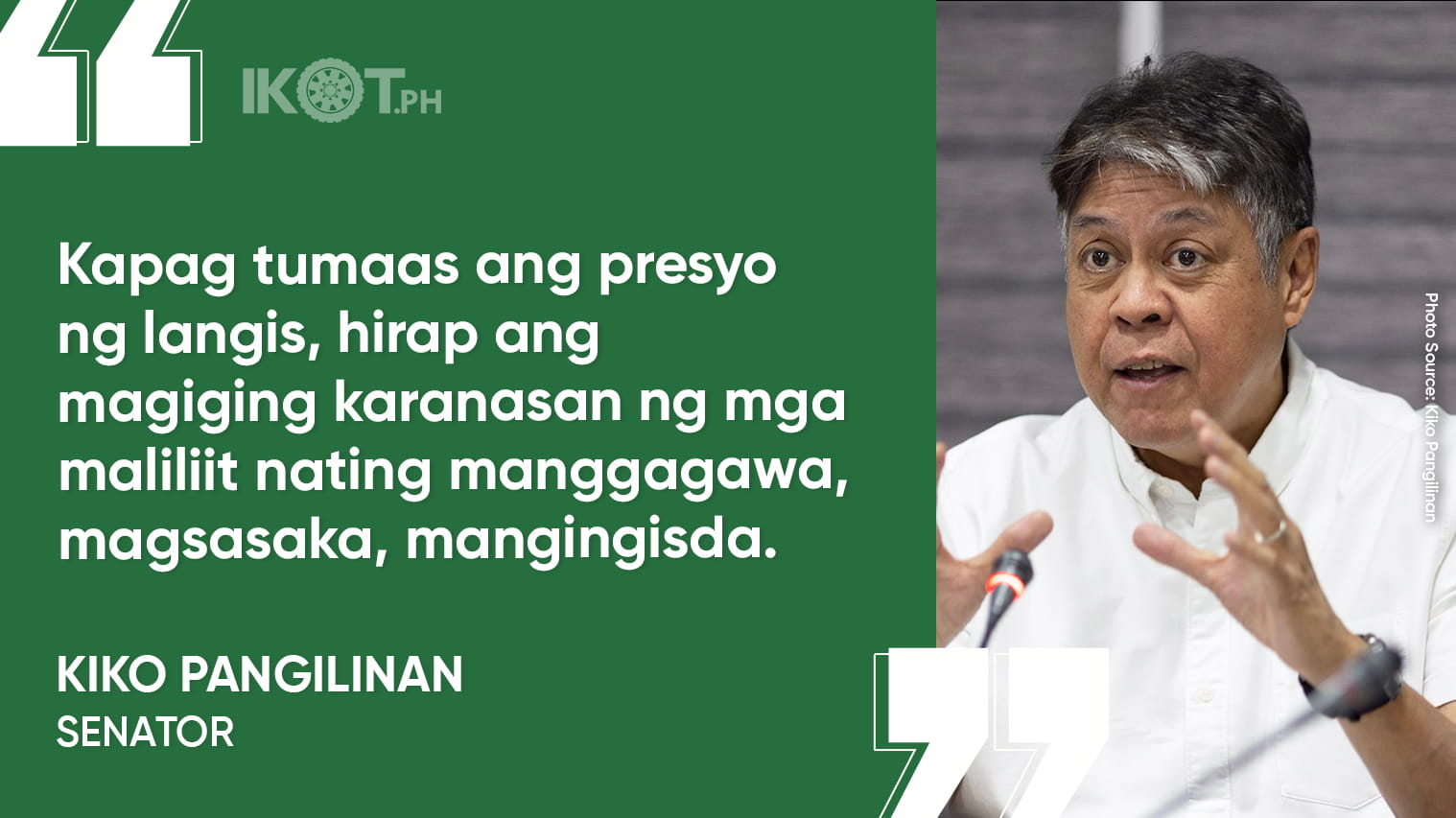
Senator Kiko Pangilinan called on the government to suspend excise taxes on fuel and activate fuel subsidies programs to cushion the economic impact on Filipino workers of the escalating tensions in the Middle East.
Doing so, Pangilinan said during his manifestation of Senator Erwin Tulfo’s privilege speech will mitigate the anticipated increase in prices of fuel and other basic commodities caused by the Middle East conflict.
“We also want to know ano ‘yung magiging immediate na pagkilos ng ating mga ahensya ng pamahalaan na may direktang kinalaman dito sa mga magiging epekto sa ating ekonomiya, magiging epekto sa ating mga kababayan nasa ibang bansa,” the veteran legislator stressed.
“Meron tayong mga programang fuel subsidies sa transport sector, sa mga magsasaka, sa mga mangingisda.”
“Meron tayong mga programang fuel subsidies sa transport sector, sa mga magsasaka, sa mga mangingisda dahil kapag tumaas ang presyo ng langis, hirap ang magiging karanasan ng mga maliliit nating manggagawa, magsasaka, mangingisda,” the seasoned lawmaker added.
“Temporarily suspending the excise tax on fuel will lead to a P3 to P6 per liter of savings on fuel.”
Temporarily suspending the excise tax on fuel will lead to a P3 to P6 per liter of savings on fuel, the senator pointed out.
According to reports, fuel prices are expected to be up by as much as P1.90 per liter.
“Kaya mahalaga ang hearing na ito para malaman natin ano ang mga hakbang at para makapag mungkahi din tayo ng mga hakbang para matugunan ang problema dala ng sigalot sa Middle East,” the senator said.
He likewise filed proposed Senate Resolution No. 325 to urge swift government action in ensuring the safety of overseas Filipino workers (OFWs) in the Middle East.
The resolution, which received the support of 22 senators, also sought critical interventions to protect the economy, particularly in the impact of the Middle East conflict on the prices of fuel and other commodities.
In his privilege speech, Tulfo underscored the importance of evacuation and repatriation plans, energy security, economic stability, price monitoring and market intervention, and the integrity of international law and rules-based order.