Staying true to his advocacy of protecting the Philippines’ marine ecosystem and biodiversity, which encompasses the livelihoods of millions of Filipino fisherfolk in the coastal areas, Senator Kiko Pangilinan filed Senate Bill No. 1840, or the Blue Economy Act, to improve the sustainable development of the country’s maritime resources.
The measure aims “to improve coordination, direct investments toward sustainable (marine) activities.”
It also wants to “ensure that economic gains from the marine and maritime domain are sustained without undermining ocean health that supports long-term growth for current and future generations of Filipinos”.
Under SBN 1840, a Blue Economy Council will be established to formulate an integrated strategy that will help in strengthening, growing, and sustaining the Philippines’ blue economy.
The Council will be tasked to form the Blue Economy Framework—a development model.
The Council will be tasked to form the Blue Economy Framework—a development model that will define the roadmap “for a diversified and sustainable ocean economy in a manner that provides long-term economic and social benefits while building resilience to climate change and without compromising the safety of our marine ecosystems”.
The measure likewise underscores the role of the government’s financial and regulatory institutions, such as the Bangko Sentral ng Pilipinas, the Securities and Exchange Commission, the Land Bank of the Philippines, and the Development Bank of the Philippines, in encouraging investments by providing an enabling regulatory environment, and by providing credit to businesses engaged in sustainable ocean-based or ocean-related activities.
Pangilinan, who chairs the Senate Committee on Agriculture, Food and Agrarian Reform, stressed the importance of the fisheries sector and ocean-based industries in ensuring food security and supporting the national economy.
“Our seas are not only a source of food but also of livelihood, culture, and national identity.”
“The Philippines is a maritime nation. Our seas are not only a source of food but also of livelihood, culture, and national identity,” the veteran legislator said.
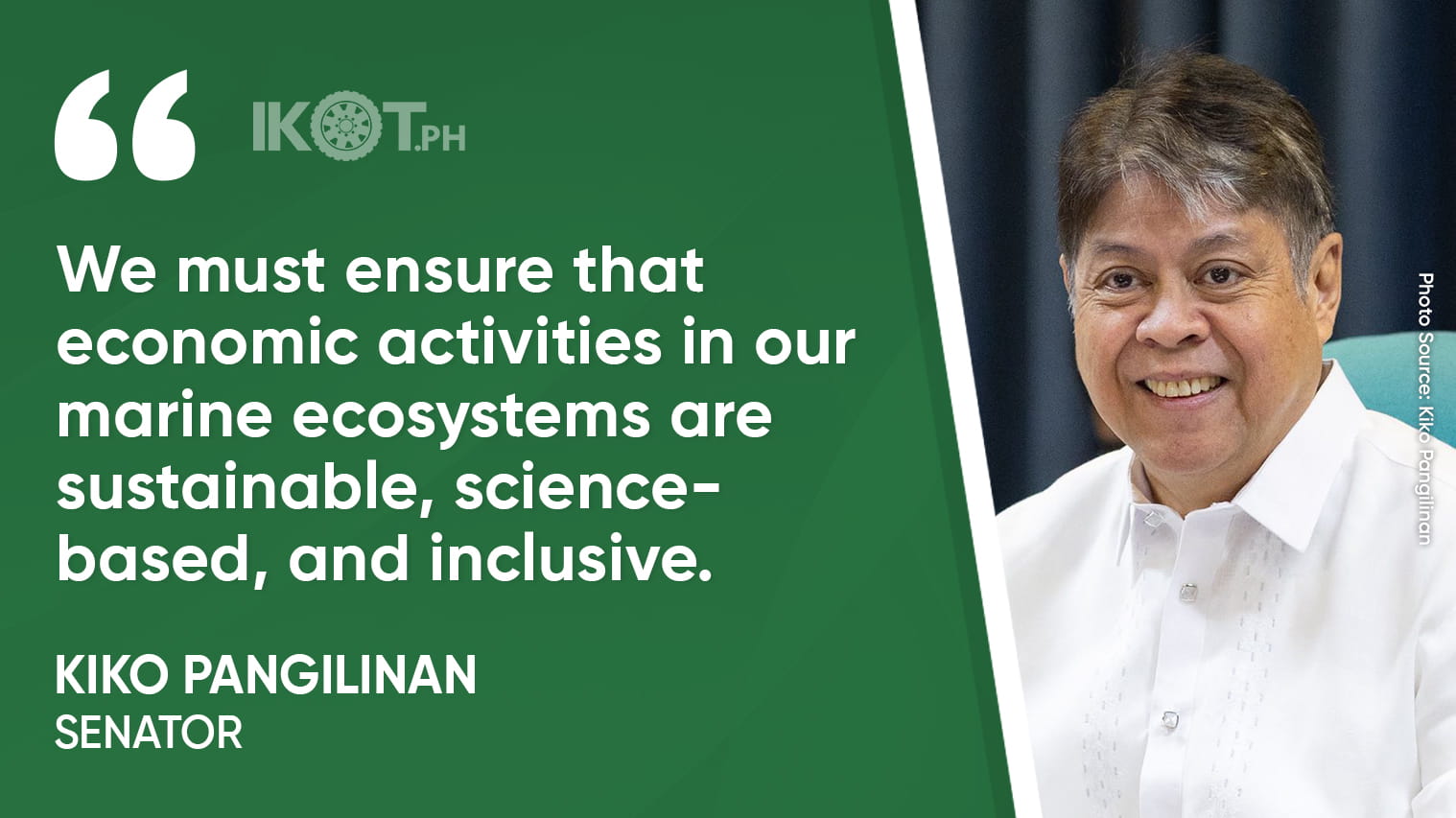
“We must ensure that economic activities in our marine ecosystems are sustainable, science-based, and inclusive,” the seasoned lawmaker stressed.