
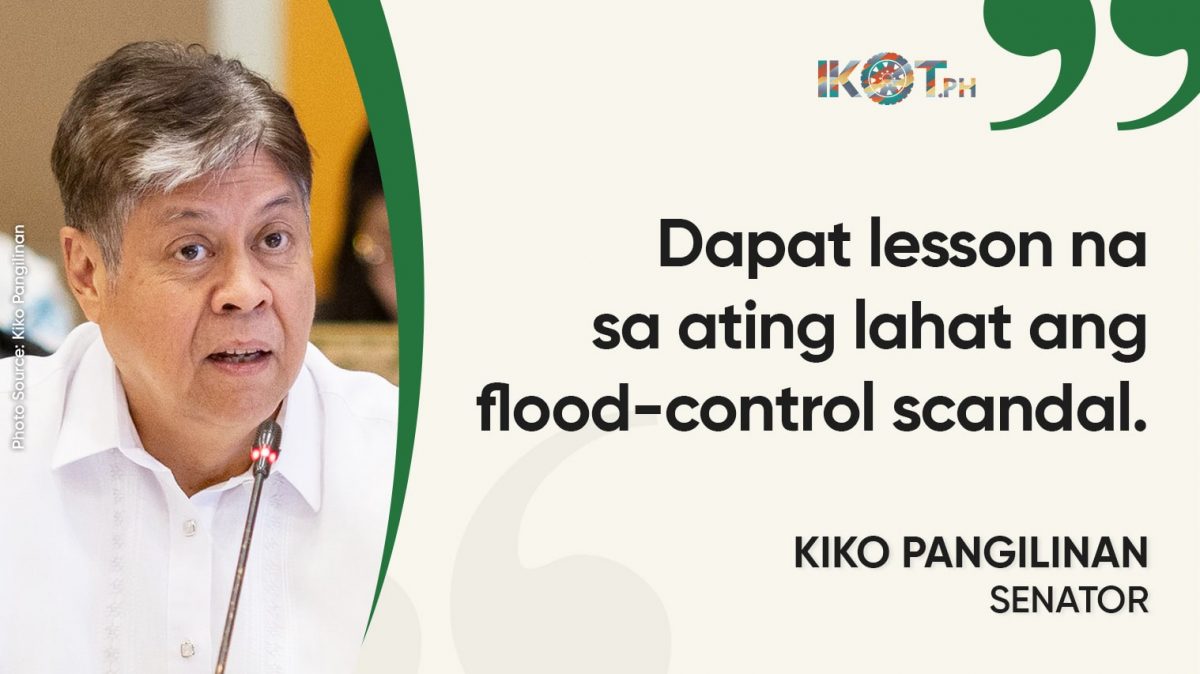
With public anger still simmering over the flood-control controversy that tainted the 2025 budget cycle, Senator Kiko Pangilinan said the bicameral conference committee-approved ₱6.793-trillion 2026 national budget now contains strong, enforceable safeguards for transparency, traceability, and citizen oversight.
“Ekis na ang patago at ‘alok-able’ na mga usapan na nagreresulta sa ‘ghost’ projects, overpricing, at mga public-infra peddlers o mga political middlemen,” said Pangilinan, a member of the bicameral panel that helped reconcile the House and Senate versions.
“Ekis na ang patago at ‘alok-able’ na mga usapan na nagreresulta sa ‘ghost’ projects, overpricing, at mga public-infra peddlers o mga political middlemen.”
“Sa kauna-unahang pagkakataon, livestreamed ang buong proseso mula sa subcommittee at committee hearings, House at Senate approvals, hanggang bicam. Nagpapasalamat tayo sa mga citizens’ groups, tulad ng People’s Budget Coalition, na tumulong sa atin magbalangkas ng mga polisiya at probisyon para patibayin ang budget process,” the veteran legislator pointed out.
“Bukod sa pagpapanagot sa mga nangurakot na noon, naglagay tayo ng mga safeguard para hindi na ito maulit muli,” the seasoned lawmaker added.
“Bukod sa pagpapanagot sa mga nangurakot na noon, naglagay tayo ng mga safeguard para hindi na ito maulit muli.”
Under the approved 2026 budget, agriculture infrastructure projects — including the Department of Agriculture’s farm-to-market roads and National Irrigation Administration projects — are now backed by formal annexes identifying exact locations with geo-tagged coordinates, detailed engineering designs, and validated cost estimates.
Timelines, contractors, and fund releases must also be posted on publicly accessible online dashboards or portals, squeezing out “paper projects” that are hard to verify on the ground.
The 2026 budget also institutionalizes Citizen Participatory Audits (CPA) across agencies, GOCCs, and LGUs in coordination with the Commission on Audit, thus opening audit planning and project validation to accredited civil society groups, and requiring that community findings be formally reflected in COA reports submitted to Congress.
In social services, the senator pushed for safeguards aimed at cutting off patronage routes, with aid going directly to the people, not political intermediaries.
For the Medical Assistance to Indigent and Financially Incapacitated Patients (MAIFIP) program, the earmarking of medical funds for specific offices or districts is expressly prohibited; releases must follow eligibility rules and reporting, with disclosure through DOH platforms.
Feeding programs and food procurement across agencies must prioritize direct purchases from farmers and fisherfolk under the Sagip Saka Act (Republic Act 11321), with quarterly consolidated reports to Congress to make procurement transparent and traceable.
Following bicam approval, the General Appropriations Bill will be returned to both chambers for ratification before being transmitted to the Office of the President for signature.
According to cited estimates compiled by the Philippine Institute for Development Studies, ₱700 billion to ₱1.4 trillion lost annually.
“Dapat lesson na sa ating lahat ang flood-control scandal. Kaya tuloy lang tayo sa pagbabantay. Ang pagpasa ng budget ay simula pa lamang. Mahalaga rin ang mahigpit na pagbabantay sa paggasta ng pera ng taumbayan,” he concluded.