
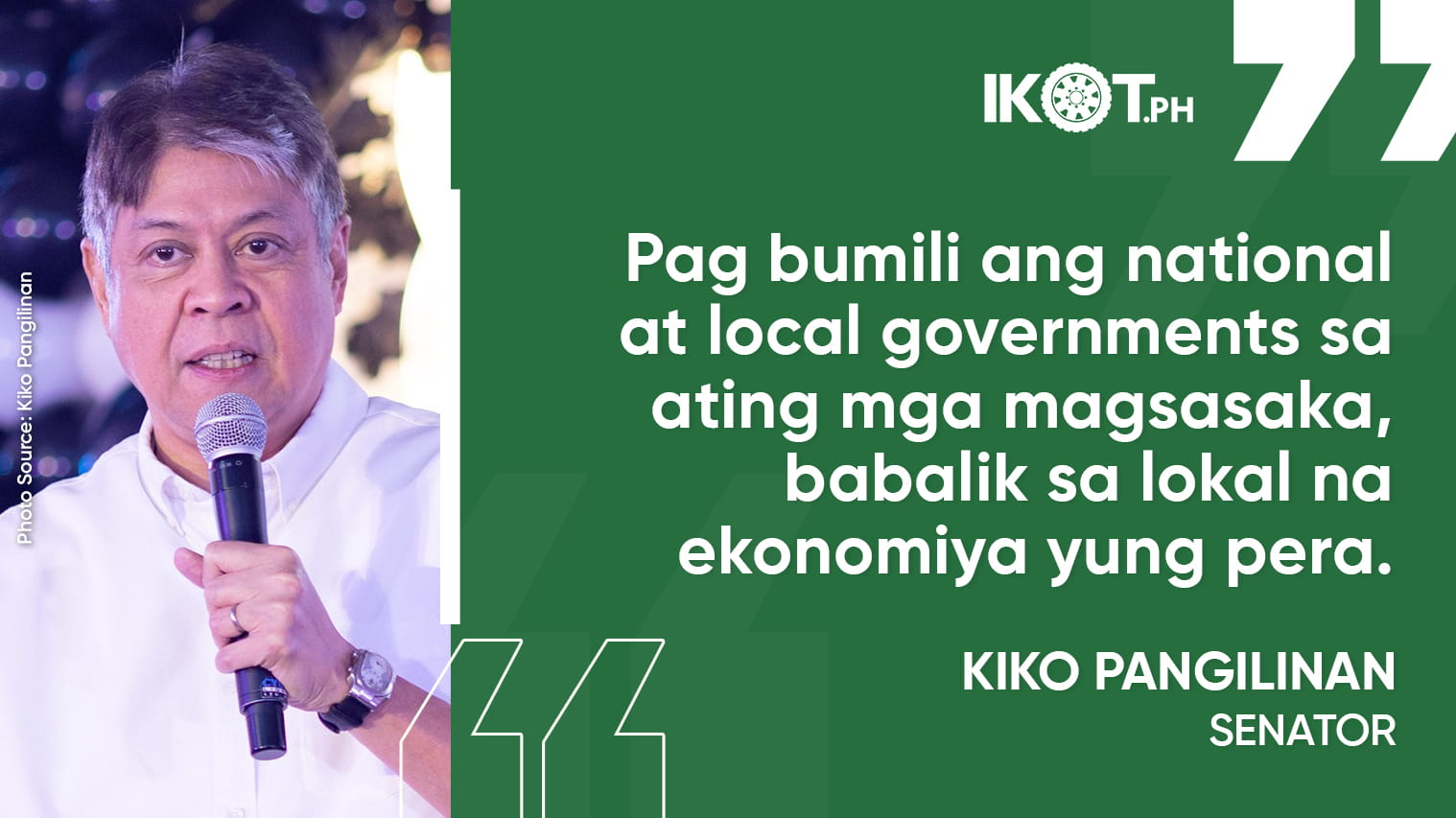
Senator Kiko Pangilinan made his appeal to local government units (LGUs) to support and implement the Sagip Saka Act during a dialogue with 67 Mayors for Good Governance and the Department of Agriculture (DA).
The law, which Pangilinan authored and passed in 2019, allows the national government agencies and LGUs to directly purchase agricultural and fisheries products from farmers and fisherfolk without public bidding.
“Sana lahat ng LGU ay tumaya at tiyakin ang full implementation ng batas.”
“Sana lahat ng LGU ay tumaya at tiyakin ang full implementation ng batas na ito kasama ang DA,” the veteran legislator said.
The chair of the Senate Committee on Agriculture, Food, and Agrarian Reform emphasized the critical role LGUs play in implementing policies, laws, and programs.
In particular, the seasoned lawmaker called LGUs the “frontliners” of government programs, pointing out their proximity and immediate mandate to effectively and efficiently implement laws that will benefit Filipinos “at the grassroots level”.
“’Pag mas active ang LGU, ramdam ang resulta ng national government programs.”
“’Pag mas active ang LGU, ramdam ang resulta ng national government programs. That’s why indispensable, as far as I’m concerned, ang cooperation between national and local governments, lalo na sa agrikultura,” the senator stated.
“’Yung gabay ng LGU ay importante. These programs are made precisely for us to be able to purchase directly sa ating farmers and our fisherfolk. And with the help of LGUs, malaking bagay na maipatupad ng tama, maganda ang kita ng ating mga magsasaka,” he added.
Pangilinan took a major role in pushing for the signing of Executive Order Nos. 100 and 101 by President Ferdinand Marcos Jr. last year.
EO 100 mandates setting a floor price for palay to protect farmers from low farmgate prices, and EO 101 directs government agencies to fully implement the Sagip Saka Act.
He explained that these twin EOs empower local and national governments to implement the Sagip Saka Act and ensure that farmers, fisherfolk, and consumers benefit from improved and sustainable local food production, strengthened rural development, and accessible fresh and nutritious food products.
“Kaya napakahalaga dahil ‘pag bumili ang national at local governments sa ating mga magsasaka, babalik sa lokal na ekonomiya yung pera, lalago ang local economy, sariwa pa ang magiging mga produkto,” Pangilinan concluded.