
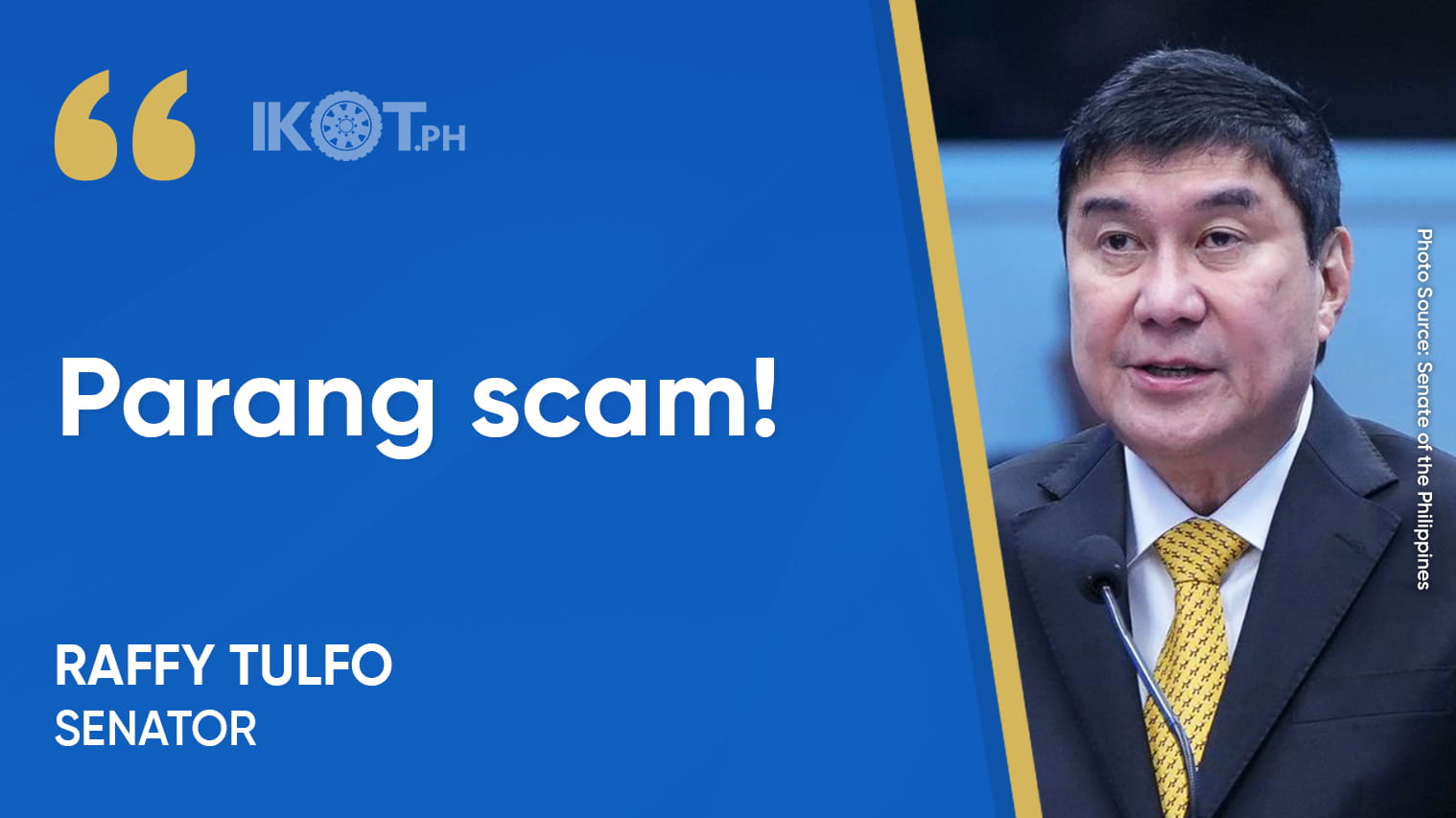
Amid the Senate recess, Senate Committee on Public Services Chairperson Raffy Tulfo held a Zoom conference meeting recently with the Department of Energy (DOE), Department of Transportation (DOTr) and Department of Social Welfare and Development (DSWD) to discuss the challenges faced by the transport sector amid the continued rise in petroleum prices.
One of the issues raised by Tulfo was the complaints of consumers regarding consecutive oil price hikes immediately implemented by oil companies in the country just days after tensions erupted in the Middle East, despite the fact that the fuel being sold was still old or “buffer stock” and not newly supplied inventory.
“Ang kapal ng mukha nitong mga oil companies na ‘to!”
“Ang kapal ng mukha nitong mga oil companies na ‘to! Ilang araw matapos sumiklab ang giyera sa Middle East, nagtaas na agad sila ng presyo ng langis na ngayon ay umaabot na sa 97% price increase kahit ang ibinebenta nilang langis ay lumang stock pa. Parang scam!” the legislator said.
The lawmaker noted that oil companies in the Philippines appear to have imposed the highest percentage of oil price increases, reaching up to 97% — compared to neighboring countries such as Laos (33%), Thailand (46%), Vietnam (35%), Cambodia (15%), and Singapore (29%), indicating possible abuse of the Philippine Oil Deregulation Law.
“The government has lost the authority to set or intervene in oil pricing since the passage of the Oil Deregulation Law in 1998.”
According to DOE Oil Industry Management Bureau Director Rino Abad, the government has lost the authority to set or intervene in oil pricing since the passage of the Oil Deregulation Law in 1998. Abad explained that this resulted in the government’s inability to estimate or establish a pricing formula for oil.
He further stated that the removal of the Oil Price Stabilization Fund (OPSF), along with the government’s exit from oil trading, led to a wide-scale takeover by the private sector or oil companies. The DOE’s role has since been limited to monitoring oil prices and appealing to companies to implement staggered price increases on a weekly basis.
The lawmaker suggested that concerned agencies should continue coordinating with oil importers and companies to protect commuters, drivers, and other stakeholders in the transport sector and to prevent further abuse in oil price increases.
The senator also raised numerous complaints regarding the government’s fuel subsidy distribution, particularly from tricycle drivers. According to him, confusion has arisen due to a disorganized payout system, including unclear requirements, incomplete beneficiary lists, and delays in disbursement.
To address these concerns, Tulfo coordinated with Edwin Morata, Director of the DSWD Crisis Intervention Division, and urged him to improve and systematize the process.
In addition to the fuel subsidy under the DSWD’s Assistance to Individuals in Crisis Situation (AICS) program, DOTr Secretary Giovanni Lopez announced that the rollout of the agency’s ₱2.5 billion fuel subsidy program that began March 24, with jeepney drivers and operators to receive ₱5,000 each.
The DOTr has partnered with Land Bank of the Philippines and various e-wallet applications to ensure easier and more convenient access to financial assistance for drivers while they continue working.