
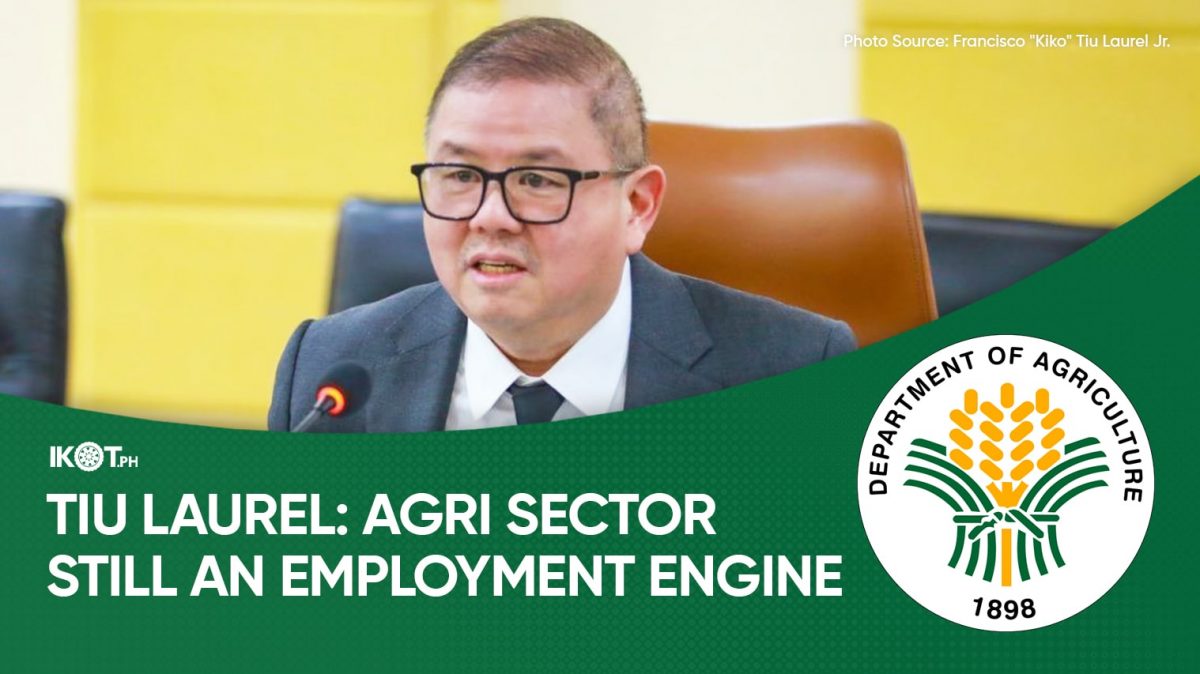
Agriculture remains a crucial engine of employment in the Philippines, but fresh data from the Philippine Statistics Authority (PSA) bring a familiar weakness into sharp focus.
Many of the jobs the sector generates still come and go with the seasons, a reality that Agriculture Secretary Francisco Tiu Laurel said highlights the urgent need to turn short-term gains into durable, long-term economic strength.
The PSA recently reported that agriculture employed 10.44 million Filipinos in October, representing 21.5 percent of the country’s 48.62 million workers and ranking second only to the services sector. This was slightly higher than the sector’s 21.2 percent share of total employment in October 2024.
Compared to July, agricultural employment rose in October by 1.85 million from around 8.5 million, or 18.5 percent of total jobs during the period. This was the largest increase among all major sectors. The jobs surge likely reflects seasonal harvest cycles rather than lasting improvements.
Roughly 88 percent of workers in agriculture remain in farming and forestry, while nearly 12 percent are in fishing and aquaculture.
“This seasonality of job opportunities in the sector brings into focus the need for long-term reforms.”
Tiu Laurel said this seasonality of job opportunities in the sector brings into focus the need for long-term reforms.
“We will also position agriculture as a far stronger contributor to the broader economy.”
“If the Department of Agriculture can create more permanent jobs by building the right infrastructure, including food hubs, cold storage facilities, agricultural ports, and food processing complexes, then we will not only uplift the lives of those who till our lands and fish our seas. We will also position agriculture as a far stronger contributor to the broader economy,” the agriculture chief said.
The PSA data also showed that of the 2.54 million underemployed Filipinos in October, agriculture accounted for 32.9 percent, or nearly four out of every ten workers who wanted more or better work.
Tiu Laurel summed up the challenge.
“Agriculture can create jobs quickly, but the responsibility of the Department of Agriculture is to ensure those jobs become lasting and stable,” he concluded.