
The Philippines closed 2025 with a significantly narrower agricultural trade deficit in December, as a surge in farm exports—led by tropical fruits—combined with softer imports to ease pressure on the country’s external accounts.
Agriculture Secretary Francisco Tiu Laurel Jr. welcomed the improvement, framing it as early proof that the Department of Agriculture’s export diversification strategy is starting to gain traction.
“Last year’s export growth strengthens the case for pushing deeper into new destinations and higher-value goods.”
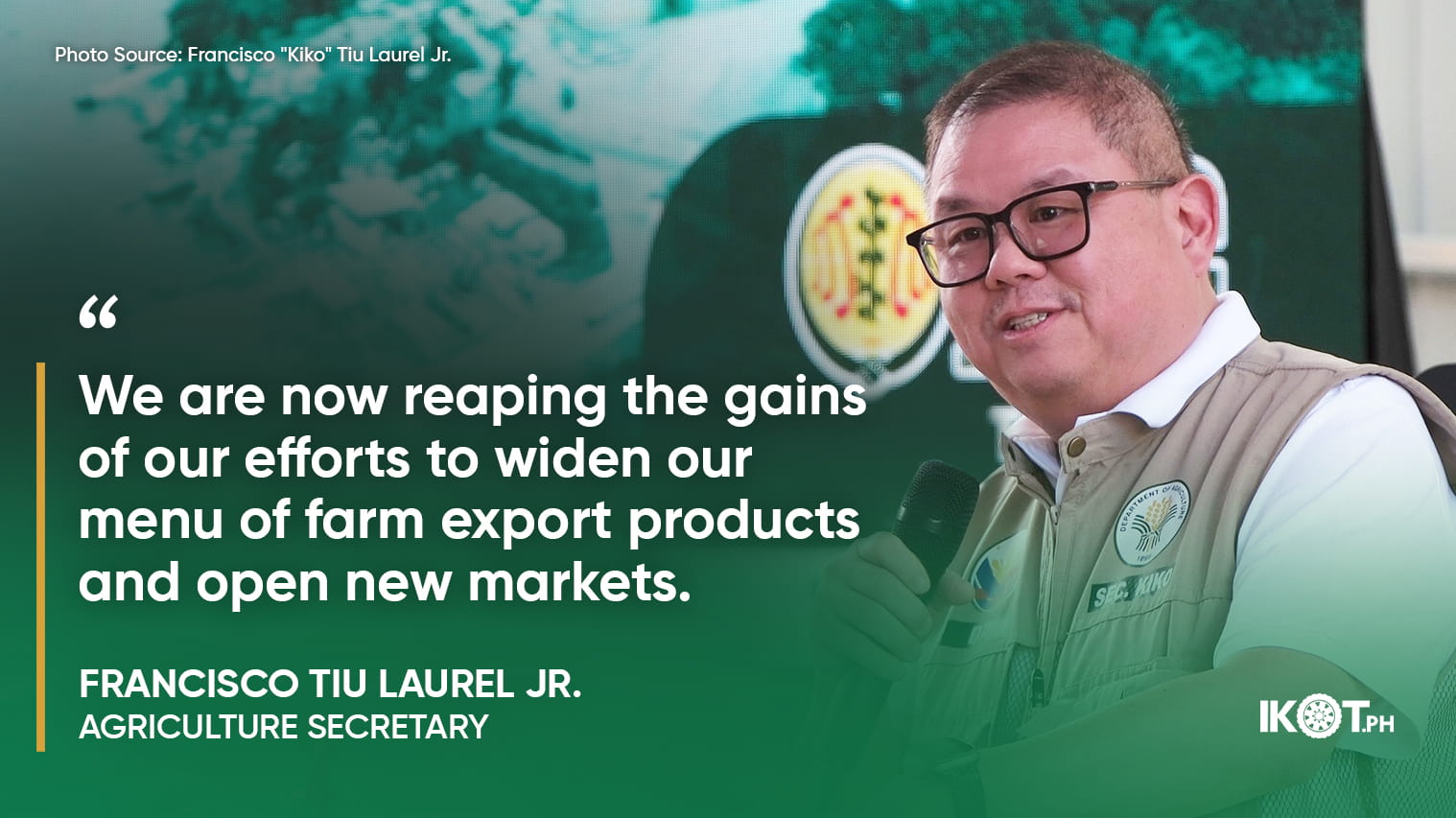
“We are now reaping the gains of our efforts to widen our menu of farm export products and open new markets,” Tiu Laurel said, adding that last year’s export growth strengthens the case for pushing deeper into new destinations and higher-value goods.
Data from the Philippine Statistics Authority showed agricultural exports reached $884.77 million in December, equivalent to 36 percent of total agricultural trade. Imports stood at $1.55 billion, or 64 percent of the total, resulting in a trade deficit of $668.35 million—27 percent narrower than in December 2024.
Exports jumped 19 percent year on year, supported by firmer overseas demand and higher shipment values. Edible fruits and nuts, including citrus and melon peels, dominated outbound trade at $329.72 million, accounting for 37 percent of total exports. The figures underline the growing role of fruit shipments in lifting export performance, while also pointing to lingering concentration risks in the export basket.
To broaden that base, the DA has identified 12 high-value crops to push in global markets: asparagus, avocado, banana, cacao, calamansi, durian, dragonfruit, mango, okra, pomelo, pineapple and rambutan. The focus reflects a shift toward products with stronger margins and clearer demand, particularly in Asian and European markets where Philippine produce has been gaining visibility.
Market access gains were evident in December’s trade flows. Malaysia emerged as the largest Southeast Asian buyer, importing $58.1 million worth of Philippine farm goods, while exports to European Union member countries reached $220.40 million. The Netherlands absorbed $154.4 million of that total, reinforcing its position as a key gateway for Philippine agricultural products into Europe.
“What matters is building value chains that raise farmers’ incomes, attract long-term investment and create jobs.”
“The goal is not just higher export numbers,” Tiu Laurel said. “What matters is building value chains that raise farmers’ incomes, attract long-term investment and create jobs. That’s how export growth translates into real gains for the rural economy.”
On the import side, agricultural purchases fell 6.2 percent year on year, with the top 10 commodity groups down 7.6 percent. Cereals, including rice, remained the largest import item.
Taken together, the December data point to a gradual rebalancing in agricultural trade—driven increasingly by export momentum rather than import restraint alone.