

There’s a moment many people recognize—but rarely talk about.
Hindi siya tungkol sa due date.
Hindi rin tungkol sa collection call.
It’s quieter than that.
Yung sandali na gusto mong magpahinga…
pero may konting guilt.
Yung bibili ka sana ng maliit na bagay…
pero bigla kang magdadalawang-isip.
Yung kahit walang nangyayari sa araw mo—
may tahimik na bigat na hindi nawawala.
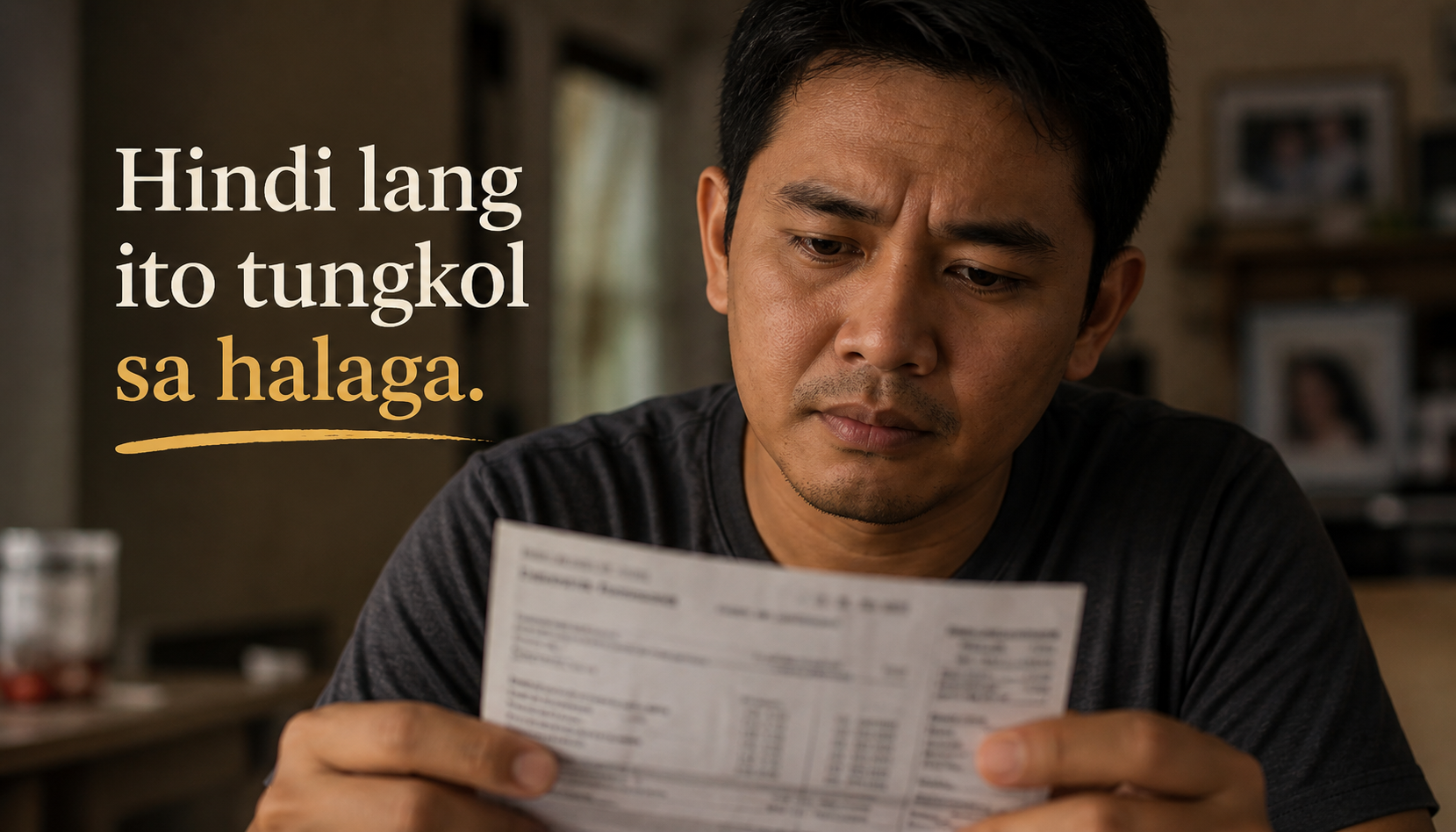
When Debt Becomes More Than Numbers
We usually talk about debt in practical terms.
Magkano ang utang.
Gaano katagal babayaran.
Anong strategy ang pinakamabilis.
But for many people, the heavier part isn’t financial.
It’s emotional.
The Weight That Follows You Around
Debt has a way of staying with you—even when you’re not actively thinking about it.
It shows up in small decisions.
Sa hesitation bago gumastos.
Sa pag-iwas sa ilang usapan.
Sa pakiramdam na kailangan mong laging mag-ingat.
Not because you’re being careless—
but because you’re carrying something.

The Shame We Don’t Say Out Loud
For some, that weight comes with something deeper.
Shame.
Hindi yung dramatic.
Hindi yung obvious.
Yung tahimik lang.
“Kung mas maayos lang sana ako…”
“Dapat hindi ako umabot dito…”
And over time, something shifts.
Debt stops feeling like a situation.
It starts feeling like a reflection of who you are.
When Identity Gets Involved
This is especially heavy in a culture like ours.
Where being responsible matters.
Where providing matters.
Where being “okay” matters.
So when debt enters the picture,
it can feel like something more than a financial challenge.
It feels personal.
Why People Carry It Quietly
And because it feels personal, people don’t always talk about it.
They minimize it.
They manage it silently.
They carry it on their own.
Not because they don’t want help—
but because they don’t want to be seen differently.
The Hidden Cost of Carrying Alone
What often goes unspoken is how much energy this takes.
Debt doesn’t just occupy space in your budget.
It occupies space in your mind.
It narrows your choices.
It makes you more cautious—or sometimes more reactive.
It pushes you to decide quickly—just to feel “free” from it.
When Progress Starts to Feel Heavy
This is why aggressive approaches don’t always hold.
You push hard.
You try to fix everything quickly.
You follow strict plans.
And for a while, it works.
Until it doesn’t.
The Cycle of Push and Exhaustion
Because when the emotional weight is ignored,
something eventually gives.
You get tired.
You feel discouraged.
You step back—not because you don’t care,
but because you’re overwhelmed.
So progress becomes uneven.
Not because the plan is wrong—
but because the weight is too heavy to carry alone.
A Different Starting Point
A healthier approach doesn’t begin with a strategy.
It begins with a separation.
You are not your debt.

Separating Identity from Situation
Having debt does not mean you are irresponsible.
It does not mean you failed.
It does not define your entire financial story.
Debt is something you are managing.
Not something you are.
What Changes When This Becomes Clear
When that distinction becomes real,
something shifts.
The pressure softens.
The mind quiets—even just a little.
Decisions become calmer.
Plans feel more doable.
Not because the numbers changed—
but because the meaning changed.

From Punishment to Pathway
Payments stop feeling like punishment.
They start feeling like movement.
Not fast.
Not dramatic.
But steady.
Why Dignity Matters in This Stage
This doesn’t remove accountability.
It restores dignity.
And dignity matters—especially in situations that take time.
Because paying off debt is rarely quick.
It requires repetition.
Patience.
Showing up even when nothing feels different yet.

Staying Without Self-Attack
Those things are hard to sustain
when every step is tied to self-judgment.
But when you remove that layer—
consistency becomes more possible.
Not easier.
But lighter.
A Quiet Reframe
Debt is not a verdict.
It is a chapter.
Finally, Something Important
If you’re carrying debt right now—
and it feels heavier than it “should”—
hindi ka nag-iisa.
And it doesn’t mean you’re weak.
It may simply mean
you’ve been carrying more than just the numbers.
Closing Reflection
Progress with debt doesn’t begin
when everything is perfectly planned.
It begins when you stop turning it
into a statement about who you are.
Because once you can face it
without shrinking—you can move through it
without losing yourself.
Catch Thanjo’s personal finance column every Tuesday at 7 p.m. on IKOT.PH and across Facebook, X (Twitter), and Instagram.
DISCLAIMER:
The views and opinions of our partners and contributors expressed in this article are exclusively their own and are made in their personal capacities. They do not reflect the views, policies, or official stance of IKOT.PH, its editors, officers, or affiliates. As such, nothing contained herein shall be construed as professional advice or as an official declaration, endorsement, or position of IKOT.PH