
The Philippines and Japan are moving to recalibrate their agricultural partnership, with officials laying the groundwork for key agreements during a high-level meeting, ahead of the scheduled state visit of President Ferdinand Marcos Jr. to Japan later this month.
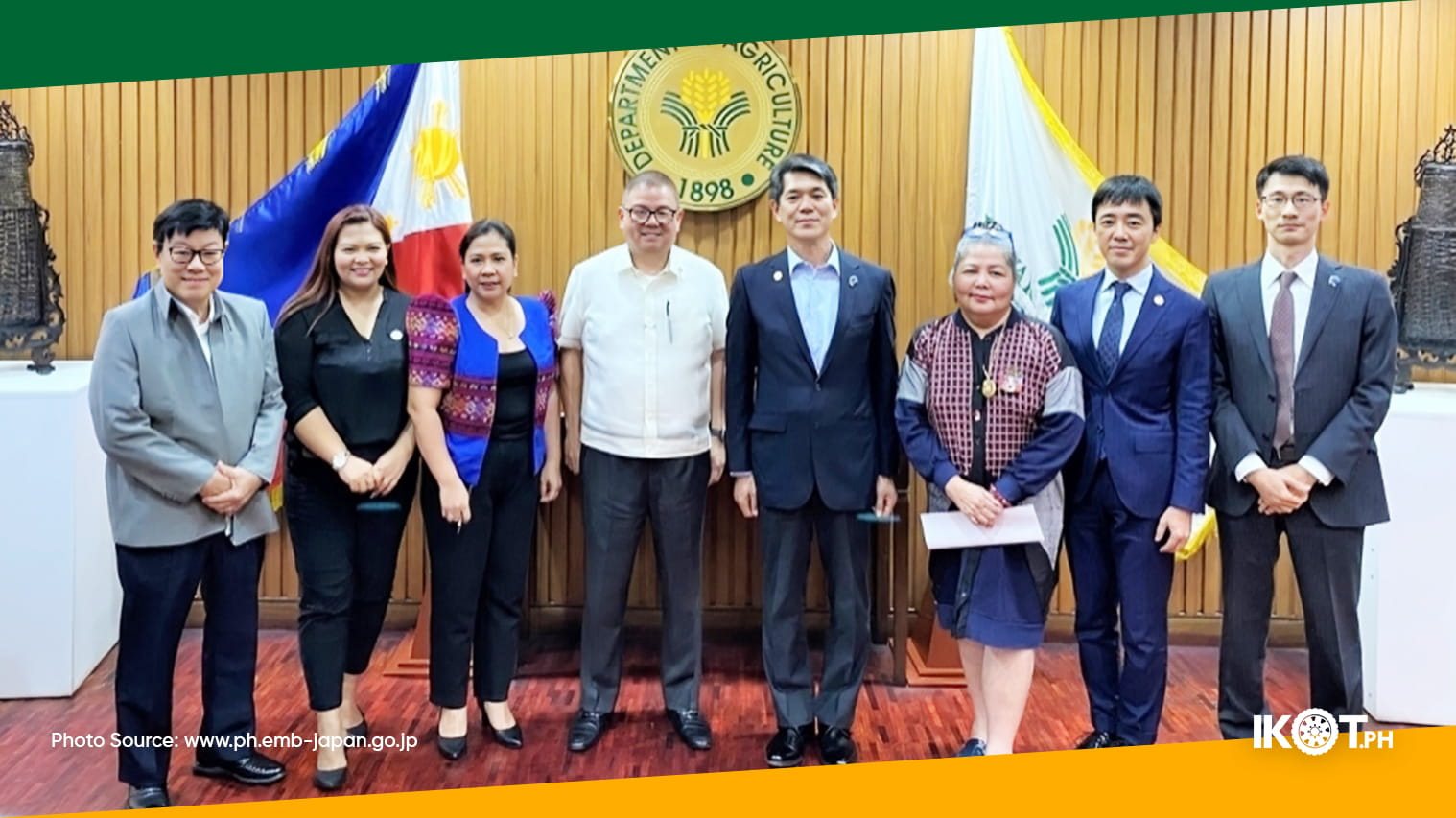
Japanese Ambassador Kazuya Endo led officials in a courtesy call on Agriculture Secretary Francisco Tiu Laurel Jr. to start preparatory discussions for expected deliverables during the state visit.
At the center of the talks is the planned amendment of the Philippines-Japan Memorandum of Cooperation (MOC) on agriculture. By incorporating fisheries, both governments are acknowledging the sector’s expanding role in food security, livelihoods, and export development, particularly for the Philippines.
Japan’s expertise in smart agriculture, digital systems, and precision farming is expected to support Philippine efforts to improve productivity and modernize its food systems.
The proposed changes also point to deeper technological collaboration. Japan’s expertise in smart agriculture, digital systems, and precision farming is expected to support Philippine efforts to improve productivity and modernize its food systems.
The amended agreement would establish a Joint Committee on Agriculture and Fisheries, a mechanism intended to institutionalize cooperation and sustain long-term initiatives.
Tiu Laurel underscored the broader significance of the Japanese ambassador’s visit, describing it as a reaffirmation of bilateral ties.
“It also provides an opportunity to align our priorities and accelerate initiatives that will directly benefit Filipino farmers and fisherfolk.”
“This visit underlines the strength and continuity of our partnership with Japan, especially as we pursue shared goals in food security, sustainability, and innovation,” the agriculture chief said. “It also provides an opportunity to align our priorities and accelerate initiatives that will directly benefit Filipino farmers and fisherfolk.”
The amended MOC is expected to be finalized and signed during Marcos’ visit, signaling both countries’ intent to deepen cooperation in agriculture and related sectors.
Both sides also reviewed preparations for the second Joint Committee on Agriculture and Fisheries meeting, which Japan will host in early July as part of efforts to sustain dialogue and advance cooperation.
The Philippines highlighted its planned participation in the Green X EXPO 2027, positioning it as an opportunity to promote high-value crops, attract investments, and strengthen its presence in global agricultural markets.
Climate cooperation emerged as another key area, with talks covering the Joint Crediting Mechanism. The Philippines is advancing the use of Alternate Wetting and Drying in rice production, a technique that could generate carbon credits while reducing emissions.
Trade issues were likewise discussed, including the Philippines’ request for lowering tariff on fresh bananas in Japan, and exchange of new market access for Philippine pomelos in Japan and Japanese grapes in the Philippines, with both sides expressing hope for progress in ongoing technical assessments.
The meeting also explored collaboration in fertilizer production, including biofertilizers and precision agriculture technologies, highlighting efforts to improve efficiency and reduce costs in the agricultural sector.