
The Department of Agriculture (DA) is intensifying efforts to rebuild the country’s hog population while maintaining stable pork supplies and prices, underscoring the delicate balancing act between industry recovery and food security amid the lingering threat of African Swine Fever (ASF).
The Philippines has yet to rebuild its hog population that was estimated around 13 million heads in 2019, the year ASF started decimating pig population.
Speaking during Hog Festival 2026, Agriculture Secretary Francisco Tiu Laurel Jr. described the swine sector as a cornerstone of Philippine agriculture and a critical source of livelihood for thousands of rural families.
Tiu Laurel said the government’s challenge is to accelerate the recovery of hog populations in ASF-free areas while protecting farmers’ incomes and ensuring Filipino consumers continue to have access to affordable pork.
“Through stronger biosecurity measures, science-based repopulation programs, and close collaboration with industry stakeholders, we are rebuilding a more resilient and sustainable swine sector.”
“Through stronger biosecurity measures, science-based repopulation programs, and close collaboration with industry stakeholders, we are rebuilding a more resilient and sustainable swine sector,” the agriculture chief said.
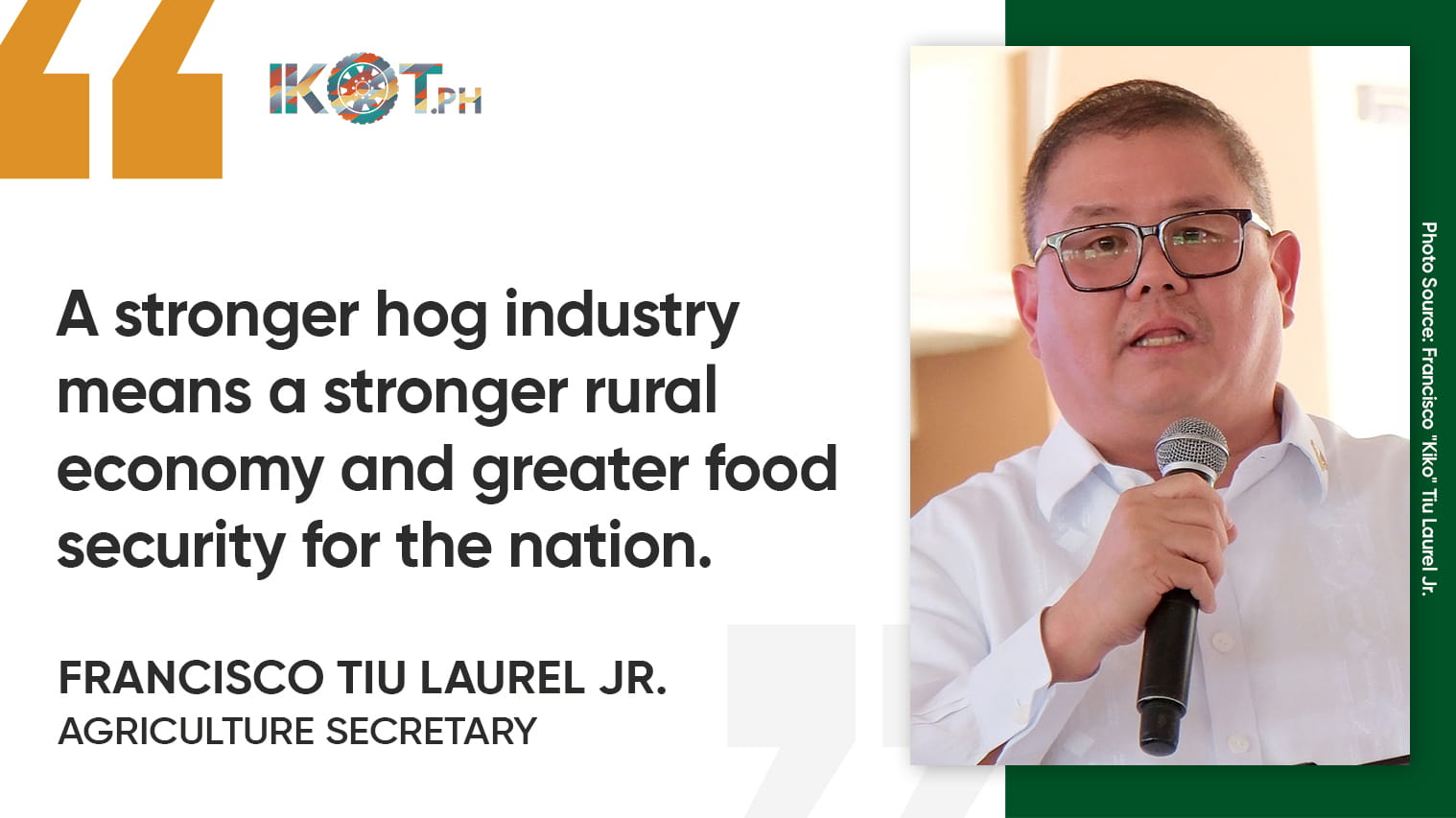
“Our goal is to help Filipino hog raisers recover from the impact of African Swine Fever while ensuring that every Filipino family continues to have access to safe, sufficient, and reasonably priced pork. A stronger hog industry means a stronger rural economy and greater food security for the nation,” the agriculture head added.
“Our goal is to help Filipino hog raisers recover from the impact of African Swine Fever while ensuring that every Filipino family continues to have access to safe, sufficient, and reasonably priced pork.”
The annual festival, which features “Pork Labanan: The Ultimate Culinary Pinoy Pork Wars,” serves as both a showcase for Filipino culinary talent and a platform for promoting locally produced pork at a time when the industry continues to grapple with disease outbreaks, rising production costs, and climate-related threats.
The DA has been working with local governments, industry groups, and private-sector partners to strengthen biosecurity protocols and accelerate repopulation efforts in areas declared free of ASF.
The objective is to restore domestic production capacity while reducing the industry’s vulnerability to future outbreaks.
According to the Philippine Statistics Authority, the country’s total swine inventory stood at 8.75 million heads in 2025, down from 9.57 million a year earlier. Smallhold farms accounted for 6.09 million heads, while semi-commercial and commercial farms account for the balance.
The volume of hogs slaughtered last year declined to 20.74 million from 21.61 million in 2024 and 25.36 million in 2020.
The recovery effort is also closely tied to the government’s broader food security agenda. Pork remains one of the country’s most widely consumed protein sources, making the health of the hog industry a key factor in controlling food inflation and ensuring adequate supply in local markets.
At the same time, the DA continues to encourage consumers to support locally produced pork, arguing that stronger demand for domestic products helps generate jobs, sustain rural livelihoods, and stimulate economic activity in farming communities.
Beyond production goals, the festival highlighted investments in the industry’s future.
Tiu Laurel commended the National Federation of Hog Farmers Inc. for allocating part of the event’s proceeds to scholarship grants for deserving children of farmers pursuing studies in agriculture and culinary arts.
As the government pushes forward with repopulation programs, industry leaders say long-term success will depend on sustaining disease control measures, improving farm productivity, and building a more resilient swine sector capable of meeting the country’s growing food requirements.