
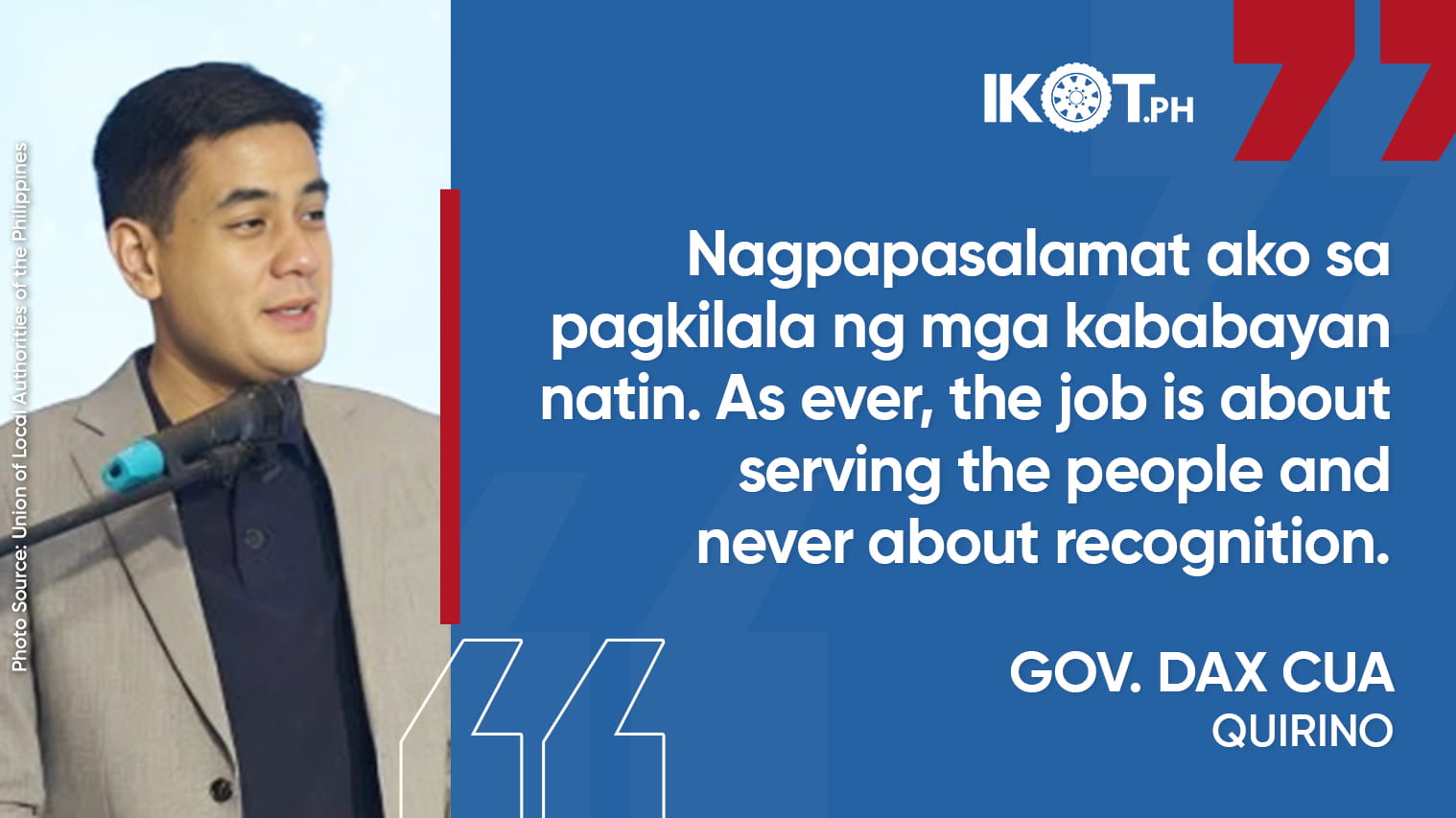
Union of Local Authorities of the Philippines (ULAP) and Quirino Governor Dax Cua expressed his thanks for the people’s continued trust in his leadership, after he emerged as the top governor in a recent survey of the country’s provincial leaders.
“Nagpapasalamat ako sa pagkilala ng mga kababayan natin. As ever, the job is about serving the people and never about recognition,” Cua said.
“Nevertheless, this recognition is both an inspiration and a challenge not only to sustain, but be better in our efforts to govern,” he added.
Cua ranked first among the country’s top-performing, most trusted provincial governors in the RPMD Foundation Inc.’s “Boses ng Bayan” Index of Governance, which was conducted in April 2026, with 5,000 registered voter respondents randomly interviewed in each region across all socioeconomic classes.
“Governance is a team effort and does not rely on the person at the top alone. Epektibo tayo dahil ang buong pamahalaang panlalawigan ay walang-pagod na kumikilos para makapaglingkod.”
The governor recorded an IOG of 86.51 percent, with 86.28 percent trust and 86.75 percent performance.
Cua was quick to share credit, as he said that “a whole system of tireless people” was responsible for his success.
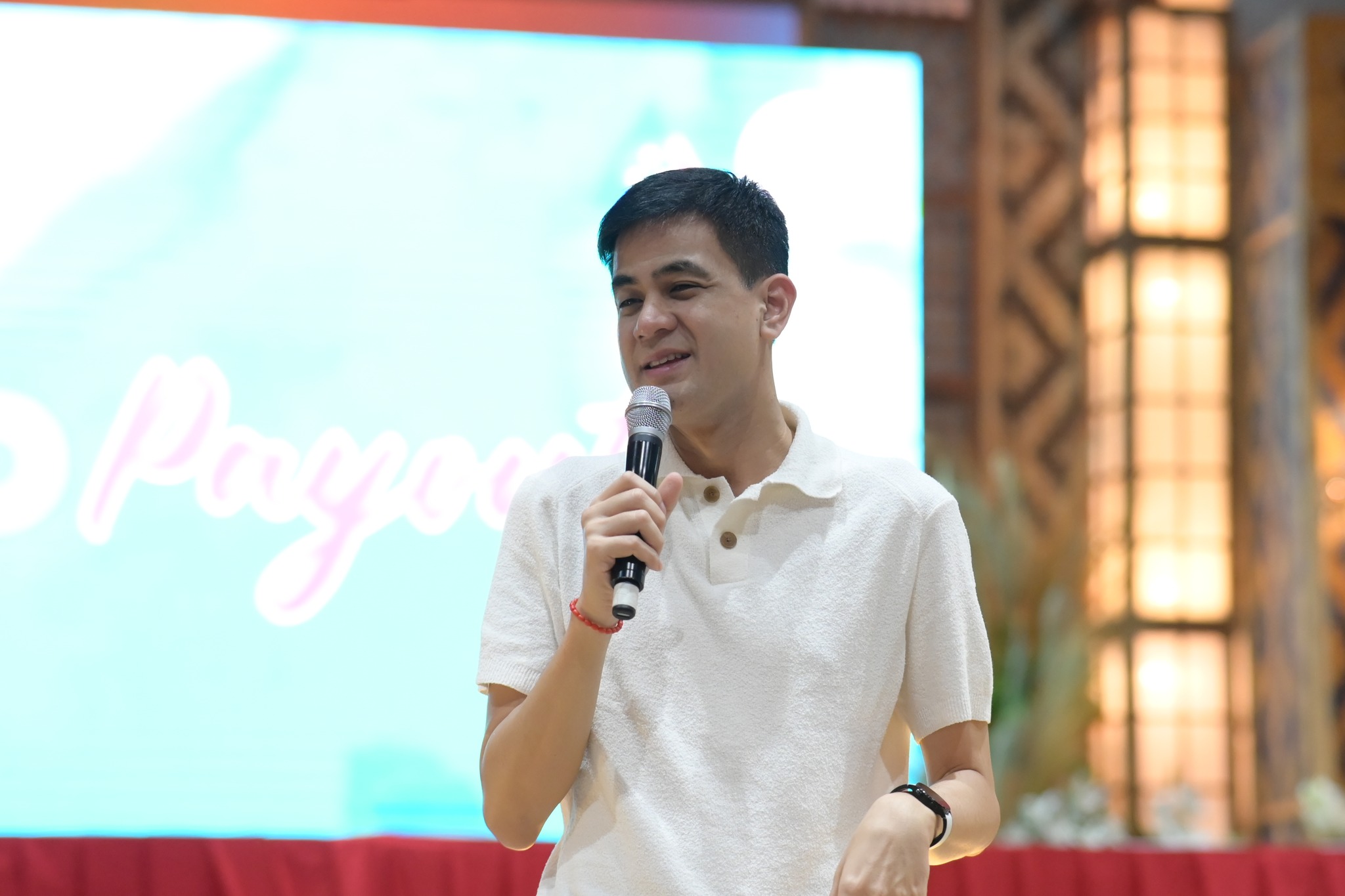
“Governance is a team effort and does not rely on the person at the top alone. Epektibo tayo dahil ang buong pamahalaang panlalawigan ay walang-pagod na kumikilos para makapaglingkod,” said the governor.
Cua also lauded ULAP, which he said has opened many doors of opportunity not only for his province but for many other local governments across the country.
“Through ULAP and its constituent organizations, our leaders now have access to trainings, linkages, and expertise that are required for modern-day governance,” he said.
Cua ranked first among the country’s top-performing, most trusted provincial governors in the RPMD Foundation Inc.’s “Boses ng Bayan” Index of Governance, which was conducted in April 2026, with 5,000 registered voter respondents randomly interviewed in each region across all socioeconomic classes.
According to RPMD, governors were first evaluated by their respective constituents and had to emerge among the top-performing, most trusted provincial leaders in their regions before advancing to the national assessment.
Areas covered by the assessment included leadership, fiscal management, social services, public safety, infrastructure development, disaster preparedness and response, environmental management, transparency, public engagement, innovation, and responsiveness to constituents.