
President Ferdinand Marcos Jr. inspected the newly rehabilitated and modernized PFDA-Sual Fish Port (PFDA-SFP), highlighting the national government’s continued investment in fisheries infrastructure to strengthen food security, improve post-harvest systems, and support the livelihoods of Filipino fisherfolk.
Implemented by the Department of Agriculture (DA), through the Philippine Fisheries Development Authority (PFDA), the modernization project has transformed one of Northern Luzon’s key fisheries hubs into a modern facility designed to reduce post-harvest losses, improve fish distribution, and strengthen the country’s fisheries value chain.
The project involved the rehabilitation and expansion of the fish port, including the upgrading of its old pier and related facilities, further enhancing its capacity to support the fisheries industry and the efficient movement of fishery products across the region.
During the inspection, Marcos, together with Agriculture Secretary Francisco Tiu Laurel Jr. and PFDA Acting General Manager Atty. Glen Pangapalan, toured the upgraded facilities and received a briefing on the improvements made to enhance fish handling, cold storage, processing, and overall port operations. The visit underscored the administration’s continuing efforts to modernize fisheries infrastructure and strengthen the efficient movement of fishery products from landing sites to markets.
Located in Barangay Poblacion, Sual, Pangasinan, the fish port serves as PFDA’s principal fisheries facility in Northern Luzon, linking fish landed from the Lingayen Gulf, the West Philippine Sea, and the Ilocos coast to major trading centers across Pangasinan and neighboring provinces. The port has long supported the livelihoods of fisherfolk, fish traders, processors, transporters, and other stakeholders whose businesses depend on the steady movement of seafood across the region.
Tiu Laurel said modernizing strategic fish ports is essential to strengthening the country’s food supply chain while improving the livelihoods of fishing communities.
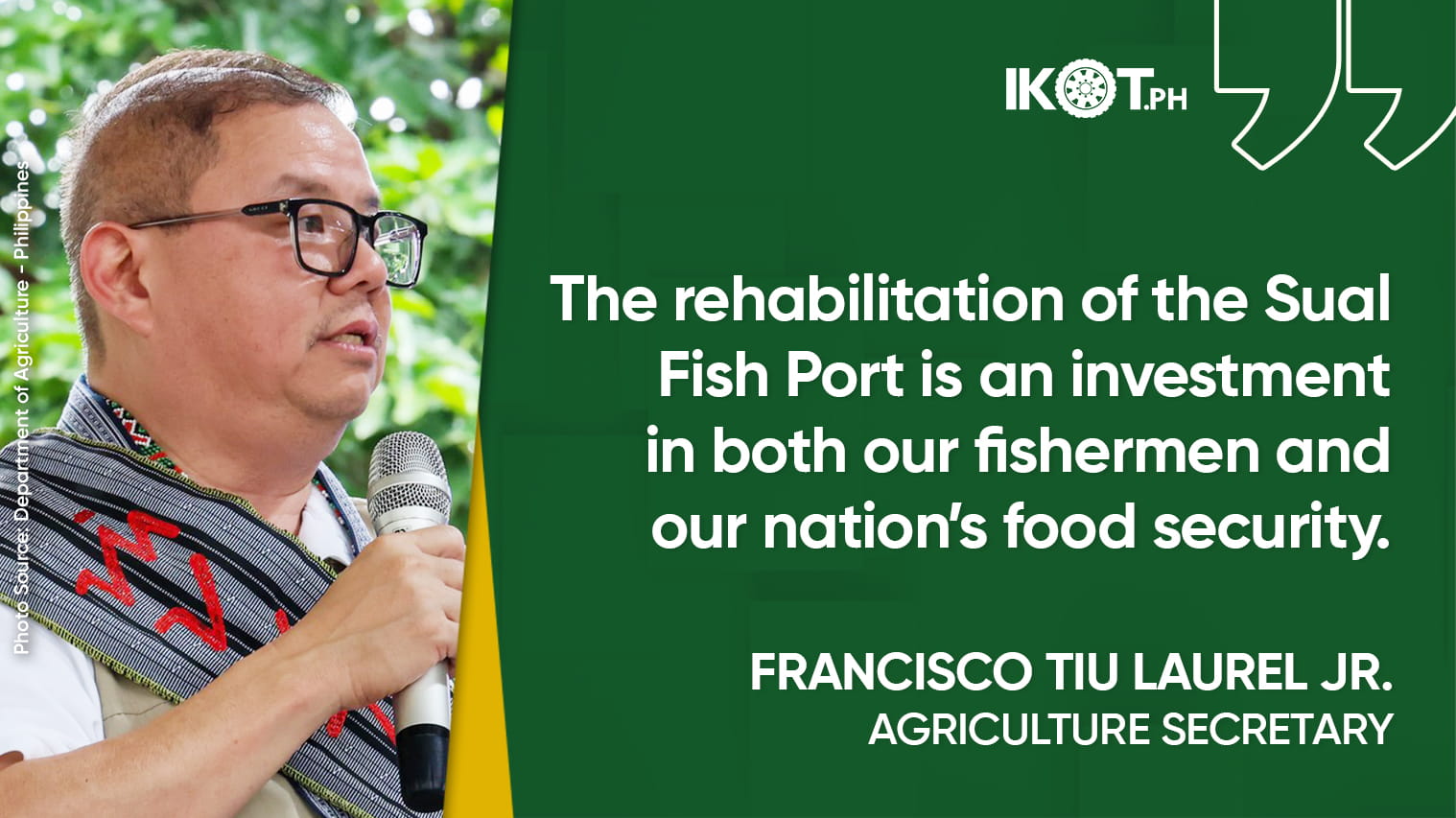
“The rehabilitation of the Sual Fish Port is an investment in both our fishermen and our nation’s food security. By providing better post-harvest facilities, cold chain infrastructure, and more efficient trading systems, we reduce losses, preserve the quality of our catch, improve incomes for our fisherfolk, and ensure that more affordable and nutritious fish reach Filipino families,” the agriculture chief said.
“By providing better post-harvest facilities, cold chain infrastructure, and more efficient trading systems, we reduce losses, preserve the quality of our catch, improve incomes for our fisherfolk, and ensure that more affordable and nutritious fish reach Filipino families.”
The upgraded port now features a widened and extended pier with a trading hall, four 50-metric ton cold storage units with a combined capacity of 200 metric tons, blast freezers, chiller rooms, flake ice-making facilities, fish processing areas capable of handling up to eight metric tons of finished products daily, a wastewater treatment plant, a 90-kilowatt solar photovoltaic system, commercial spaces, and improved roads and utilities. The project also included the rehabilitation of the old pier, access roads, and quayside to enhance vessel operations and cargo handling.
These improvements strengthen the fisheries cold chain by allowing fish to be handled, preserved, processed, and transported under better conditions, helping maintain product quality while reducing spoilage and post-harvest losses. The expanded facilities can also accommodate larger fishing and transport vessels, improving the movement of seafood from landing sites to markets and making trading more efficient.
Pangasinan, home to Dagupan City, the country’s Bangus Capital, stands to benefit significantly from the upgraded infrastructure, which complements the province’s thriving aquaculture and capture fisheries industries by providing better post-harvest handling for milkfish and other commercially important species.
Pangapalan said the rehabilitation reflects the agency’s continuing commitment to providing modern fisheries infrastructure that directly benefits fishing communities.
“This facility will serve fishing communities for many years, providing them with better services, modern post-harvest facilities, and greater opportunities to grow their livelihoods.”
“Seeing the Sual Fish Port fully rehabilitated is a milestone for PFDA. This facility will serve fishing communities for many years, providing them with better services, modern post-harvest facilities, and greater opportunities to grow their livelihoods. That is what makes this investment truly meaningful,” he said.
The project forms part of the government’s broader push to modernize fisheries infrastructure nationwide and improve the country’s post-harvest system, helping build a more resilient and competitive fisheries industry that benefits both producers and consumers while ensuring a stable supply of safe, affordable, and high-quality seafood for Filipino households.
Beyond strengthening fisheries operations, the rehabilitation is expected to generate wider economic benefits through increased business activity, new investments in fish processing and cold chain facilities, employment opportunities, higher local government revenues, and expanded livelihood opportunities for coastal communities, reinforcing Northern Luzon’s role as one of the country’s most important food-producing regions.
During the visit, Marcos also inspected the implementation of the government’s ‘Benteng Bigas Meron Na’ Program at the fish port’s Commercial Building, where affordable rice is being made available to registered fisherfolk in the area. The initiative complements the modernization of the fish port by bringing essential government programs directly to fishing communities while reinforcing the administration’s commitment to food security, rural development, and improved quality of life for Filipino fisherfolk.