
The Bureau of Animal Industry (BAI) has approved the commercial sale of AVAC ASF LIVE, the first African Swine Fever (ASF) vaccine for fatteners cleared for public sale, giving the battered hog industry a new weapon as the government races to rebuild the country’s swine herd.
Developed by AVAC Vietnam Joint Stock Company, AVAC ASF LIVE is a live, attenuated, gene- deleted freeze-dried vaccine designed to protect pigs against the African swine fever virus. Its approval comes nearly seven years after ASF first hit the Philippines in 2019, cutting the national hog population to around 8 million heads from about 13 million before the outbreak.
“Another said a second vaccine, PROVAC from South Korea, is undergoing BAI testing.”
Agriculture Undersecretary for Livestock Constante Palabrica said another said a second vaccine, PROVAC from South Korea, is undergoing BAI testing, potentially giving hog raisers by next year another option against a virus that has repeatedly disrupted local pork production, especially during rainy season.
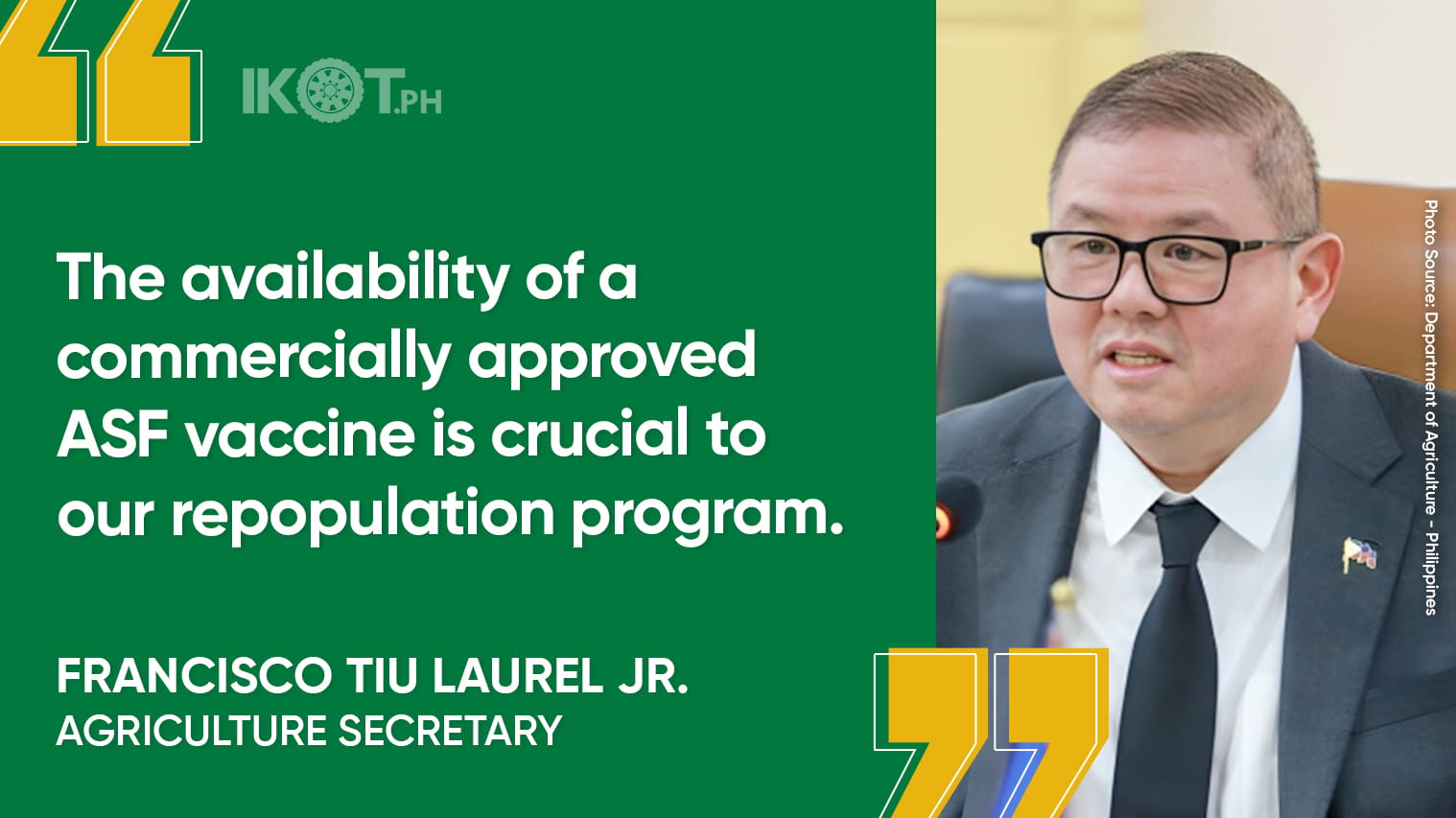
“The availability of a commercially approved ASF vaccine is crucial to our repopulation program,” Agriculture Secretary Francisco Tiu Laurel Jr. said.
“It gives hog raisers another tool to protect healthy animals as we work to rebuild the industry and secure a more stable supply of pork.”
“It gives hog raisers another tool to protect healthy animals as we work to rebuild the industry and secure a more stable supply of pork,” Tiu Laurel added.
ASF does not infect humans, but it can be devastating to pigs, forcing farmers to cull infected or exposed animals and disrupting restocking. The disease has also discouraged some producers from returning to hog farming, particularly in areas repeatedly hit by outbreaks.
The BAI had reported that ASF outbreaks have reached 76 of the Philippines’ 82 provinces, underscoring the scale of the challenge facing the industry. The damage has been particularly painful for backyard raisers, who often have fewer resources to maintain stringent biosecurity measures and absorb losses from disease outbreaks.
Palabrica said he has asked Tiu Laurel for P1 billion next year to subsidize ASF vaccination programs, including ASF vaccination for backyard pig farms, potentially making the vaccine more accessible to smaller producers.
The government is positioning vaccination as part of a broader repopulation strategy that includes disease surveillance, biosecurity, movement control, and targeted restocking. The goal is to restore swine population to pre-ASF outbreak level.
The stakes extend beyond farmers. The collapse of the local hog herd has contributed to supply gaps and greater reliance on pork imports, while recurring outbreaks continue to threaten domestic production.
Rebuilding the herd means more than reviving farm incomes. A healthier and larger local swine population could provide a steadier pork supply and eventually help ease price pressures for consumers.
The vaccine is no silver bullet. But after years of fighting ASF largely through containment, culling, and biosecurity, hog raisers now have a new tool to fight back.
For an industry that has spent years trying simply to survive, that is a significant shot in the arm.