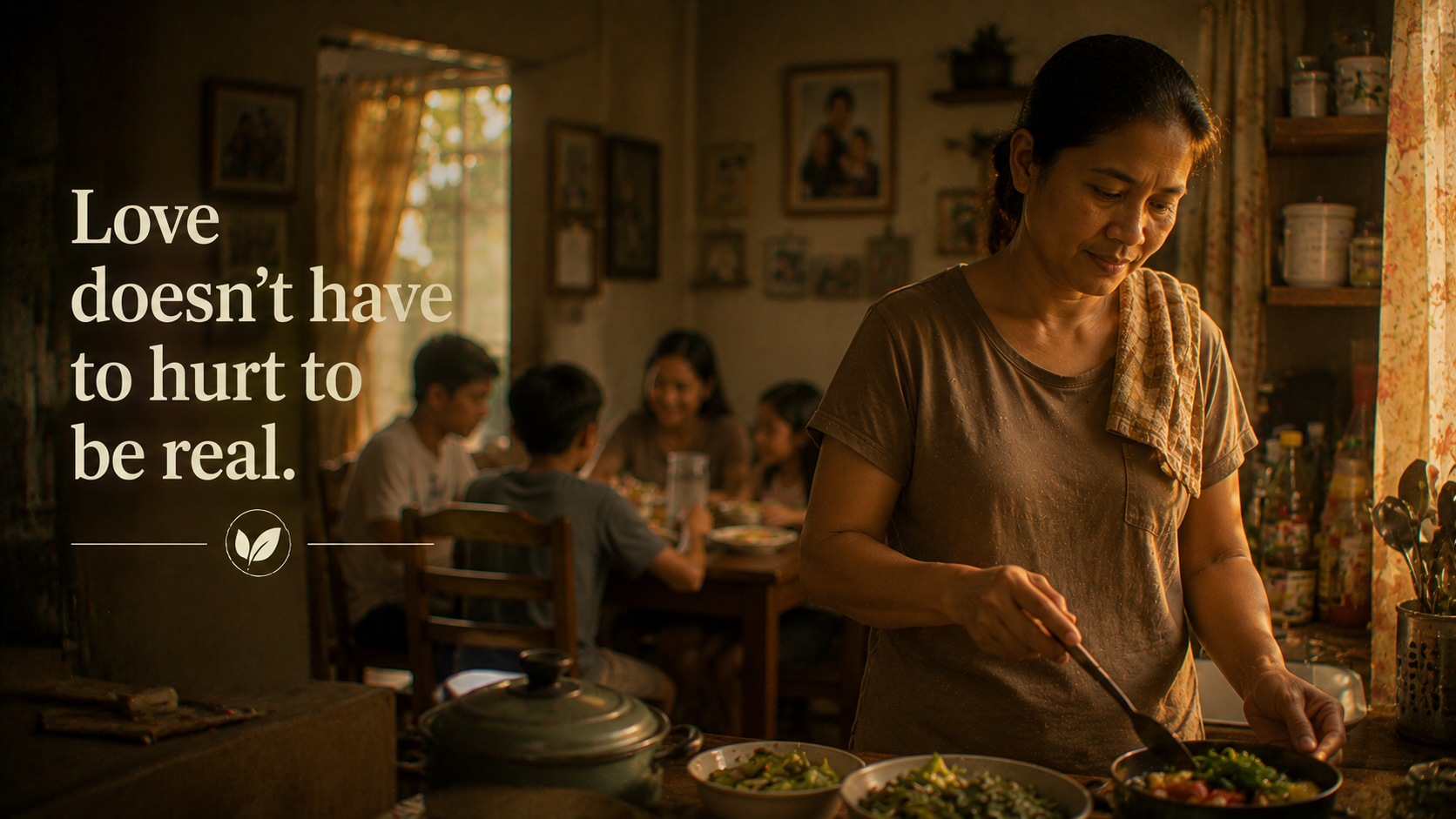
Many Filipinos were raised to admire sacrifice.
The parent who skipped meals so the children could eat.
The sibling who gave up a dream to help the family.
The OFW who endured years of loneliness so loved ones could have a better life.
The provider who quietly carried burdens nobody else fully saw.
These stories are deeply woven into how many of us understand love.
And there is real dignity in sacrifice.
Sometimes life truly requires people to give more than what feels comfortable.
Some seasons demand courage.
Some seasons demand endurance.
Some seasons demand putting other people first.
But somewhere along the way, many people quietly absorbed a different lesson:
That love becomes more valuable the more it hurts.
When Exhaustion Starts Looking Like Virtue
Over time, many people begin believing things they never consciously chose to believe.
That good people should always be available.
That caring means constantly adjusting.
That generosity becomes more meaningful when it is painful.
That exhaustion is proof of love.
And because of this, even when life becomes more stable, many continue operating from the same survival patterns they learned during harder years.
Not from overflow.
But from depletion.
The Giving That Comes From Fear
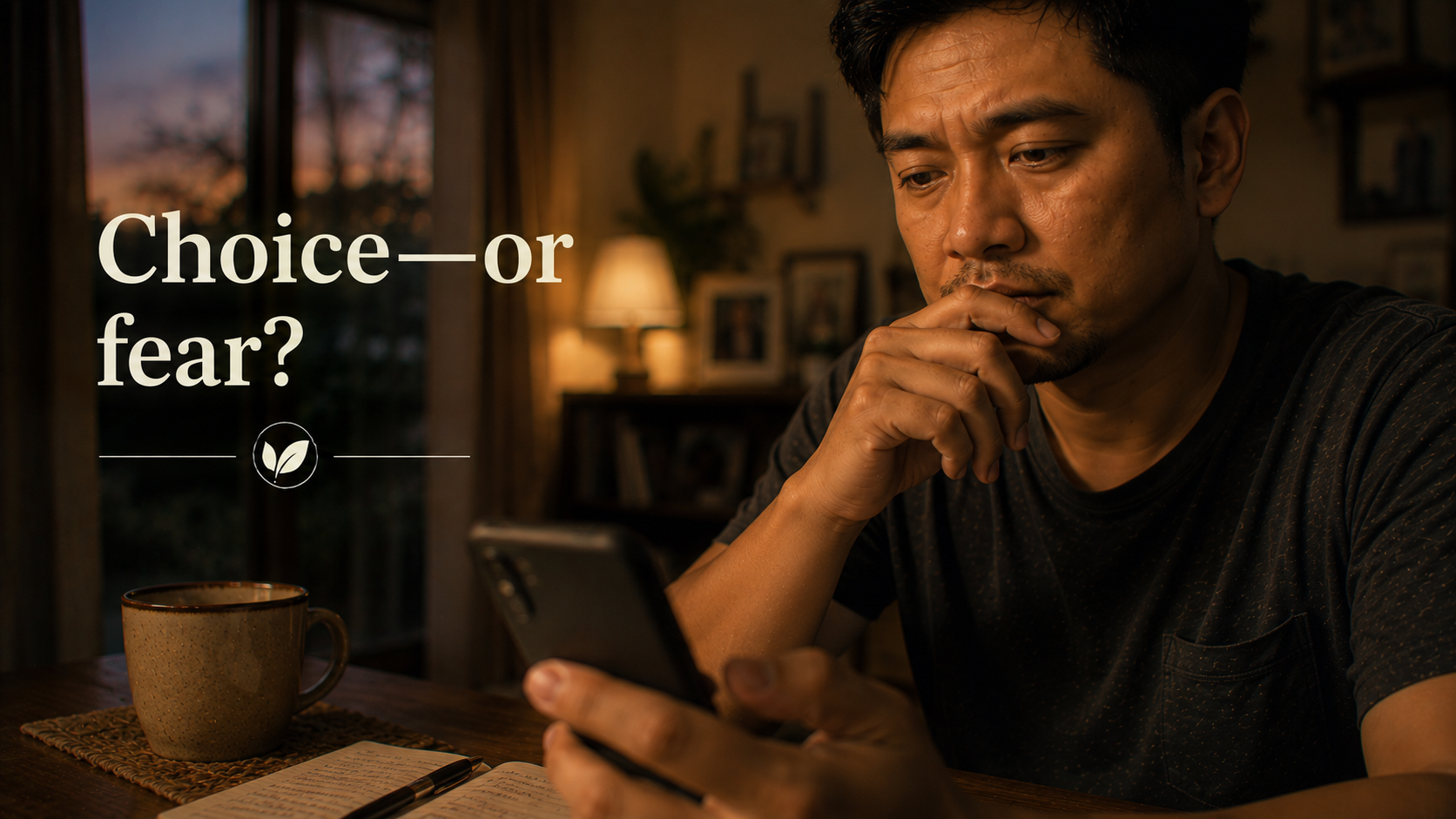
At first, this kind of giving can look admirable.
You help immediately.
You rarely say no.
You absorb pressure quietly.
You continue showing up even when your own reserves are running low.
But internally, the experience feels different.
The giving is no longer peaceful.
It becomes compulsory.
You help because you feel guilty if you don’t.
You say yes because conflict feels uncomfortable.
You sacrifice because disappointing people feels unbearable.
And slowly, generosity becomes tangled with fear.
Fear of judgment.
Fear of rejection.
Fear of losing your place in people’s lives.
Fear of no longer being seen as “the good one.”
The Hidden Question Beneath Some Forms of Giving
This is where an uncomfortable question appears:
Am I giving because I want to?
Or
Am I giving because I’m afraid not to?
The two can look almost identical from the outside.
But internally, they create very different lives.
One creates peace.
The other creates pressure.
Why Overflow Feels Different
Overflow is not measured by the amount you give.
It is measured by what remains after you give.
Overflow still leaves room for recovery.
Still leaves room for tomorrow.
Still leaves room for your own responsibilities, health, peace, and future.
It does not require you to disappear emotionally just to prove your love exists.
And perhaps this is the clearest difference:
Self-sacrifice often asks you to shrink.
Overflow allows you to remain whole.
When Good People Become Quietly Depleted
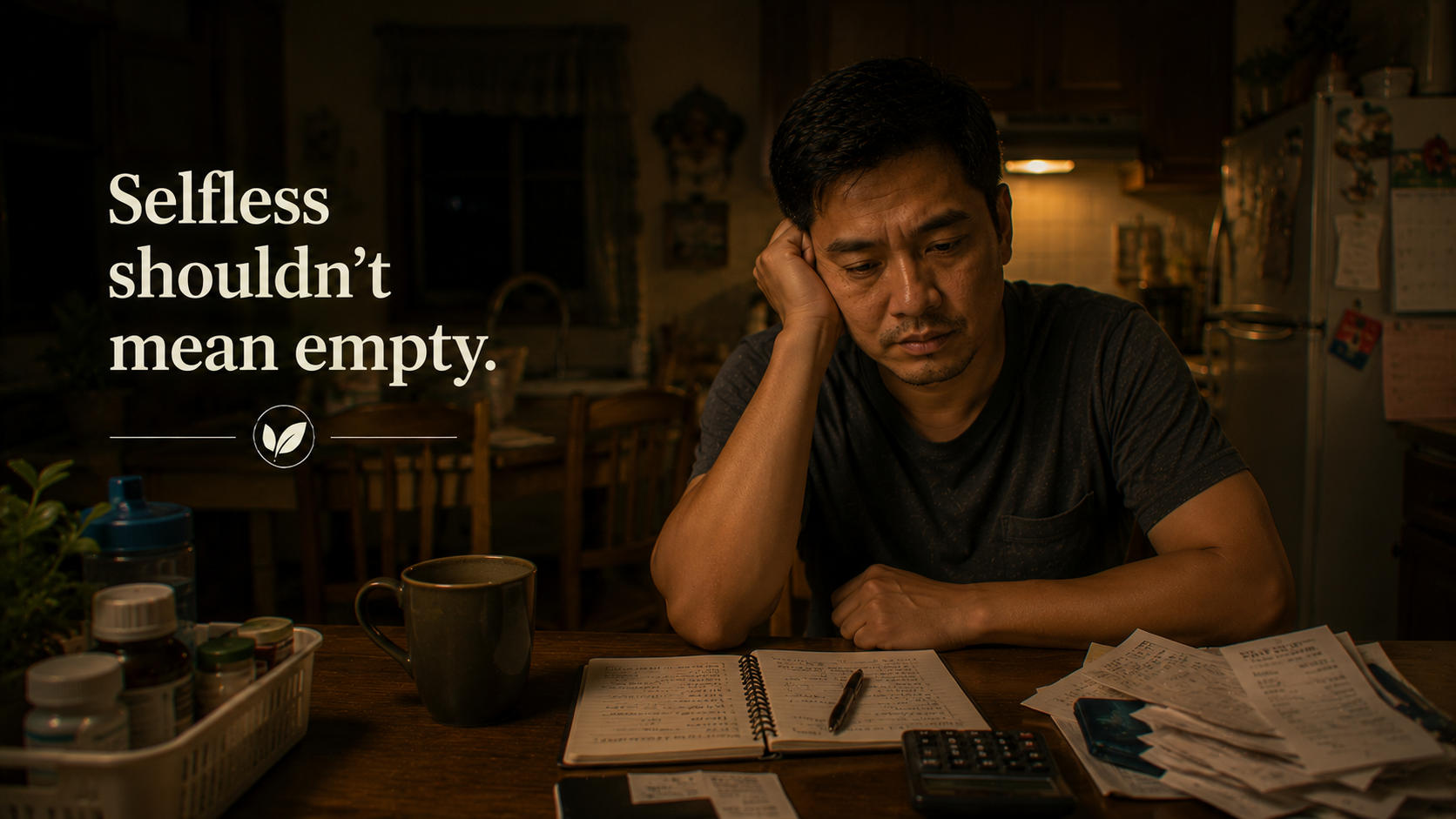
Many responsible people struggle to recognize this.
Because depletion often looks responsible in Filipino culture.
The exhausted provider is praised.
The endlessly available relative is admired.
The person carrying everyone’s problems is called selfless.
Meanwhile, sustainability rarely receives the same recognition.
But reality eventually teaches a difficult lesson:
What is unsustainable eventually breaks.
Even loving people become tired.
Even generous hearts become overwhelmed.
Even strong people need replenishment.
The Financial Side of Emotional Giving
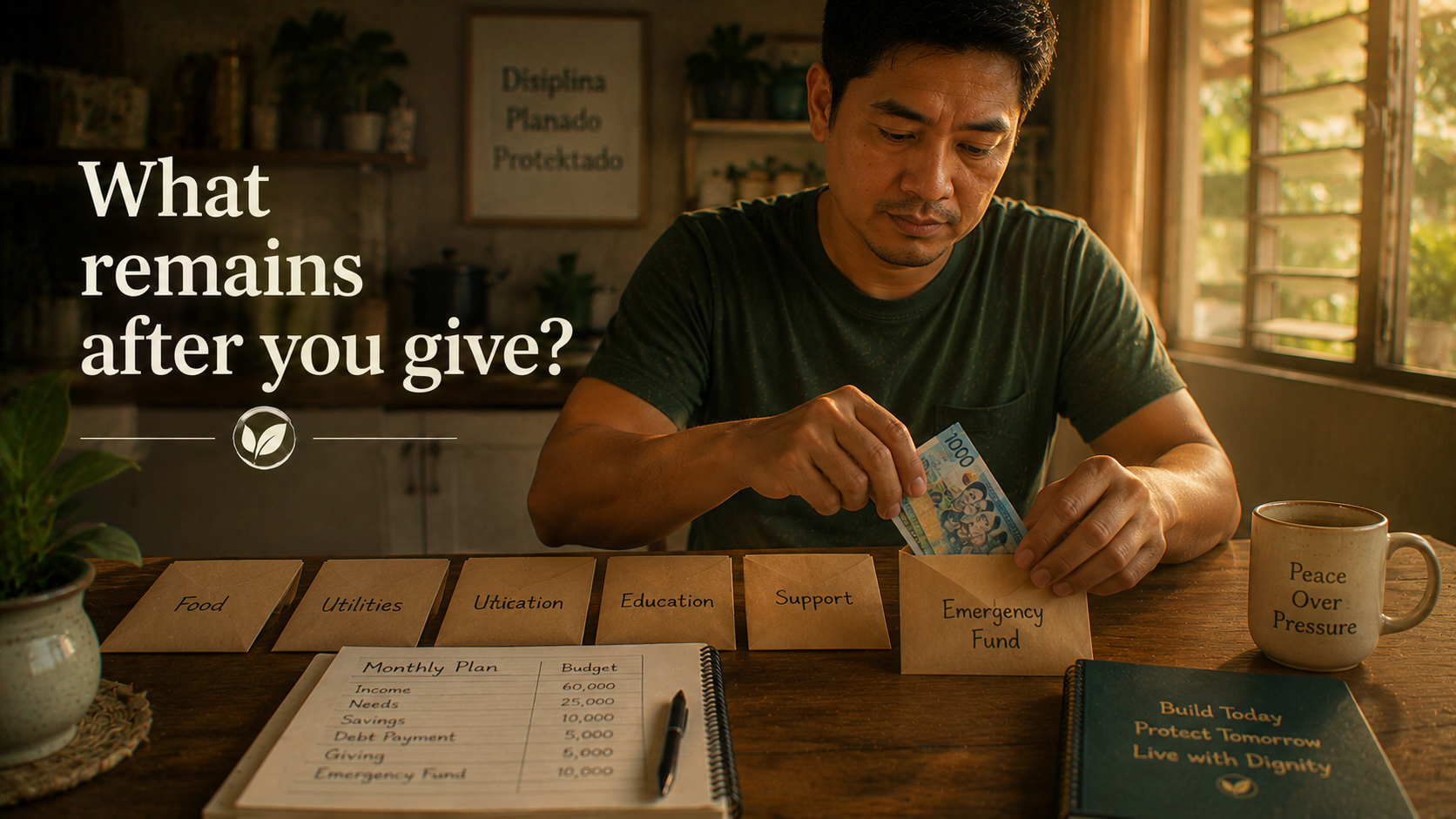
This shows up financially too.
Many people continue helping others in ways that quietly destabilize their own future.
Emergency funds repeatedly disappear.
Important goals keep getting postponed.
Retirement planning gets delayed.
Recovery gets delayed.
Peace gets delayed.
And because helping feels morally right, few people stop to ask whether the pattern itself remains healthy.
Why Stewardship Matters
This is why stewardship becomes such an important part of mature generosity.
Not because money should be hoarded.
Not because compassion should disappear.
But because generosity works differently when it grows from stability instead of scarcity.
A financially and emotionally steady person can often help longer, wiser, and more effectively than someone constantly operating from depletion.
Stewardship protects generosity.
It does not weaken it.
When Guilt Appears During Growth
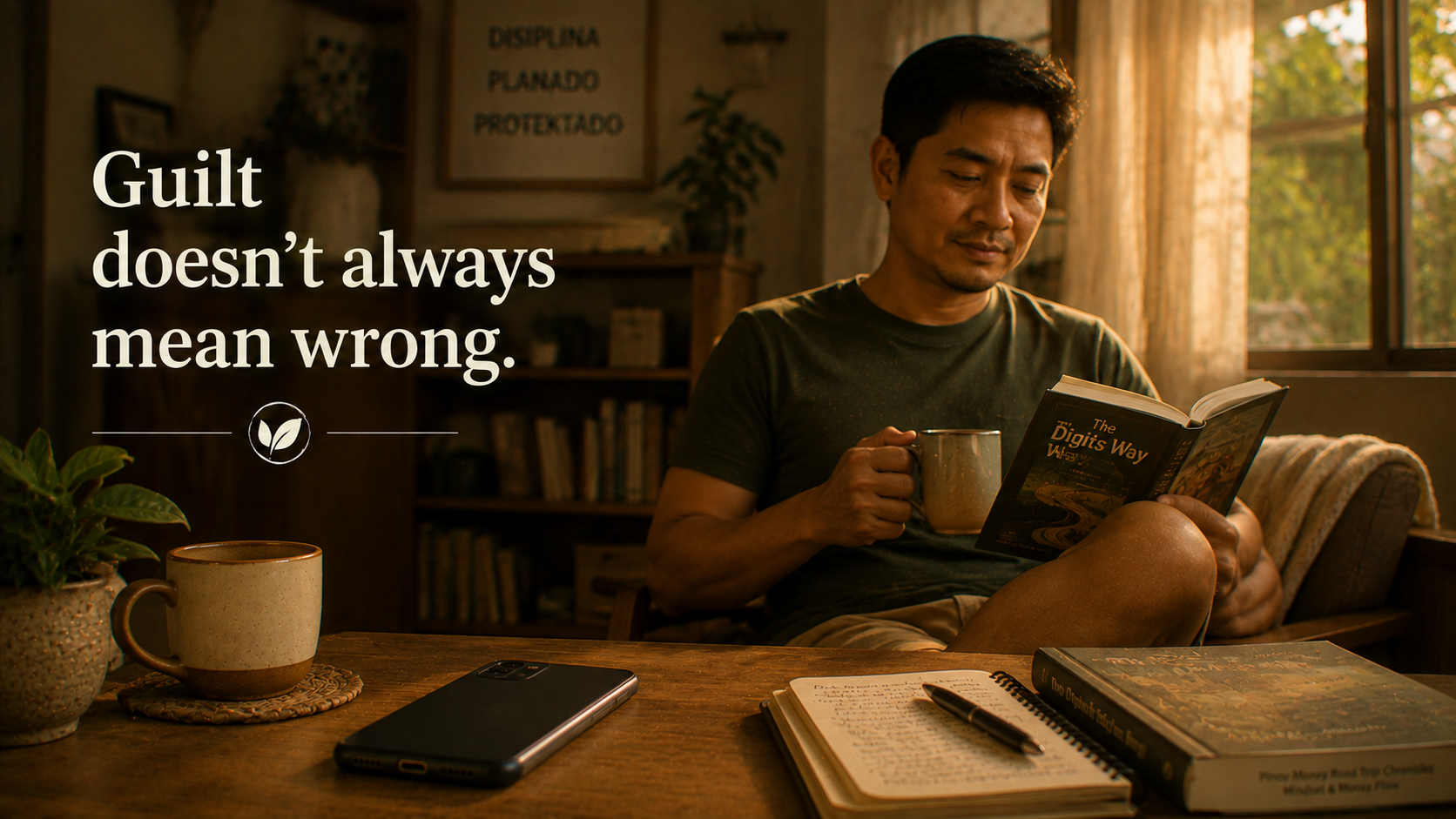
Unfortunately, many people encounter guilt the moment they begin changing these patterns.
You pause before saying yes.
You protect your budget.
You choose recovery.
And immediately, something inside feels uncomfortable.
But guilt is not always proof that you are doing something wrong.
Sometimes guilt simply means you are challenging beliefs that have lived inside you for a very long time.
Beliefs that taught you:
Your needs come last.
Your exhaustion is normal.
Your value depends on how much you sacrifice.
Learning a New Definition of Love
Healing often feels uncomfortable because healthier patterns initially feel unfamiliar.
And unfamiliarity often gets mistaken for selfishness.
But learning to rest is not selfish.
Learning to protect your capacity is not selfish.
Learning to consider your future is not selfish.
Sometimes, these are acts of responsibility too.
Because people who never replenish eventually begin giving fragments of themselves instead of wholeness.
And relationships feel that difference.
The Quiet Strength of Overflow
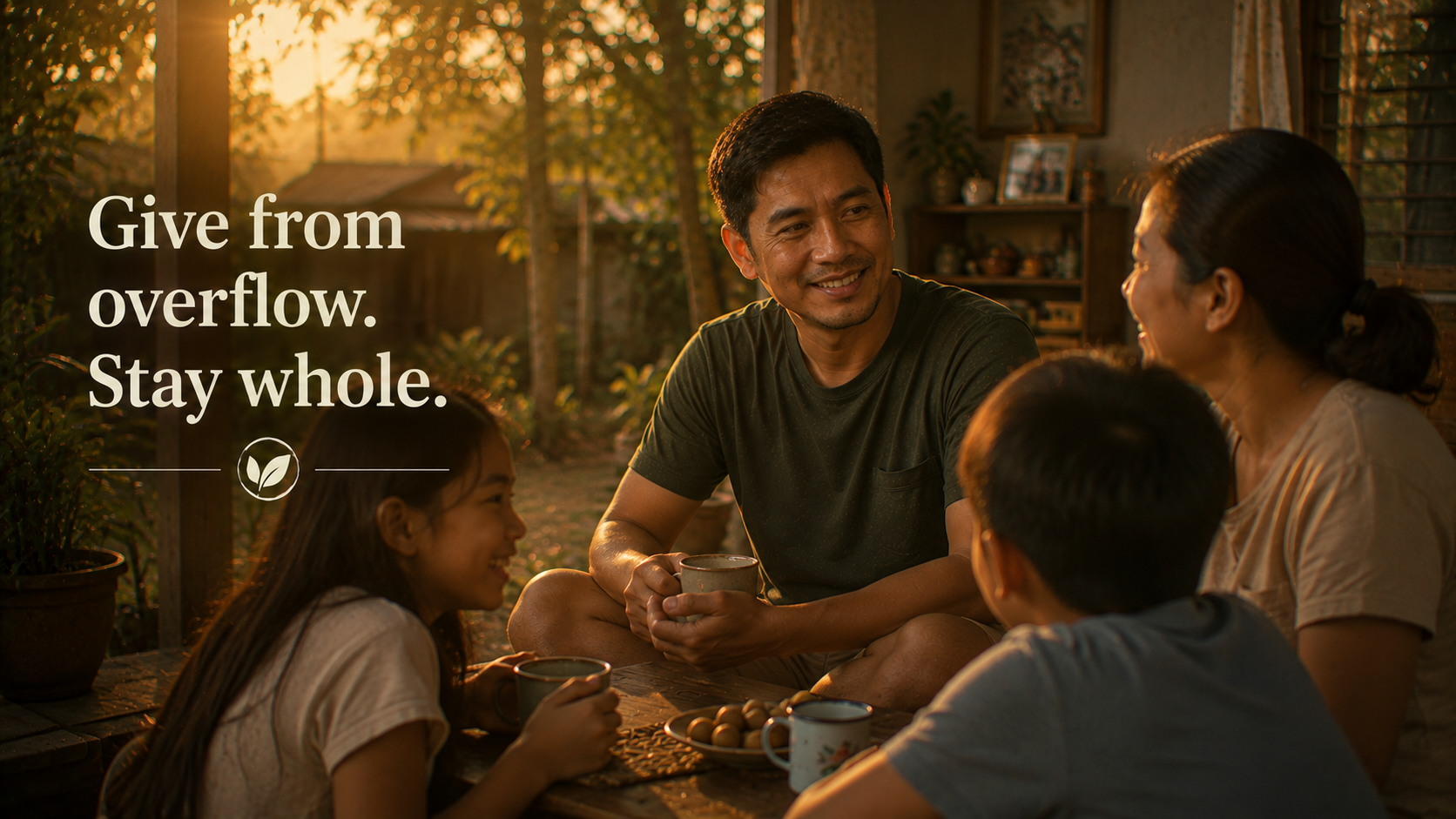
This is why healthier generosity usually looks quieter than people expect.
Less dramatic.
Less performative.
Less dependent on suffering.
It gives because it genuinely wants to.
Not because fear demands proof.
Not because guilt refuses alternatives.
Not because exhaustion has become identity.
Just because there is something healthy available to give.
A Different Kind of Abundance
Perhaps this is the deeper shift many people are slowly learning:
Love does not require self-destruction to be real.
You can care deeply without carrying everything.
You can support people without abandoning yourself.
You can remain generous while still protecting your own future.
And maybe that is what healthy overflow truly looks like.
Not endless sacrifice.
Not emotional depletion.
Not proving your worth through exhaustion.
But a life that has finally become steady enough that what flows outward no longer leaves emptiness behind.
Closing Reflection
Because perhaps the goal was never to become someone who gives until nothing remains.
Perhaps the goal was to become someone whose life is stable enough, healthy enough, and grounded enough that generosity can continue for years without resentment, fear, or collapse.
That kind of giving may look less dramatic.
But it lasts longer.
And often, it changes more lives—including your own.
One of the quiet lessons of adulthood is that love and sacrifice are not always the same thing.
Sometimes the healthiest form of love is not giving more.
Sometimes it is learning how to give from a place where both people can continue growing afterward.
That is the difference between depletion and overflow.
And over time, that difference changes everything.
Catch Thanjo’s personal finance column every Tuesday at 7 p.m. on IKOT.PH and across Facebook, X (Twitter), and Instagram.
DISCLAIMER:
The views and opinions of our partners and contributors expressed in this article are exclusively their own and are made in their personal capacities. They do not reflect the views, policies, or official stance of IKOT.PH, its editors, officers, or affiliates. As such, nothing contained herein shall be construed as professional advice or as an official declaration, endorsement, or position of IKOT.PH.