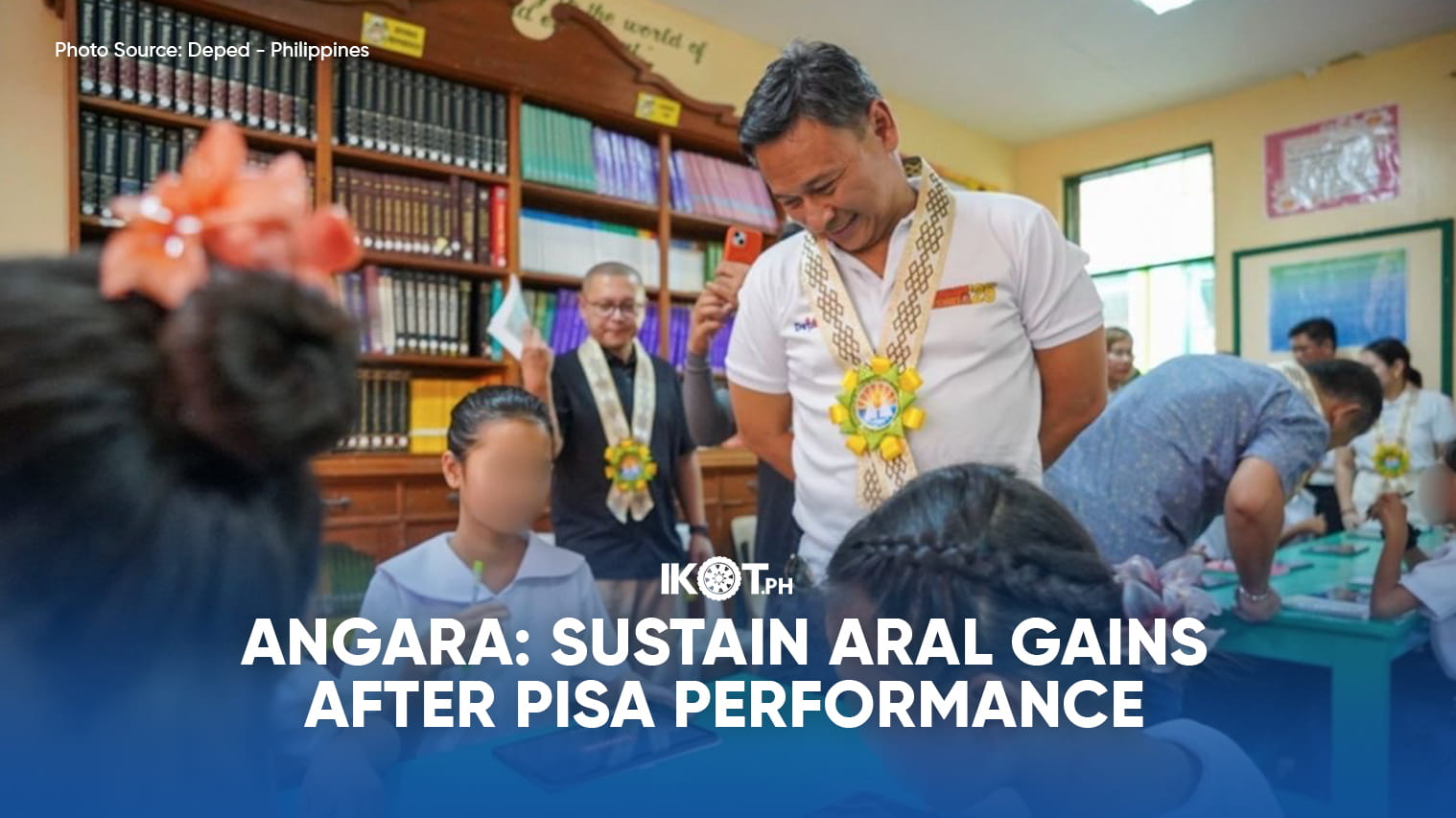
Education Secretary Sonny Angara emphasized the urgent need to sustain targeted academic interventions like the Academic Recovery and Accessible Learning (ARAL) Program, following significant performance gains by Filipino learners in the latest Programme for International Student Assessment (PISA).
The 2025 PISA results marked the Philippines’ strongest showing across Reading, Mathematics, and Science since it joined the global assessment in 2018. The country emerged as the fastest-improving education system in Reading over a 10-year trend, gaining 38 points overall. Compared to 2022 levels, Reading scores climbed by 20 points to reach 367, Science increased by 17 points to 373, and Mathematics rose by 16 points to 371.
While the share of learners achieving minimum proficiency expanded, Angara emphasized that the progress is the groundwork for further recovery, as a majority of 15-year-old learners still fall below baseline proficiency and require targeted learning support.
During School Year 2025–2026, ARAL formed part of DepEd’s intensified learning recovery efforts by providing targeted support for struggling learners
To sustain this momentum, the Department of Education (DepEd) is appealing to lawmakers to restore funding for the ARAL Program under its Fiscal Year 2027 budget after the initiative received zero allocation in the National Expenditure Program (NEP).
“President Bongbong Marcos brought us into the Department of Education with a clear mission: elevate the quality of basic education across the country,” Secretary Angara said. “These latest PISA gains are an encouraging checkpoint, not the finish line. They prove that system-wide progress is possible, but they also highlight why sustained funding and structured interventions like ARAL remain non-negotiable.”
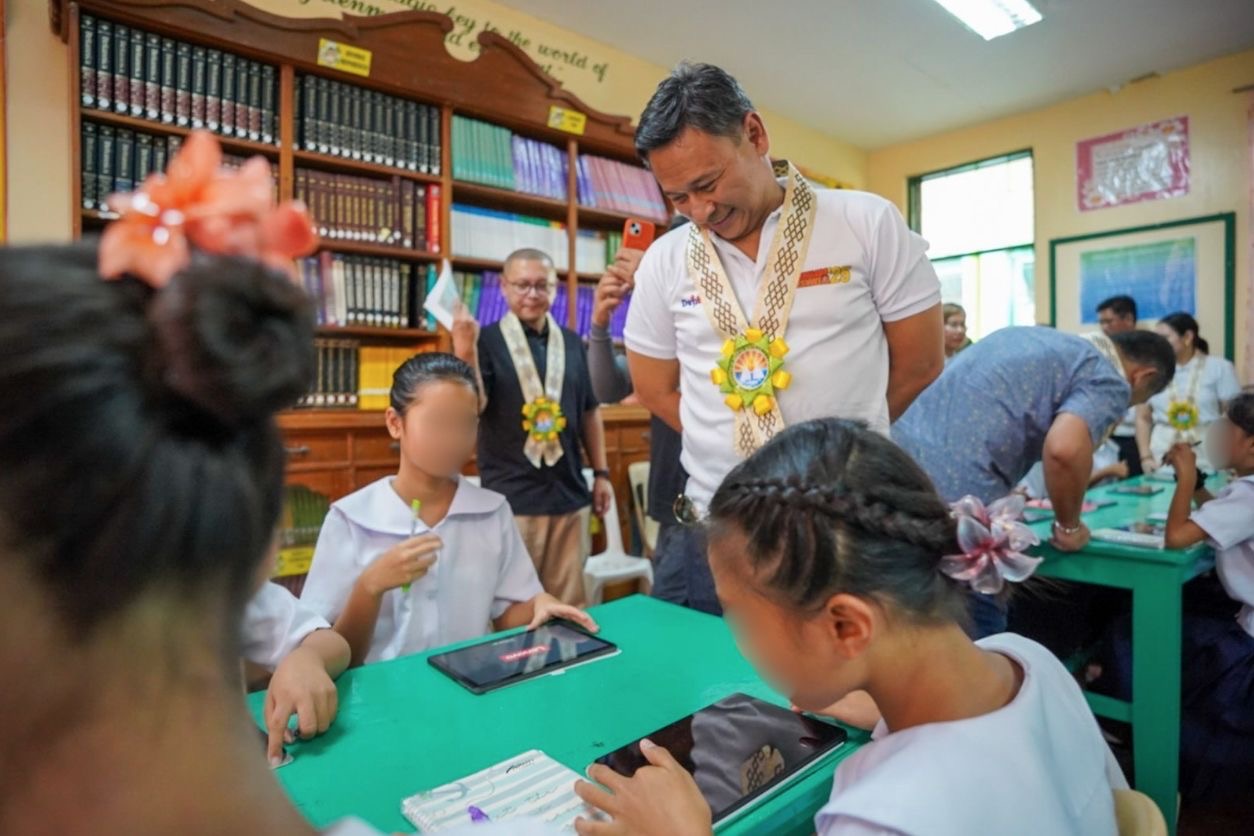
During School Year 2025–2026, ARAL formed part of DepEd’s intensified learning recovery efforts by providing targeted support for struggling learners, helping reduce the number of struggling readers nationwide from 6.7 million to 2.2 million, while boosting grade-level reading readiness from 3.3 million to 5.8 million learners.
DepEd is also reinforcing stronger foundational learning through complementary literacy initiatives. These include distributing storybooks to Kindergarten to Grade 3 learners, setting up Reading Nooks in schools, and strengthening the nationwide Bayang Bumabasa Initiative through tailored early-grade reading and literacy improvement plans.
“The determination of the Filipino child is undeniable. Our job in government is to match that drive with real resources,”
Angara stressed that building stronger foundational learning in reading is critical, as it serves as the bedrock for learners to comprehend and excel in all other academic subjects.
To support these recovery efforts, DepEd is requesting a PHP16.03 billion supplemental FY 2027 budget for Learning Recovery, allocated mainly for the ARAL Program. This covers remediation consultations, learning resources, training of DepEd tutors, the ARAL Summer Program, external tutors’ compensation, and teaching overload honoraria.
Alongside academic recovery, DepEd is prioritizing learner welfare with PHP11.43 billion earmarked under the proposed 2027 NEP for the School-Based Feeding Program (SBFP) to cover 3.69 million learners, including all Kindergarten and Grade 1 learners as well as wasted and severely wasted learners from Grade 2 onwards.
“The determination of the Filipino child is undeniable. Our job in government is to match that drive with real resources,” Angara added. “Under President Marcos’ vision for education, we are ensuring that these gains translate from numbers on a report to real capabilities in every classroom.”